Her Daughter Sold Her Home and Left Her Homeless at 71—So She Bought a $5 Ice Cream Truck, Until One Day Its Bell Rang and Changed Everything!
Her Daughter Sold Her Home and Left Her Homeless at 71—So She Bought a $5 Ice Cream Truck, Until One Day Its Bell Rang and Changed Everything!
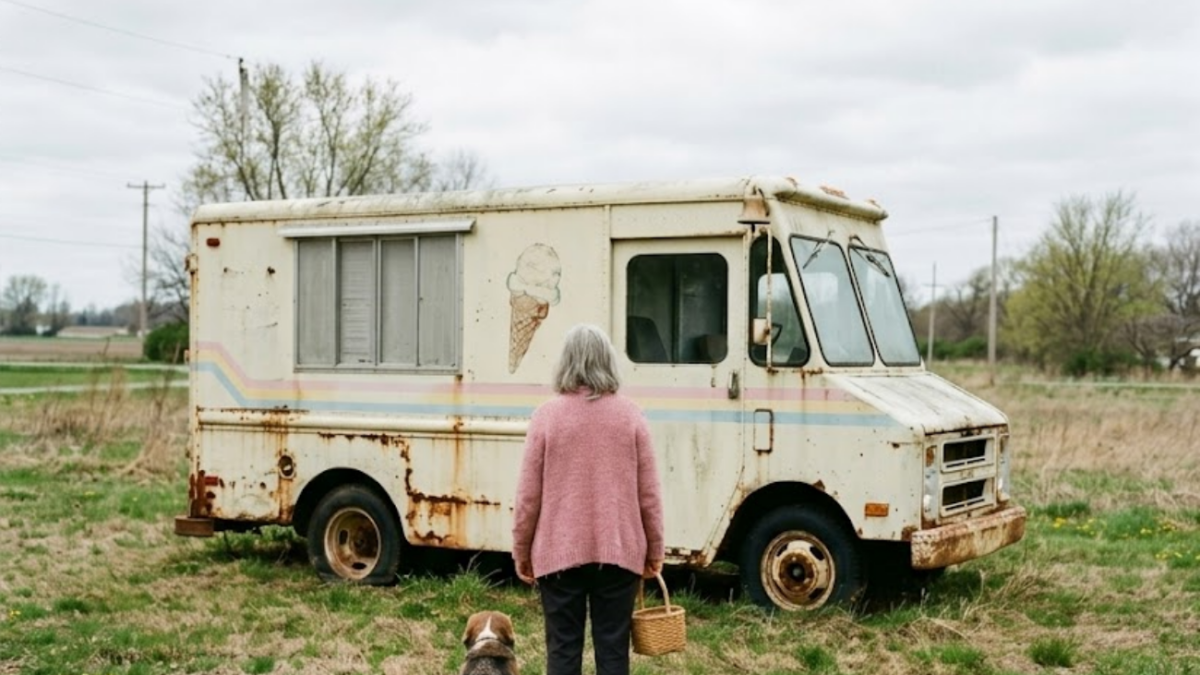
At 71, two winters a widow, Doy sat on her daughter’s basement stairs in Toledo and watched her armchair and her husband’s fishing rod get price stickers. Her house was already sold, and from her last $40, she paid five for a rusted ice cream truck outside the city.
Her daughter laughed and asked if she was out of her mind, and the grandchildren laughed along. The tires were flat. Rust ate the body. The freezer was dead. That afternoon she tore the weeds from its wheels with bare hands while her old beagle Buster watched. Then she knelt where nobody had looked and saw the dead freezer needed only a part cheaper than lunch.
She had $35, a basement she could lose, and summer coming fast. Before the year was half over, on the first hot day, her laughing daughter would not recognize the truck or the woman inside when its brass bell rang again. The basement of Karen’s house smelled of dryer sheets and wet concrete.
There was a washing machine against one wall, a folding cot against the other, and between them a small window up near the ceiling at the level of the lawn, so that whoever sat on the stairs saw the world from the ankles down. On that Saturday in April, Doy Harland sat on the third step from the bottom with her hands folded in her lap and watched the ankles come and go. Up above the floor creaked.
Karen was walking back and forth from the garage to the front yard, and every trip she made, something else went past the little window. A lamp went by. A box of Christmas ornaments went by. Then the armchair went by, the green one with the worn left arm carried by Tyler and one of his friends, and Doy leaned forward a little on the step to see where they put it. They set it on the grass near the driveway.
Karen came out with a roll of orange stickers and pressed one onto the headrest. A woman in white sneakers stopped beside it almost right away. She ran her palm along the left arm, where the fabric had gone shiny and thin, and Doy knew exactly what the woman was feeling. It was the place where her own elbow had rested every evening for 20 years, while Walt read the paper out loud and complained about the mudhens.
“Is this real wool?” the woman asked. “I think so,” Karen said. “It was my mother’s. She doesn’t need it anymore.” The woman sat down in it to test it. She bounced a little. Doy watched her bounce. Walt had been gone two winters. After the funeral, Karen had come over every Sunday with casserles and folders, and in one of the folders, there had been a paper about the house. It was simpler this way, Karen said. It saved fuss later.
Nobody wanted lawyers fighting over a little brick house on Willow Street when the time came. Put it in my name now, Mom, and you’ll never have to think about it again. Doy had been tired that winter in a way she had never been tired before, and she had signed where the yellow tabs told her to sign.
Then the next autumn, there had been a fall on the ice by the mailbox, and a cracked wrist, and a lot of talk at the kitchen table about how she shouldn’t be alone. And by Christmas, there was a sign in the yard on Willow Street, and a family from across town looking at the furnace. She had not been asked about the sign. She had been told about it, which was different. The money had gone into Karen’s kitchen mostly.
The new countertops were white stone with gray veins in them, and Karen liked to say that nobody would ever believe what they had cost. The rest had gone to things Doy was not told about. She had been given the basement, the cot, and a hook on the back of the door for her coat. The upstairs door opened and Karen came halfway down the steps with a cardboard box on her hip.
Mom, are you [clears throat] going to sit down here all day? I’m watching, Daddy said. Well, watch from the kitchen. It’s depressing seeing you on the stairs like that. Karen shifted the box. I found some more of Dad’s stuff in the garage. You don’t want any of this, right? Doy looked into the box.
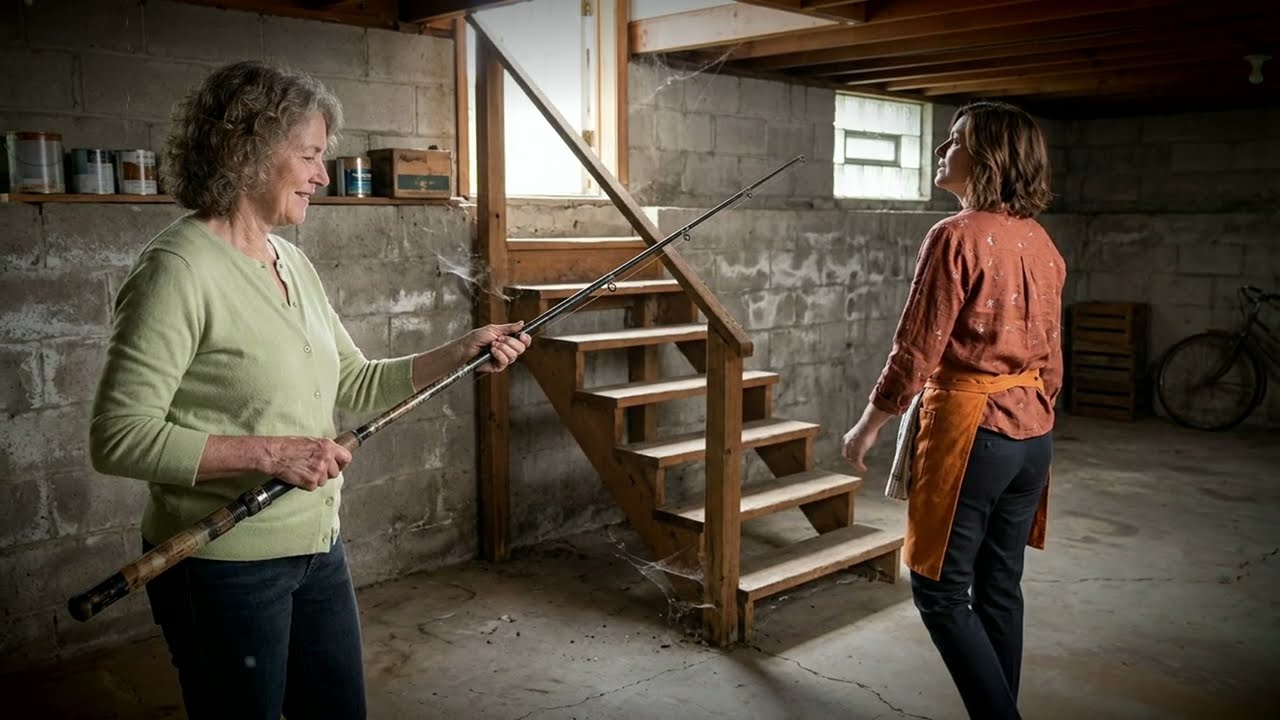
There were Walt’s waiters, folded the way he always folded them, and his tackle box with the rusty latch, and on top in two pieces, his fishing rod. It was the long one, the one he had used on the mommy every spring when the walleye were running, standing in the cold water up to his thighs, and coming home smelling of river and cigarettes. He swore he did not smoke anymore. “I’d like the rod,” Dottie said. “Mom, where are you going to fish?” You don’t fish.
Karen was already turning back up the stairs. It’s $6. Somebody will use it. That’s better than it sitting in a closet. 20 minutes later, a man in a ball cap bought it. Doie watched his boots stop by the box and watched his hand come down and lift the rod and watched the boots walk away to a pickup truck at the curb. That was all she saw.
She never saw his face. There was one more thing on the lawn that she wanted, and she saw it a little afternoon when the sun had moved and the light came through the window at a different angle. It was on a card table between a waffle iron and a stack of paperbacks. A thick book held together with a rubber band, the cover gone soft and brown at the corners. Her mother’s cookbook.
Her mother had written in it for 40 years, and then Doy had written in it for 40 more, so that the margins were full of two kinds of handwriting, one slanted and one round, and splashes of vanilla and butter on the pages people used most. Karen had put a sticker on it, $1.
Doy went up the stairs slowly because her knee did not like stairs and through the kitchen with its white stone counters and out the front door into the bright cold April noon. Buster came behind her, his nails clicking, his gray muzzle low to the grass. He was 13 and half deaf, and he did not like crowds, but he did not like being left either, so he followed her everywhere and sighed about it. She picked up the cookbook. She took the rubber band off and put it back on.
[clears throat] Then she opened her purse, the old brown one with the brass clasp, and took out a dollar bill, and held it out to her daughter. Karen looked at the dollar. For a second, something crossed her face, and Doy thought she was going to laugh or cry or say, “Don’t be silly.
” Instead, Karen took the bill, folded it once, and put it in the pocket of her apron with the other money. “There,” Karen said. “Now it’s officially yours.” A neighbor at the next table laughed, thinking it was a joke. Karen laughed, too, a little late. Doy tucked the book into the crook of her arm and went back into the house, and Buster sighed and followed her. That night at dinner, there was meatloaf and green beans, and the television was on in the next room, and Tyler was showing everyone something on his phone.
Maddie, who was 12, was trying to feed Buster a green bean under the table, and Buster was trying not to take it. Karen’s husband had worked late, as he usually did. “We made almost $300 today,” Karen said. “Not bad for junk.” Nobody said anything about whose junk it was.
“I was talking to Denise from work,” Karen went on, cutting her meatloaf into small squares, the way she had done since she was a little girl. Her mother is at that place on the river, the one with the garden, Sunny Shores, or Sunny Banks, something. Denise says it’s like a hotel. They have bingo. They have a bus that takes them to the mall. They have nurses right there if anybody falls. She looked up.
Mom, you’d have friends. You’d have a real bedroom instead of the basement. And who pays for the hotel? Doy asked. Your social security would cover most of it. We’d figure out the rest. Karen smiled at her. Just think about it. That’s all I’m asking. Doiey’s social security came into an account with both their names on it.
Karen had set it up after the wrist because it was easier because mom shouldn’t have to go to the bank in winter. Every Friday, Karen gave her an envelope with some cash in it for the week. Doy thought of the envelope and of the white stone counters and of the cot in the basement, and she said she would think about it.
Later, when the house was quiet, she went down to the basement and sat on the stairs again, because that was where the light from the little window fell, a pale square from the street lamp outside. Buster climbed onto the step below her and leaned his whole warm weight against her shin. She opened her purse and counted what was in it, slowly smoothing each bill flat on her knee. $40, two.
That was what was left of the week’s envelope and of the cookbook dollar and of 71 years. She put the money back. She opened the cookbook to the middle, where it always fell open, to her mother’s recipe for the big soft chocolate cookies you could put ice cream between. In the margin, in her own round hand, she had written something 50 years ago that she had forgotten until this moment. Willow Street, July. The truck came at 4. Karen wanted Strawberry.
Doy sat with that for a long time. If stories like this are close to your heart, give this video a like and subscribe to the channel with the bell so you don’t miss the next one. And now, let’s continue. The number 20 bus left from the corner by the gas station at 7:40 in the morning, and Doy was on it with Buster in her lap and her wicker basket over her arm.
The basket had been her mother’s, too. It had carried eggs and then picnic sandwiches and then for years Doy’s knitting. And that morning it carried a thermos of coffee, two peanut butter sandwiches wrapped in wax paper, a bag of dog biscuits, and the cookbook because she did not want to leave it in a house where things got stickers on them. She was not going anywhere in particular.
That was the truth of it. She had seen a handwritten notice on the board at the grocery store, an old garage out past the edge of the city, clearing out its lot, tools and parts, and an old chest freezer that worked. Karen kept saying there was no room in the kitchen for Dotty’s things, that the refrigerator was full, that Dotty’s frozen dinners got mixed up with everybody else’s.
A little chest freezer of her own in the basement, Doy had thought, would be one less thing for anyone to sigh about. It was a small practical thought. It was the last small practical thought she had that spring. The bus went out along the road, past the strip malls and the car dealerships, and the houses got farther apart.
And then there were fields flat and wet and brown with the first green coming through. At the end of the line, the driver turned around in the lot of a closed diner and told her this was as far as he went. The garage, she knew from the notice, was another mile up the county road. She walked it.
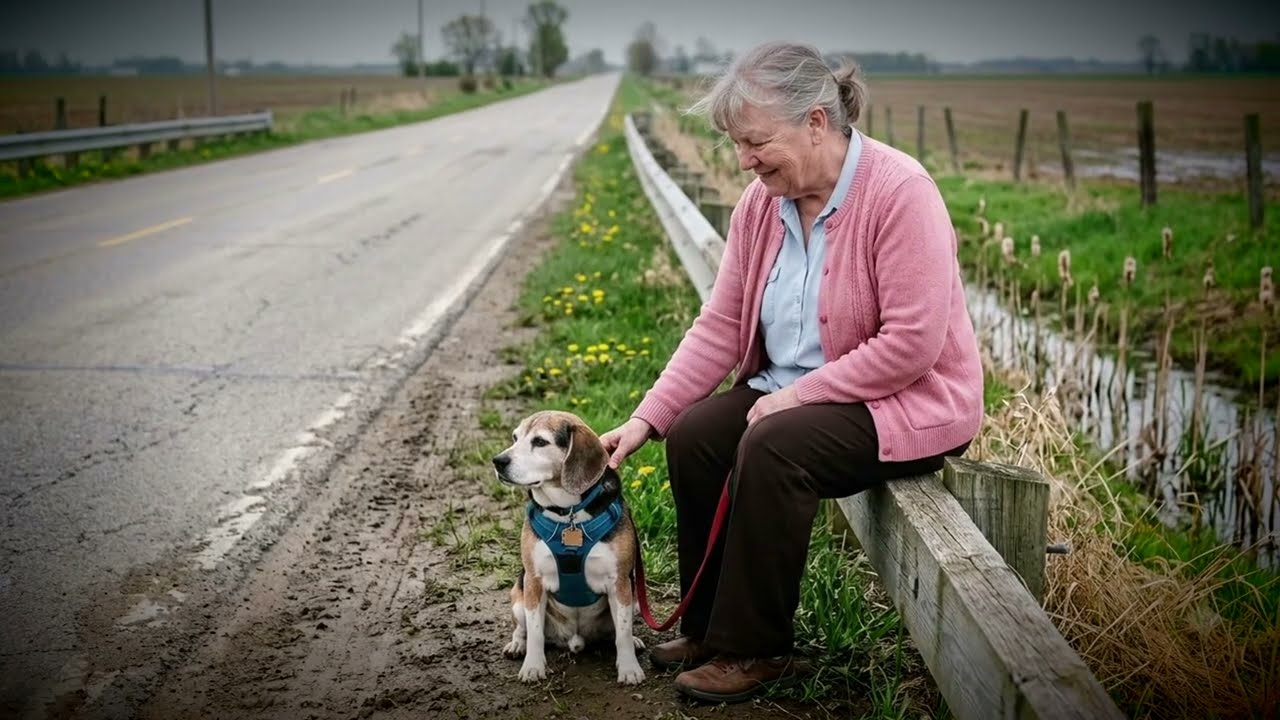
Buster walked it with her, stopping at every fence post, and twice she had to sit on the guard rail and rest her knee. The sky was very wide out there. A red-winged blackbird sat on a cattail in the ditch and made its creaky sound over and over, and the wind came across the fields, smelling of mud and new grass. The garage was a long, low building of gray cinder block with two big doors and a handpainted sign that just said repairs. Out front there were folding tables covered in wrenches and hubcaps and coffee cans full of bolts.
An old man in a quilted vest sat on a lawn chair beside them with a little radio playing a ball game from somewhere far away. “You’re here for the freezer,” he said before she said anything. How did you know? Because nobody your age walks a mile up this road for a socket set. He stood up slowly the way she stood up.
It’s sold. Sorry. Fella came at 6:00 this morning. Doy nodded. She had expected that somehow. She set the basket down on the edge of a table, and Buster lay down in the gravel with a groan, and she looked past the old man toward the back of the lot, where the gravel ran out into a field full of dandelions.
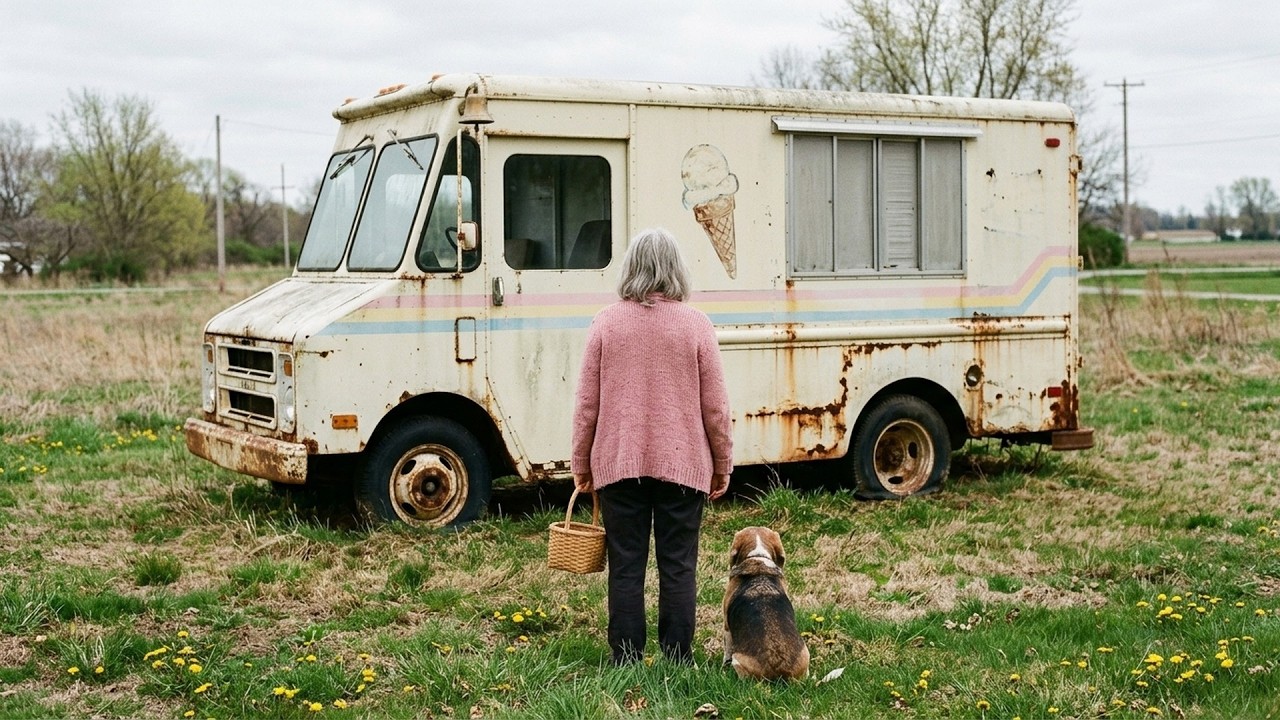
There was a truck back there. It was square, the way trucks used to be square, a tall, boxy step van with a flat face and a little cab and a long body behind it. It had once been cream white. Faded stripes ran along its side in colors that had been pink and mint and pale blue, the colors of sherbet. The serving window on the side was closed with a metal shutter.
Below the window, painted right onto the body, was an ice cream cone as tall as dirty with a big swirl on top. There were no words on it at all. No name, no prices, just the cone gone pale as an old photograph. And on the roof above the cab, there was a bell. A real bell, a brass one, the size of a coffee can gone dark brown and green with weather. All four tires were flat. The truck sat down on its rims like a tired animal.
Rust came up from the bottom of the body in orange lace around the wheel wells, along the step, under the doors. Dandelions grew up past the front bumper. “What’s that?” Doie said, though she knew. The old man followed her eyes. That’s a mistake I made in 1991. He came and stood beside her. Earl Haskins, this is my place for about two more months. Doy Harlon.
Fella I bought it from swore it ran. It ran exactly from his driveway to mine and then it quit and it’s been sitting out there ever since. Earl shook his head. I kept thinking I’d fix it up for the grandkids. Then the grandkids grew up. The scrap man’s coming for it in a couple of weeks with the rest of the junk. He’ll give me maybe 50 for it, minus the toe, which is about 40.
He laughed a little. So, I’ll make $10 and lose a headache. Do walked out across the gravel toward the truck. Buster heaved himself up and came after her. Up close, it was bigger than she remembered trucks like this being. Or maybe she was smaller. She put her hand flat against the side on the faded cone.
The metal was cold from the night and rough with old paint. There had been a truck like this on Willow Street. Not this one, she was sure. It had been white with a red stripe, but it had been this shape exactly. It came every afternoon in July at 4:00 and you heard the bell three streets away. Karen used to stand at the front window from 3 with her nose against the glass. Strawberry.
Always strawberry. A paper cup with a flat wooden spoon. Walt would come home from the plant at 4:30 and find his daughter on the front step with pink all down her chin. And he would pretend to be shocked. Who did this? He would say. Who did this to my girl? Doy had not thought about that in 40 years.
And then she had read it in her own handwriting last night, and now here was the truck, or the shape of it, sitting in the dandelions like it had been waiting. She went around to the back. There was a small door there with a step, and the handle turned when she tried it. Inside it was dim and smelled of mice and old rubber and something sweet underneath, very faint, like a candy wrapper found in a winter coat.
There was a long steel freezer along one side with heavy lids and a counter under the shutter and a little steel sink and a coin changer bolted to the wall, the old kind with tubes for each coin. Leaves had blown in somehow and lay in drifts in the corners. Freezer’s dead, Earl called from outside. Before you ask, plugged it in once in 92. Nothing, not even a hum. Doy came back out and stood on the step and looked up at the bell. “How much do you want for it?” she said.
Earl laughed. Then he saw her face and stopped laughing, though he did not stop smiling. Mrs. Harlem, the scrapman is giving me $10 for it net. Then I’ll give you more than the scrap man. [clears throat] She opened the brown purse. She had two 20s. She held one out. Can you make change? Earl looked at the 20 for a long moment. Then he looked at the truck and at her and at the old beagle sitting in the dandelions at her feet with his tongue out. $5, he said.
That’s my price. Not a penny more or I’ll feel like a crook. He took the 20 and went into the garage and came back with a 10 and a five and a title in a plastic sleeve that had gone yellow. It’s legal. It’s just useless. Can I leave it here for a while? It’s not going anywhere, ma’am.
Neither of you by the look of it. He rubbed his jaw. I’m closing up at the end of June. After that, I can’t promise you anything. The new owner wants the lot clean. The end of June, Doy said. She folded the title and put it in her purse next to the $35. That’s fine.
She ate one of her peanut butter sandwiches sitting on the back step of the truck in the sun and gave half the crust to Buster. Then she put the thermos back in the basket, pushed up the sleeves of her pink cardigan, got down on her knees in the wet gravel, and started pulling the dandelions and the long grass out from around the front wheels with her bare hands. Earl watched her from his lawn chair for a while.
Then he turned the radio up and pretended not to. She caught the 4:00 bus home with green stains on her knees and dirt under every fingernail. At dinner, she told them she had decided on the bus that she would not hide it because hiding things was what you did when you were ashamed. And she was not ashamed exactly. She was something else she did not have a word for yet.
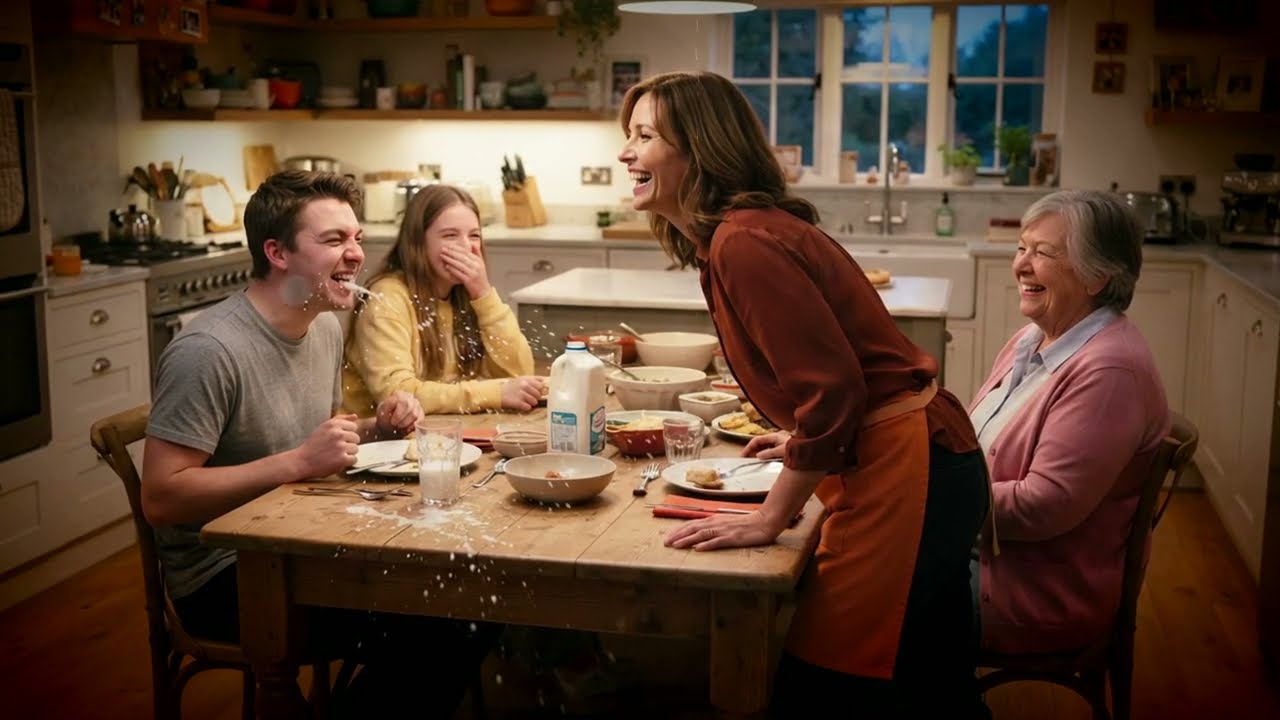
You bought a what? Karen said. An ice cream truck. An old one from the 60s. The man thinks. For how much? $5. Tyler snorted milk. Maddie put her hand over her mouth. Karen set down her fork and for a moment she just looked at her mother. And then she started to laugh. Really laugh. The kind that bends you over. Mom, she said when she could talk.
Mom, [laughter] are you out of your mind? I don’t think so. Does it run? No. Does it have tires? It has tires. They’re flat. That set Karen off again. Tyler already had his phone out. Grandma, say that again. Save $5. I’m putting this on my story. Maddie was giggling into her napkin, looking at her brother and then at her mother and then, a little uncertainly at her grandmother.
What are you going to do with it? Karen asked, wiping her eyes. Seriously, live in it? Doie took a bite of green beans and chewed it and swallowed. I’m going to fix it, she said. And by summer, I’m going to drive it down Willow Street and sell ice cream to the children the way they used to do. There was a silence.
Then Karen laughed again, but differently this time, shorter, with her eyebrows together. Okay, she said. Okay, Mom. You do that. She picked her fork back up. Just don’t spend your grocery money on it and don’t fall off anything. Later, through the floor, Doy heard her on the phone with somebody, probably Denise from work.
She could not hear the words, only the rhythm of them and the laugh at the end of each sentence, like a little bell. On Monday, she went back. She took the number 20 again with Buster and the basket, and this time the basket had rags in it and a bottle of dish soap and a pair of Walt’s old work gloves that had been in her coat pocket since the funeral and an empty coffee can.
Earl was at his tables. He looked up when she came up the road, and he did not look surprised, and he did not look pleased either. “You came back,” he said. “I own a truck here,” Doy said. She started inside because inside was something she could do. She swept out the leaves, carried three mouse nests out to the field on a dustpan, and washed the counter and the sink and the walls until the water stopped coming off brown. Under the grime, the steel walls were dull silver, and the counter was a pale yellow laminate with little gold
flexcks in it, the kind that had been in every kitchen in 1963. The shutter over the serving window would not move. It was stuck in its tracks with rust and dirt. She tried pushing it up from inside and it did not budge and she tried again with her shoulder and her shoulder told her not to try that a third time. Earl was watching from the door. You’ll break your arm, he [clears throat] said.
Then your daughter will sue me. My daughter won’t sue anybody. She’ll just say she told me so. he grunted. He went away and came back with a can of penetrating oil with a long, thin straw on it and handed it up to her without a word. She worked the oil into the tracks on both sides, inch by inch, and into the hinge at the top, and then she went outside and ate her sandwich and let it soak. When she came back, the shutter moved a finger’s width, then another.
She worked it up and down, adding oil, wiping away the rust that came out in orange drips. And by 3:00, it rolled all the way up with a long, complaining screech. The April light came pouring in across the yellow counter for the first time in more than 30 years. Doy stood behind the counter and looked out of the window.
She could see the field and the dandelions and the county road and a hawk turning slowly above it all. She put her hands on the counter the way the man on Willow Street must have put his hands and leaned out a little and said to nobody, “What can I get you, sweetheart?” Buster in the gravel below thumped his tail. The freezer was the thing that worried her.
A truck that did not run could be towed or pushed or fixed in time, but an ice cream truck with a dead freezer was just a truck. She opened the heavy lids one after the other. Inside the freezer was deep and lined with steel, and along the walls there were flat metal panels, thick and heavy, with pipes running into them. There were not shelves.
She knocked on one with her knuckle, and it gave back a dull, full sound, like a can of something. She did not know what they were, but she had been married for 44 years to a man who worked on refrigeration lines at the plant, and who came home and talked about compressors at dinner, whether anybody wanted to hear it or not, and some of it had gone in.
She got down on her knees, which did not want to go down, and looked under the freezer where the machinery was. Nobody had looked there in a very long time, she could tell, because there was a perfect gray felt of dust on everything, unbroken. She took a rag and wiped. There was a squat black compressor, round like a pot. There were copper tubes, green with age, but whole, not cracked, not bent.
There was a heavy rubber cord coming out of the back, and it had been cut clean through about a foot from the end, as if somebody long ago had needed a plug for something else and taken this one. And there, clipped to the side of the compressor, was a small black box the size of a matchbox with a burned brown stain spreading across its face.
She sat back on her heels and looked at that box for a long time. Earl, she called. Earl, would you come here and look at something? He came complaining and got down beside her with a flashlight, complaining more. She showed him the cut cord and the little black box with the burn on it. He looked for a while without saying anything.
Then he reached in and unclipped the box and turned it over in his fingers under the flashlight. He sniffed it. He actually sniffed it the way Buster would have. Well, I’ll be, he said. That’s the start relay. It’s cooked. He looked up at the steel plates inside the open freezer. Those are holdover plates. You freeze them solid overnight off a wall plug, and they keep the box cold all day on the road without the motor running.
That’s how they all did it back then. He turned the relay over again. 92. I plugged it in with a cut cord spliced together and a cooked relay, and I said it was dead. 30 years I’ve been saying it was dead. Is it the compressor? I don’t know. I’d have to put a new relay on it and a new cord and see. He handed her the little box.
This thing’s maybe $8 $9 at the part store in town if they still make one that’ll fit. Doy held the burned relay in her palm. It weighed almost nothing. 8 or $9. That was less than the lunch Karen bought every day at work. She closed her fingers around it. “Where’s the part store?” she said. The parts store was in a strip at the edge of the city, between a nail salon and a mattress outlet.
The boy behind the counter looked at the burned relay as if she had brought him a fossil, went into the back for a long time, and came out grinning with a little universal one in a box. $8.40. She bought a new grounded cord, too, because Earl had said not to be cheap about the cord, and that was 11 more. $1560 left and a relay in her basket next to the cookbook.
Earl put them on the next afternoon. She held the flashlight. He showed her how the wires went, the white and the black and the green, and he made her do the last screw herself, which took her four tries because her fingers shook. Then he ran the new cord out the back door of the truck and across the gravel to an outlet on the side of the garage and stood there holding the plug.
“Don’t get your hopes up,” he said. “I’m 71,” said Doie. “I don’t get my hopes up. I just get them out once in a while and look at them.” He plugged it in. For a second, nothing happened. Then from under the freezer there was a click and a shudder and then a low steady hum like a big cat purring somewhere under the floor. Earl stood very still with his hand still on the outlet.
Doie put her palm flat on the steel lid of the freezer and felt the hum come up through it into her arm. 30 years Earl said quietly. 30 years for $8.40. 40 cents. They left it running overnight. In the morning, when Doie came up the county road, Earl was standing by the back door of the truck waiting for her, which he had never done before. He did not say anything. He just lifted the first heavy lid.
Inside the steel plates along the walls were furred white with frost, thick as a winter windshield, and cold breathed up out of the box into the April morning like something alive. Doy touched the frost with one finger and looked at the mark left. Then she went outside, sat on the backst step, and cried for about a minute, very quietly into her cardigan sleeve, the first time since the funeral.
Buster put his head on her knee. Earl went into his garage and made a lot of noise with a toolbox until she was finished. The money was the next thing, and she knew it, and she had been not thinking about it for a week. On Friday morning, she did not wait for her envelope. She took the bus downtown to the old bank on the corner, where she and Walt had opened their first savings account in 1972.
The marble floor was the same, and the clock over the tellers. She sat across from a young woman in a pink cardigan, almost like her own, and said she wanted an account in her own name, only hers, and her social security sent into it starting next month. “We can do that today,” the young woman said. “It’s just a form.” She slid it across.
“Do you want to tell the other account holder, or should we?” “I’ll tell her,” Die said. She told her that night in the kitchen standing by the white stone counter. She had thought about how to say it all the way home on the bus and in the end she just said it. Karen stared at her. You did what? It’s my check, honey. It always was. I’d like it to come to me. After everything I’ve done for you.
Karen’s voice went high and thin. I gave you a place to live. I drive you to the doctor. I handle all of it so you don’t have to worry about it. And now you go behind my back to the bank like I’m some kind of thief. I didn’t say thief. You didn’t have to. Karen pressed her hands on the counter. This is about that stupid truck, isn’t it? You want money for that stupid truck? Partly. Doy took a breath.
And partly I’m 71 years old and I’d like to buy my own groceries again. I’ll pay you rent for the basement like a tenant. Whatever’s fair. Karen named a number. It was high, higher than anything anybody would pay for a basement with a cot and a washing machine in it. And they both knew it.
Doy nodded and said that was fine. And Karen looked for a moment as if she had been slapped because she had expected an argument and there was none to have. So that was how it would be. After the rent, after the bus fair and the dog food and the groceries she would buy for herself now and put on her own shelf in the basement, there would be a little left each month. Not much, a little.
Doy wrote it all in the back of the cookbook on a blank page after the index in her round hand and drew a line under it. The first check came at the beginning of May. That week, she bought two used tires from a man Earl knew who kept a pile behind his barn, and Earl’s air compressor brought the other two back up. She bought a battery, the most expensive thing yet, and carried it from the bus stop in her mother’s basket, which nearly came apart under it, while Earl walked beside her, calling her a stubborn old woman. The engine was a straight six, Earl said, as if that explained something. And it had not
turned over in more than 30 years. Every morning he said it would never start. And every morning he showed her one more thing. How to find the carburetor, take it apart on newspaper with every piece laid out in order, and wash each tiny part in the coffee can of cleaner with an old toothbrush.
It took her four days with Walt’s reading glasses on top of her own. On the fifth day, they put it back together. Earl poured a little gasoline into the throat of it from a cup. Doy sat in the driver’s seat, which was cracked brown vinyl and had a spring that came up in the wrong place, and put her hands on the big thin steering wheel. “Turn it,” said Earl. She turned the key.
The engine groaned and coughed and groaned again. [clears throat] Then it caught with a bang that made Buster leap off the step and a cloud of blue smoke that rolled out across the dandelions. It ran rough for a minute, shaking the whole truck like a washing machine with a brick in it, and then it smoothed out and settled down and ran. Earl stood in the smoke with his arms folded.
“Well,” he said after a while, “don’t tell anybody. I said it couldn’t be done.” I’ll tell everybody,” said Doie. The rust was hers. Every day in May, with Walt’s gloves on and a wire brush and a scraper, she sat on an upturned bucket by the truck and scraped, and the orange came off in flakes that stuck to her hair and Buster’s ears.
In two places, low behind the back wheels, the metal was gone, and Earl showed her how to rivet thin patches over the holes. Then gray primer sprayed with a towel tied over her face and two coats of cream white with a brush because a brush was something she had always been good with. When she came to the cone, she stopped.
She sat on her bucket and looked at it for a long time. It was so faded that in some light you could hardly see it at all. Earl came over and stood behind her. Paint over it, he said. Do a new one. Do something with letters, a name, dotties [clears throat] or something. People like a name. No, she said it doesn’t need a name.
She bought three small jars of paint, tan and brown and pink, and the thinnest brush the craft store had. And over the next week, she went over the old cone exactly where it was. She followed every line whoever painted it had drawn. the waffle cross-hatching, the big lazy swirl, the one drip down the side, the way you trace a child’s handwriting.
By the end of May, the cone stood as tall as she was, brown and pink and new, and it was the same cone it had [clears throat] always been. The bell she did not touch. She had climbed the little ladder on the back once to look at it, with Earl below, promising he would not be the one to explain a broken hip to her daughter. A cord ran down from it into the cab, ending in a wooden handle by the driver’s seat, but the clapper had been tied fast to the side with a twist of old wire. Somebody once had wanted it quiet. I’ll cut that for you, Earl said.
Not yet, Doy said. Not until it has somewhere to ring. Fixing the truck, it turned out, was the easy part. selling ice cream out of it was a different thing altogether, a thing with forms. She went to the county health department downtown and came home with a folder.
A mobile food unit needed a license and an inspection, hot and cold water at the sink, a thermometer in the freezer, food from an approved source or a licensed kitchen, and a licensed kitchen to go back to every night to be cleaned. A commissary, the woman at the counter called it a base. Doy read the folder on the bus twice.
Then she got off the bus four stops early and walked to the little brick Lutheran church at the end of Willow Street, the one she had gone to for 50 years before she was moved across town and knocked on the door of the office. The pastor’s wife was named Ruth. She was nearly 80 and still ran the church kitchen in the basement for funerals and the spring rummage sale and the fish fry in Lent.
The kitchen was licensed, she said, because of the fish fry. She looked at Doy for a long time across the desk. I heard about your house, she said finally. I’m so sorry, Doy. We all missed you. I’d like to rent the kitchen, Doy said. A few hours a week and a place to wash out the truck at night. I can pay a little. What truck? said Ruth. So Doy told her.
It was the first time she had told anybody besides Earl and the people at the dinner table. And Ruth did not laugh. Ruth listened all the way to the end. And then she said that the church could use $20 a month for the kitchen and the hose behind the parking lot if Doie would also make cookies for the fish fry next Lent. And Doy said she would make cookies for every fish fry until she died.
She had no money yet for ice cream in bulk. So she opened her mother’s cookbook to the page where it always fell open. The big soft chocolate cookies were from the 1940s. Her mother’s slanted handwriting said, “Use real butter, not that other stuff.” And under it, in Doy’s round hand from the 1970s, it said, “Karen 86, put in fridge to hide.
” The cookies were made to be soft, even cold, so you could sandwich a slab of vanilla ice cream between two of them and freeze the whole thing, and still bite through it in July. Nobody made them like that anymore. Everything in the store was hard as a roof shingle. She baked the first batch in Ruth’s church kitchen on a Tuesday afternoon in late May, with Buster asleep under the steel table and the old ovens ticking. The smell came up the basement stairs and into the sanctuary, Ruth said later, and two ladies from the alter guild came down to see what had died and gone to heaven. That week she started walking Willow Street with the basket. She had not walked it since Christmas. The street looked the same and not the same.
The maple in front of the kowal chicks had been cut down. The house on the corner was a different color. Her own house, the little brick one with the green shutters, was in the middle of the block, and she made herself walk past it slowly the first time, and look, there was a plastic slide in the front yard now, and a pink bicycle lying on its side on the walk.
Somebody had planted maragolds along the steps where she had planted tulips. She did not knock there. Not that first day. She knocked across the street instead at Mrs. Okaffors, who had lived there since 1980, and had sent over a pound cake every single Christmas of all those years. Mrs. Okafor opened the door in her house coat, looked at Doy, looked at the basket, looked at Buster, and put both hands to her mouth.
Dorothy Harlon, she said. Where on earth have they put you? Across town, said Doy. In a basement. It’s all right. She lifted the cloth off the basket. I’m selling cookies, Grace. A dollar a piece. They’re my mother’s. And this summer, I’m bringing ice cream back to the street in a truck like we used to have, with a bell. Mrs.
Okafor bought six cookies and made her come in and drink coffee and tell the whole story from the beginning. And by the time Doy left, she had promised to tell everybody at the church and everybody at the beauty shop, which on Willow Street was the same as telling the newspaper. She sold the basket empty in 2 hours. The next day, she baked twice as many. By the end of the week, people were waiting for her, standing on their porches when she turned onto the street, and the children came running down the walks with dollar bills in their fists. And one little boy told her solemnly that his grandpa said she used to be the lady with the tulips.
On the Friday, she knocked at her own house. A young woman answered with a baby on her hip and a little girl of about five peering out from behind her leg. The woman did not know who Doy was. Doy did not tell her. She just said she was selling cookies for the ice cream truck that was coming this summer. And the little girl’s eyes went enormous.
“An ice cream truck,” the little girl said. “A real one on our street?” “A real one,” Dottie said with a bell on the roof. The young woman bought four cookies. Behind her in the hall, Doy could see the place on the wall where Walt had measured Karen’s height every birthday in pencil. It had been painted over. Of course, it had.
You could not see the marks anymore, but Doy knew exactly where they were. That Saturday, Maddie asked if she could come. She asked at breakfast very quietly, while her mother was in the shower and Tyler was still asleep. Doie looked at her granddaughter across the table at the small worried face and said, “Yes.
” They took the number 20 together, Maddie with her earbuds in for the first half, and then somewhere past the car dealerships with them out. They walked the mile up the county road. Buster walked between them. When they came around the bend, and Maddie saw the truck, she stopped walking. It was standing on four full tires in the gravel.
It was cream white, gleaming. Doy had redone the pink and mint and blue stripes that week with tape and a steady hand, and they ran clean along its side like ribbons. The shutter was up. The cone on the side stood tall and brown and pink against the white. Only the bell on the roof was still dark. “Grandma,” Maddie said. “That’s not the one from Tyler’s video.” It’s the same one,” said Doie.
Maddie walked all the way around it without saying anything. Then she climbed in through the back and stood behind the yellow counter and looked out the window at her grandmother. And Doy saw her granddaughter’s face in that window and had to look at the hawk over the field for a while. “Don’t tell your mother you came,” Dottie said on the bus home. “I won’t.” Maddie was quiet for a long time.
Then she said, “Mom showed everybody the video at her work. They all laughed. I laughed, too.” She looked at her shoes. “I’m sorry.” You were 12, said Doy. You still are. It’s allowed. June came in hot. The mobile unit inspection was set for the second week at the church parking lot. And before that, the truck had to drive itself there all the way across the city, which it had not done since 1991.
Earl wanted to take it around the lot first. He said it the way you would say you wanted to check the ice on a pond. Doy sat in the passenger seat. Earl drove. Buster stayed in the gravel and barked, which he almost never did. The truck rolled forward across the lot, slow and heavy and loud, and turned in a wide arc around the field, and Doy felt it move under her for the first time, alive, and she laughed out loud.
Earl brought it back toward the garage and pressed the brake. The pedal went to the floor. The truck did not stop. It rolled on across the gravel at walking speed, quiet now, except for the crunch of the tires, toward the cinder block wall of the garage. Earl swore and stamped on the pedal again, and yanked the handbreak, and the handbrake groaned and caught a little, and the truck slowed and slowed and touched the wire fence at the edge of the lot with its front bumper and stopped there, leaning into it, the fence wire singing.
Neither of them said anything for a while. Buster had stopped barking underneath. When Earl crawled under with his flashlight, the brake lines had rusted through in two places. The master cylinder, he said, was shot and probably the wheel cylinders, and the shoes were glazed like donuts.
He came out from under the truck and sat on the gravel with his back against the tire. That’s the whole system, he said. lines, cylinders, shoes. Parts alone, the cheapest I can get them, 380, maybe 400. And I don’t have them here. I’d have to order. He wiped his face. Doy, I’m sorry. It can’t go on the road like that. I wouldn’t let my worst enemy drive it like that. She had $62.
She knew exactly because it was written in the back of the cookbook. The next check was 3 weeks away, and most of it was rent. That night, it rained the way it rains in Ohio in June, all at once and sideways, with thunder rolling across the fields like furniture moved upstairs. In the morning, Earl called the house phone, which nobody ever called.
A seam in the roof over the freezer had opened in the storm, and the cases of paper cups and napkins she had bought with cookie money and stacked inside, where it had always been dry, had gone to pulp. Karen took the phone from her mother’s hand when it was over, and listened to Earl for a minute herself. Then she hung up and stood in the kitchen with her arms crossed. “I’m driving you out there,” she said.
“I want to see this thing.” They drove out in Karen’s car, the big silver one, in silence. It was the first time Karen had seen the truck. She stood at the edge of the gravel in her good shoes and looked at it for a long time, at the clean white paint, and the stripes and the cone, and at the front bumper pressed against the bent wire fence, and at the soggy cardboard Earl had dragged out onto the ground. “Well,” Karen said, “you made it pretty, Mom. I’ll give you that. It’s not finished. No, it’s not.
Karen took a business card out of her purse. I called the scrapyard on the way out. Your friend here is closing at the end of the month. He told me himself on the phone. The man from the yard will come and get it on the 30th. No charge for the toe. He’ll even give you something for the metal. She held the card out. And I talked to Sunny Banks.
They have a room opening in July. A real room with a window. They need a deposit by the first and I’ll cover it. I’ll cover all of it until your check goes through. Her voice softened. Mom, you tried. Everyone can see you tried, but it’s over now. Let’s just be done with this. Okay. End of June.
Either way, Doy did not take the card. Karen put it on the step of the truck by the back door and went back to the car and sat in it with the engine running and the air conditioning on. Doy climbed into the cab. She did not know why. She sat behind the big thin steering wheel on the cracked vinyl seat with the spring coming up in the wrong place and Buster clambored up after her with a great deal of effort and lay down on her feet.
It started to rain again, softly this time on the windshield and on the roof and on the dark bell, and she could hear it dripping somewhere behind her into the freezer through the open seam. She had $62, 16 days, a truck with no brakes, and a bell that had never rung.
If you’ve made it this far with Doy, give it a like and subscribe, because what comes next is the part of the story that all of it was for. She sat there until the rain stopped. Then she climbed down, picked the business card up off the step, and put it in her purse without looking at it next to the title in its yellow plastic sleeve. Karen drove her home without a word, and Doy did not offer one.
In the morning, she was on the number 20 at 7:40, but she did not ride it to the end of the line. She got off downtown and changed and rode the other bus out to Willow Street and walked straight to Mrs. Okafor’s porch with the basket on her arm and a clipboard in the basket that she had bought for a dollar at the drugstore. I need $400 by the 28th, she said before Grace Okaphor could even offer coffee for breaks.
I’m not asking anybody to give it to me. I’m selling it. She had thought it out on the bus. The 4th of July was 18 days away, and Willow Street had always had a block party on the 4th, with saw horses at both ends and sparklers until the fireflies came out. So she would sell the fourth now in advance. $2 for an ice cream sandwich on her mother’s cookies, paid today, delivered from the window of the truck.
If the truck did not come, she would pay every dollar back out of her checks, and she wrote that on the clipboard, too. Grace read the clipboard twice. Then she went inside and came back with her own purse and wrote her name at the top. Okafor six sandwiches, $12 paid.
Under it, in her careful school teacher hand, she wrote, “Dorothy Harlon is good for it. I have known her 40 years.” That line did more than anything Doy could have said. She walked Willow Street that day and the next and the streets on either side of it, the ones where the old bell used to carry.
Some people said no, and one man told her she ought to be ashamed, begging door to door at her age. Most said yes for one sandwich or for four or for the whole family and the cousins coming in from Detroit. On Sunday, Ruth stood up in church after the announcements and said that anybody who wanted to be part of bringing the truck back could see Doy in the fellowship hall after the service. There was a line.
The young woman in Doy’s old house signed up for four. Her little girl wrote her own name next to it in green crayon with the s backwards. At night, Doy baked. Ruth gave her a key to the church kitchen, and she baked until the trays ran out and froze the cookies flat in wax paper in the church’s big chest freezer. Maddie came three nights a week.
She told her mother she was at a friend’s, which was not a lie exactly, because Ruth was a friend now. She rolled the dough into bowls in rows as straight as soldiers, and counted every tray out loud, as if the cookies might escape. On the 25th, Doy added up the clipboard on Ruth’s kitchen table.
$341 in an old cocoa tin in fives and ones and some quarters from children. With the 62 from the back of the cookbook, it came to $43. Earl had ordered the parts on her word before she had a penny of it. He said he was too old to wait for anybody’s money. The lines and the cylinders and the new shoes came in a single heavy box on the 26th, and he did not charge her a scent for his hands.
He did make her lie on a piece of cardboard under the truck beside him and hold the flashlight for two whole days and hand him wrenches and learn the names of everything. “Somebody’s got to know how to do this after me,” he said, his voice muffled under the axle. “And it isn’t going to be the scrapman.” On the 27th, in the late afternoon, they bled the brakes. Doy sat in the cab and pumped the pedal, while Earl crouched by each wheel with a little jar and a length of clear tube and called out, “Hold and release, and hold.
” When they were done, he drove it around the lot once, and Doy stood in the gravel with Buster and watched, and he pressed the brake by the garage, and the truck stopped. Right there, square and solid, a foot from the wall, with a little lurch that rocked the whole box on its springs. Earl did it twice more to be sure.
Then he got out and handed her the keys. “You drive it out,” he said. “It’s yours.” She had renewed her license every 8 years out of plain stubbornness, though she had not owned a car since the plant closed. On the morning of the 28th, she drove the truck out of Earl’s lot and down the county road toward the city, slowly, with Buster in the passenger seat, and his ears blowing back in the warm wind. Earl followed in his pickup all the way, close behind, like a man walking behind a child on a new bicycle.
It took an hour and 10 minutes to get across to the church on Willow Street. She parked it behind the church by the hose in the shade of the big oak. Ruth came out of the office and stood with her hand over her heart.
The county inspector came on the 2nd of July, a heavy set woman with a tablet who did not smile once. She checked the sink and the hot water and the soap, put her thermometer in the freezer, and read the receipts for the tubs of ice cream and the dates Maddie had written on every wax paper wrapper in purple marker. Then she pressed a sticker onto the corner of the windshield and told Doy she was good to go and to have a nice summer.
Doy stood in the church parking lot with the sticker and the sun, and did not know what to do with her hands. The 4th of July was hot from the first light. the thick white Ohio heat that sits on the city like a lid. At noon, Doy filled the freezer from the church freezer, the sandwiches stacked inside the frosted steel like bricks, and tubs of strawberry and vanilla and chocolate in the corners for cups. She put on a white apron Ruth had found for her, tied her gray hair up under a kirchief, and put the cookbook in the glove compartment.
Earl came at 3. He had his tin snips in his back pocket. He did not ask. He climbed the little ladder on the back of the truck slowly, one rung at a time, swearing at his knees, and leaned over the roof to the bell, and Doy heard the wire snap. He came back down and wiped his hands on his vest. “There,” he said.
“Now it has somewhere to ring.” She drove out of the church lot and turned onto Willow Street at a/4 to 4. The saw horses were already up at both ends, and somebody moved one aside to let her in and moved it back behind her. The street was full. There were folding chairs on the lawns and coolers on the walks and grills smoking in two driveways.
Children in swimsuits were running through a sprinkler in front of the Kowalic’s old place. A radio was playing somewhere. Nobody had seen her yet. Doy slowed the truck to walking speed in the middle of the block.
She reached up beside the driver’s seat for the wooden handle on the end of the cord, the one that had hung there silent for longer than Maddie had been alive, and she pulled it. The bell rang. It was not loud exactly. It was clear. It was one bright round brass note that went up off the roof of the truck and out over the street, over the lawns and the sprinkler and the grills, and kept going.
and she pulled again and again, and the second ring overlapped the first, and the third, the second. On the street, every head turned at once. The children and the sprinkler stopped dead, dripping. A man at a grill stood with his spatula in the air. Then the children ran.
They came from every yard on Willow Street, barefoot, shrieking, with wet hair, with sparklers not yet lit, with dollar bills and without them. and the parents came after them. And then the grandparents came after the parents, slower, out onto their porches, down their steps. Grace Okaffor stood at the top of her porch with both hands pressed to her mouth exactly the way she had the first day. Ruth was there.
Earl was leaning against his pickup at the corner with his arms folded and his face doing something he would not have admitted to. Doie stopped the truck, pulled the handbrake, climbed back behind the yellow counter, and rolled up the shutter. “What can I get you, sweetheart?” she said to the first little face at the window.
It was the girl from her old house, the one who had written her name in green crayon with the S backwards. She was jumping up and down so hard that her mother had to hold her by the shoulder to keep her from bouncing into the truck. “I’m on the list,” the girl said. “I’m on the list. I’m on the list.
I know you are,” said Doie, and found the name on the clipboard and handed down the first ice cream sandwich wrapped in wax paper with the date on it in Mattie’s purple marker. After that, there was no time to feel anything at all. There was only the window and the hands, small ones and old ones, hands holding up phones to film the bell, hands reaching for strawberry, for chocolate, for one more for my brother who is asleep.
Maddie was beside her, checking names on the clipboard and making change from the old coin changer on the wall, which still worked. Buster lay on the back step in the shade and let every child on Willow Street pet him with a look of deep, patient suffering. Karen came at a/4 to 5. Doy did not see her arrive.
Maddie saw her first and went very still, the way she had at the breakfast table. Karen was standing on the curb across the street in front of Mrs. Okaffors with her phone in her hand. Tyler was beside her. Somebody’s video had gone around. Doy would learn later. A little girl’s mother had filmed the first ring of the bell from her porch and put it up, and in an hour it had gone across half of Toledo.
Tyler had seen it. It had a lot more views than his. Karen was looking at the truck. She looked at the cream white paint and the pink and mint and blue ribbons of the stripes and the tall brown cone and the brass bell gleaming on the roof in the sun.
She looked at the line of children and at the old woman in the white apron and the kirchief leaning out of the window laughing at something a little boy said with flower on her cheek. She looked for quite a long time. Then she turned to Tyler. Whose is that? She said. Is that the churches? Tyler did not answer. He just pointed with his chin at the old beagle on the back step. Doy saw her daughter’s face change.
Then she saw it from across the street through the heat and the children and the smoke off the grills. The way you see weather moving across a field. Karen crossed the street. She came along the line, past the neighbors who knew her, some of them, who remembered her from when she was a girl on this street with pink all down her chin, and who looked at her now, some of them, the way people look when they have heard a story. She came to the window. Up close, she had a smile on, the bright one she used at work.
“Mom,” she said. “Oh my gosh, mom, look at this.” “Hello, honey. This is incredible. Everybody’s talking about it. Denise sent me the video. I almost fell over. Karen laughed too loud and looked around at the neighbors to include them. My mother. Everybody. 71. Can you believe it? We’re so proud of her. She leaned in closer to the window and lowered her voice, but not enough.
We should talk about this. Seriously, this could be a family thing. Birthday parties, weddings. I could do the bookings. I could set up a page for it. You wouldn’t have to do any of the hard part. I’ve done the hard part, Doy said. Behind Karen in the line, there was a man Doy did not know.
He was older in a golf shirt with a camera around his neck, and he had been walking around the truck for 20 minutes, looking at the wheel wells and the rivets and the cone. Now, he stepped up beside Karen and put a business card on the counter. Man, excuse me. I don’t mean to butt in, he said. I restore these vintage step vans, the old ice cream trucks. This is a beautiful example.
You did a careful job on it. He tapped the card. I’d pay you good money for it as it sits today. Cash, more than you’d think. I’d make it a museum piece. The people nearest the window heard him. There was a little ripple down the line. Karen turned to her mother and her eyes had gone bright in a different way.
Mom, did you hear what he said? She put her hand on the counter on the yellow laminate with the gold flex. That covers Sunny Banks for months. Months. Or we could split it. You could have a real room, a nice one, and we could finally fix the basement up. Mom, you proved it. You proved everybody wrong. You don’t have to keep driving this thing around in 100°.
It had gone quiet around the window. The children were still eating, but the grown-ups had stopped talking. Grace Okaffor was standing at the curb. Ruth was standing beside her. Earl had come off the side of his pickup. Doy looked down at the business card on the counter.
She picked it up and handed it back to the man in the golf shirt gently, the way you hand back a dropped glove. “Thank you,” she said. “That’s very kind. It isn’t for sale.” Then she looked at her daughter. “I paid 5forthistruck,honey,”shesaid.Shedidnotraisehervoice.Shedidnothaveto.Thestreetwaslistening.”5 out of the last 40 I had the week you sold my chair on your lawn. You were there. You laughed.” “That’s all right.
I’d have laughed, too, I think.” She took the steel scoop out of the water and opened the freezer lid beside her. “But it’s mine. I’m going to drive it down this street every afternoon this summer at 4:00 and ring that bell until I can’t anymore. And then I’ll give it to somebody who will. She did not look at Maddie when she said that, but Maddie heard. Doy scooped.
She filled a paper cup, the old kind, with a flat wooden spoon, and she held it out the window to her daughter. It was strawberry. Karen looked at the cup for a long moment. Her bright smile was gone. Her face, without it, looked suddenly very young and very tired and very much like a little girl on a front step on this street 50 years ago. She took the cup.
She did not say anything. She held it in both hands and turned and walked back through the line, past the neighbors, past Grace and Ruth and Earl, and across the street to the curb. and she sat down there on the curb in her good slacks with her strawberry ice cream and did not eat it. Doy went back to work. There were 40 more people in line.
Karen was still sitting there an hour later when the line was gone and the light had gone gold and the first sparklers were starting up at the far end of the street. The cup in her hands was empty. Tyler had gone off with some boys he knew. Doy climbed down from the back of the truck with Buster and crossed the street slowly because her knee was tired and lowered herself onto the curb beside her daughter. They sat there for a while. I’m going to cancel it, Karen said finally to the street.
Sunny Banks. I’ll call them in the morning. I should have called them a month ago. She turned the empty cup around in her hands. I don’t know why I’m telling you that. It doesn’t fix anything. No, said Die. It doesn’t. The house, Karen said, and stopped. She tried again. We needed the money. We really did, Mom. Kevin’s hours got cut.
The credit cards were I didn’t tell you how bad. And I told myself it was best for you. I told myself that so many times. I believed it. She wiped her face with the back of her wrist. I sold Dad’s fishing rod for $6. I know. I watched. Karen made a sound that was almost a laugh and almost something else.
Grace’s cousin has a room, Doy said after a while. Over the laundromat on Elm, one street over. It’s small. It has a window on the street and a hot plate and a door that locks. I can make the rent on my check and the truck will pay for its own gas and the kitchen. I’m moving in on the 1st of August. She looked at her daughter. You can come and visit. You can bring the kids. I’d like that.
Karen nodded without looking up. She did not say she was sorry, not in those words, and Doy did not ask her to. Some things you cannot get back by saying them. You have to do them slowly for a long time. The way you scrape rust. They watched the sparklers. After a while, Karen leaned her head over just a little onto her mother’s shoulder.
the way she had not done since she was very small, and Doy let her. The summer went by the way summers do. Every afternoon at 4:00 the bell rang on Willow Street, then on Elm and on the streets beyond. Doy learned which children wanted strawberry and which chocolate, and which ones did not have the dollar, and stood at the very back, hoping not to be noticed. She noticed.
Those ones got their cups quietly with the paper wrapped around so nobody could see there had been no money. At night in the church kitchen she counted the tin cash box on Ruth’s table and wrote it in the back of the cookbook under the line she had drawn in April. Earl closed his garage on the 30th of June as he had said he would. But he did not move to Florida.
He came to Willow Street twice a week instead and sat in a folding chair on Grace Okaffor’s lawn with his little radio, and every time the truck went by, he lifted one hand off the arm of the chair. Karen came on Sundays with Tyler sometimes, and Maddie always, and sat on Grace’s porch steps, and watched the truck go by, and did not say much, and came back the next Sunday.
In the last week of August, on a warm evening when the cicas were loud in the trees and the light came sideways and long down Willow Street, Doy parked the truck in front of her old house and turned off the engine. The run was over. The freezer was almost empty. Maddie was inside the truck counting the cash box out loud the way she counted cookies.
Every bill as if it might escape. The little girl from the green crayon was sitting on the front step of the brick house with the green shutters and the maragolds with pink ice cream all down her chin and her mother was laughing at her from the door and saying, “Who did this? Who did this to my girl?” Doy sat down on the back step of the truck.
Buster climbed up beside her very slowly and leaned his warm old weight against her leg. She took the cookbook out of her apron pocket where she kept it now and opened it to the page where it always fell open to her mother’s cookies. In the margin below what she had written 50 years before she wrote one more line in her round hand. Willow Street, August. The truck came at 4.
Maddie rang the bell. Then she closed the book and put it back in her pocket. Inside the truck, Maddie finished counting and came to the back door and stood above her, holding the tin box against her chest. “Grandma,” she said. “Can I do it one more time before we go?” Doy looked up at her granddaughter, standing in the doorway of a truck that had cost $5 with the evening light on her face.
Then she reached up into the cab to the wooden handle on the end of the cord and put it in Mattiey’s hand and closed the girl’s fingers around it. The way you close someone’s fingers around something they are going to keep. Go on, she said. It’s yours to ring. The bell rang out once, clear and round over Willow Street, over the lawns and the porches and the little brick house. And somewhere a screen door opened and a child came running.
Right now there are three links on your screen. On the left our newest video. In the center a link to our channel. On the right a whole playlist of stories just like this one. Give it a like. Tell us in the comments what you think. And stay with us.