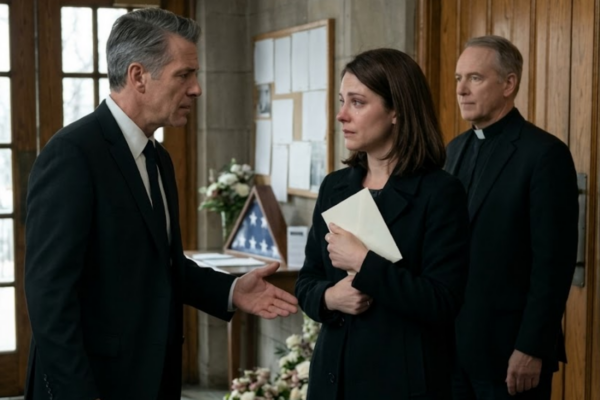
Her Family Mocked Her for Inheriting Just $1—Until a Second Lawyer Arrived the Next Morning and Took Her to a Secret Estate!
Her Family Mocked Her for Inheriting Just $1—Until a Second Lawyer Arrived the Next Morning and Took Her to a Secret Estate!
The house on Seventy-Fourth Street, to my son, Gordon. My investment accounts, to my son, Gordon. The six paintings, to my daughter-in-law, Celeste. To my granddaughter, Lucy Harlan, daughter of my late son, Daniel… one dollar. In the envelope she was handed this morning. One dollar. Let that sink in, kiddo.
Three years changing my mother’s sheets, and you really thought that bought you a house? It clears when the estate clears. I told you. Thirty days. We list the house Monday. And finally: “Any private arrangements I have made elsewhere will be handled by a separate executor.” A separate executor? Who? That’s all it says, Gordon.
Don’t spend it all in one place, cuz. Wade. You spent two years at a real firm in Midtown. Act like it. Trust who, Grandma? Lucy. Somebody’s going to knock. A stranger. With a letter, or a key. You open that door. Promise me. I promise. Is it snowing at Sparrow Hill? It’s snowing everywhere, Grandma. Go to sleep.
Lucy? Miriam Banks. Your grandmother’s other attorney. Thirty-eight morning. Seven tomorrow morning, at the curb downstairs. Pack for three days. And bring the dollar. You were outside that room today. Why didn’t you come in? Nobody invited me. And her business with me was never the family lawyer’s. My Lucy. That room full of laughter was my last test.
You passed it without even knowing. I know where they’ve put you. I’m sorry, sweetheart. The dollar isn’t your inheritance. It’s a receipt. There are people waiting for me to come home, and I can’t. Go and tell them for me. Tell them slowly, the way you sat with me. J. Trust her. Your grandmother gave me this car the year she paid my first bill. Seat belt.
Why like that? In front of all of them? She wanted to see if you’d break in that room. Crying, fine. Begging, no. Cruelty, no. If you’d lawyered up to fight them, you wouldn’t be in this car. Then why not just tell me? People carrying a secret walk differently. Your uncle can smell it from across a room. Three times, she had me drive her to a doctor.
They just asked her questions. What’s the date. What season is it. Count back by sevens. In pen. She did the crossword in the waiting room. In pen. I never knew why. Where are we going? A place called Sparrow Hill? You heard her say it. You just didn’t know where she meant. Here we are. That’s Pepper. She knew you were coming before you turned in.
Same with your grandmother. Come up here. Let me look at you. So you’re the granddaughter. One weekend every month she came up, and she talked about you half the night. Then she got sick. Three years of letters, all about you. When you were nine, did you get a Christmas card with a pressed violet? …Yes. I still have it.
That was me. You’re Opal. Her old friend upstate. That’s Augie. Thirty-nine years on the railroad. Fixes everything up here. His son hasn’t called in four years. Five, Sister Frances. Violin every evening. Badly. Number one, married fifty-three years. Their kids sold the farm and never told them. Seven, Dr. Mayfield.
Nights are getting hard for her. Twelve houses. Ten people. Every one of them got left at somebody’s door. Two hundred eighty acres, every building on it, and three point six million in investments. You’re the only beneficiary, and the only trustee. It earns about a hundred eighty thousand a year. It costs six hundred thousand to run.
Nurses, aides, heat, taxes, the Thursday doctor. And it goes up every year. That’s over four hundred thousand short every year. And the smaller it gets, the less it earns. It won’t last seven years. She knew the math. She wanted you to know it too. One condition. You serve one full year before you can sell the land or close the doors.
After that, it’s your call. And nobody changes these terms on their own. Only a court can. And if I just walk away now? Then I run it till the money’s gone, and the county puts everybody wherever there’s a bed. None of them have anywhere else. We’ve asked. I need a minute. Three months. Give me three months.
Then we’ll talk about the year. It took most of us a week just to unpack. Three months is fair. The clock starts today. One year. She used to bring me a boiled egg. Ten minutes. Hard. Bad night. She’ll sleep till ten. We need an aide who knows memory care. Nobody comes this far out for what we pay. We’re eating the principal.
Your grandmother saw three ways out. Fundraising, which none of us can do. A state grant. She got halfway through the application. It’s due in eleven weeks. And the third? Ask a court to change the trust terms, so foundations can fund specific care. Right now they can’t. Care changes aren’t locked by the one-year rule.
But somebody has to draft it, and a judge takes months. This isn’t a gift. It’s a job. I want to say this slowly. She’s not coming back. She died at home, two weeks ago. I was holding her hand. She wanted to come back to you. She sent me instead. Eternal rest grant unto her, O Lord. We figured. Been waiting on family to come say it.
Sixty-five years ago this May, she stepped off the Greyhound. Nineteen. One eye swollen shut. A paper sack with two dresses and a hairbrush. Married at seventeen. The night he broke her wrist, she got on the only bus out. My husband was the postmaster. He brought her home. She slept on our porch a whole week.
Too scared to come inside. She never told me. She waited tables, put herself through nursing school, married your grandfather. When he passed, she sat on that porch three days. Then she said, “I’m building a place for people who get left at the door. Little houses. A chapel that doesn’t preach. And it has to outlast me.
” Years later, Kendra got off that same bus with a paper sack. Sixteen. She used to do that. Every time, before she drove back to the city. My lawyer’s been on that “separate executor” line since the reading. Every property my mother ever transferred. There’s a county deed upstate, two hundred eighty acres, put in a trust years ago.
Last week, a new filing. Trustee, you. Attorney, Miriam Banks. What did she leave you? Twelve little houses. And ten old people with nowhere else to go. Then sell it. Keep a piece, send me the rest, find those people somewhere else. I made promises based on what my mother had. I’ve got problems of my own. There is nowhere else. We asked.
That’s not your problem. It is now. She’s using you, sweetheart. I’ll drive up tomorrow, and we’ll talk about this like family. Goodbye, Uncle Gordon. Then we get ready tonight. Miriam. Those three doctors. Did they write it down? Every word. Bring it all tomorrow. Three hours in the car. For a mud farm. Five-acre lots.
Lose the wetlands, you’ve still got fifty-some parcels. Two hundred grand apiece, give or take. Eight to ten million for the whole thing. These are the problem. They come down. Buyers want clean land. People live in those houses. People living there is temporary. Dr. Mayfield, this is my uncle Gordon. Jo’s son.
Mr. Harlan. Your mother was a good woman. I’m so sorry for your loss. Thank you. Fine. I’ve seen enough. Let’s go talk inside. The trust. The original. Airtight. She dictated. I drafted. I read the terms. We sign with a buyer now, and the sale closes the day your year is up. Five hundred thousand to you the day we sign.
Two and a half million more when it closes. The rest comes to me. You finish nursing school, buy a little apartment, have a normal life. The county places these folks, and I cover their first two years. Everybody’s taken care of. You think this is land. You think it’s money. It’s neither. It’s her promise. For forty years she kept it, every day, for people you wouldn’t look at twice on a sidewalk.
You keep asking what it’s worth. It doesn’t have a price. Then I’ll see you in court. Capacity. Undue influence. Whatever sticks. Those three doctor visits? I drove her. Every one. She didn’t miss a single question. Then she finished the crossword in the waiting room. In pen. She didn’t go for herself, Uncle Gordon.
She went for you. Three doctors, three years. You’ll lose, Gordon. And you’ll spend money you don’t have. Your company has three liens on it. I checked. You took her away from me. No. She chose. I’ve been sleeping in my car. Walmart lot in Jersey. Lost the job in November. He cut me off in December. Lost my apartment in January.
The drinking started way before all that. He made me come today. He thought we were coming to see what you stole. That day, at the reading… I laughed because for once, I wasn’t the one at the bottom of the list. I’m sorry, Lucy. I’ll go wait down by the road. He’ll remember he forgot me in about ten minutes.

He’s not coming back. Number four is empty. Stay tonight. We’ll figure out tomorrow tomorrow. I haven’t slept in a bed in seven weeks. Kendra! Number seven’s empty! Her shoes? Still by the door. The creek’s up. Go. I’m right behind you with blankets. I’m waiting for my son. He said he’d pick me up. I’m late. He’ll come to the house looking for you.
Let’s go home and get warm, and we’ll call him. Of course I can walk. Mild hypothermia. Nothing broken. Another half mile, and the creek would’ve had her. She needs real memory care. Her own room, alarms on the doors, two aides on rotation. It isn’t cheap. But it’s doable. Let me help. Before I blew it, I was a junior analyst in Midtown for two years.
Trust restructuring. Grant applications. Give me sixty days at that kitchen table. If I’m no use by then, I’ll leave on my own. Number four is yours. You pay rent. You work. And there’s a meeting in the church basement in town, Tuesday nights. Today’s Tuesday. My old boss knows a care foundation. They’re interested.
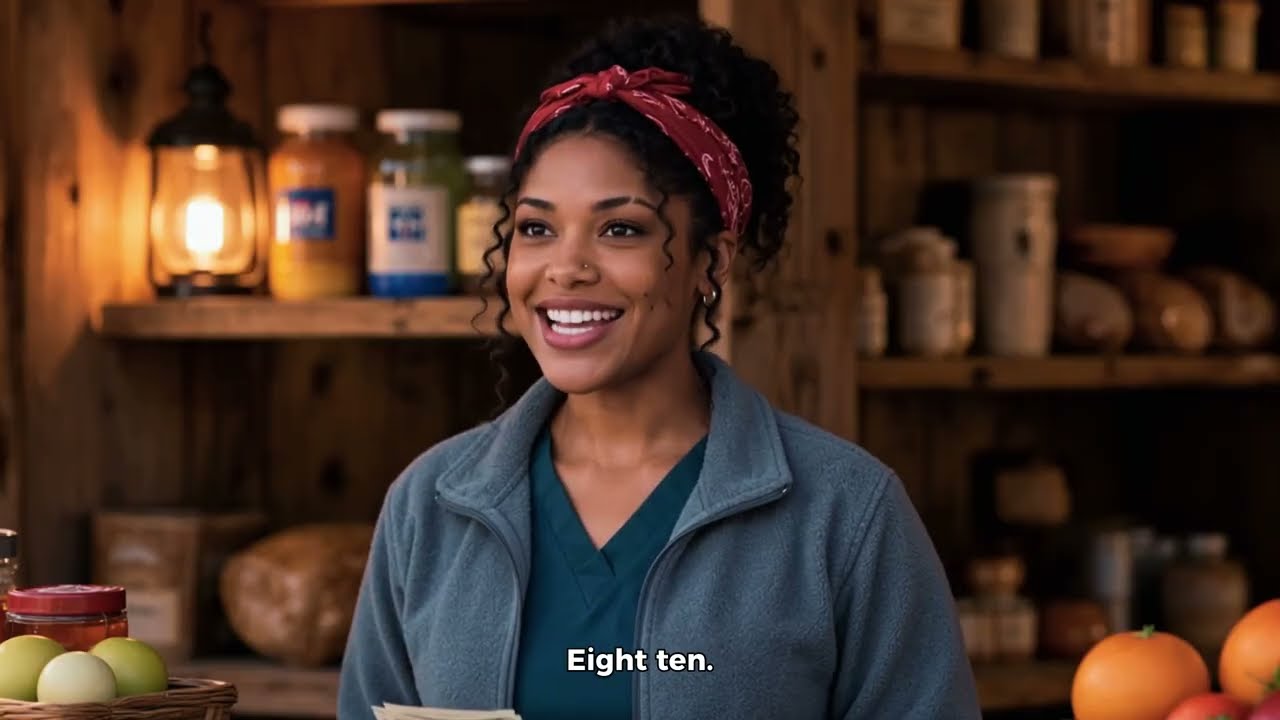
Good. Once the judge signs. Eight ten. If Jo could see you now, she’d be grinning ear to ear. You’re good at this. Thank you, ma’am. When Sparrow Hill fell through, every lender I had called in the loans. The company’s gone. The house on Seventy-Fourth went to the bank. Celeste left. Took the paintings. I’m in a hotel by the airport.
My mother ruined me from the grave. And you helped her. When you’re sober, come up here. There’s an empty house. There’s work. Your son is here. You don’t owe me anything. I don’t. I’m inviting you. The door’s not locked. The court signed it. The change is approved. That was him. He found a meeting near that hotel.
Two months now. He hasn’t had a drink. Did the state grant come through? Not yet. Soon. She left this place to you. But she meant for it to go through you. She didn’t need the land. She needed somebody to keep doing it. Put the kettle on at five. Knock on number seven. Carry somebody else’s grandmother home from the creek at three in the morning.
You can’t sell that. You can’t split it. That’s the only kind of thing worth leaving anybody. My cornbread. I wrote that last line ten years ago. Keep it where that dollar is. Bury me behind the chapel, next to my husband. And nobody wears black who doesn’t already own some. Thank you for keeping that porch.
Jo’s instructions. Rows of chairs, like the reading in the city. The state grant came through. Two hundred forty thousand over three years. The foundation’s in for ten years. The county covers home visits, and the store helps. We were four hundred thousand short a year. Now it’s just over a hundred. Keep this up, and the principal lasts twenty years and more.
As for the terms. The trustee has now served one full year. As of today, she may sell the land. She may close the doors. We’re not selling. We’re staying. She left one more. To be opened only if her son came. To my son, Gordon… one dollar. It’s the same receipt I left your niece. It won’t buy a thing at the bank.
Here, it buys a door. If she’ll open it. I laughed at you. Go ahead. Tell me to let it sink in. Breakfast is at eight. You’re on eggs. Augie’s are ten minutes. Hard. It’s snowing at Sparrow Hill, Grandma. I’m Lucy. Come on in. There’s a fire going, and coffee.
They said… there might be room here. There’s room.
The sound that filled the thirty-fourth-floor conference room on Madison Avenue was not grief, but the sharp, unrestrained crack of family laughter.
It began in the throat of Gordon Harland, a man whose bespoke charcoal suit could not conceal the heavy, predatory slouch of an executive accustomed to taking whatever was left undefended on the table. It spread across the mahogany surface to his wife, Celeste, who dabbed at the corners of her carefully painted lips with an embroidered handkerchief, and finally reached their twenty-two-year-old son, Wade, who shook his head in derisive delight, his loafers propped casually on the brass rim of his chair.
Between them sat twenty-four-year-old Lucy Harland, her knuckles white against the edge of a plain, cream-colored document envelope that had just been slid across the table by the family’s estate attorney, Arthur Vance.
Inside the envelope was a single, crisp United States one-dollar bill. Nothing else.
“To my granddaughter, Lucy Harland, daughter of my late son Daniel,” Vance had read in his measured, dry baritone, clearing his throat as if attempting to dislodge the awkwardness of the sentence, “one dollar, in the envelope she was handed this morning.”
Gordon leaned forward, slamming his palms flat against the polished wood so hard that the crystal water tumblers rattled.
“One dollar,” Gordon mocked, his voice thick with malicious satisfaction. “Let that sink in, kiddo. Three entire years of changing my mother’s sheets, cooking bland soup, and wiping drool off her chin. And you really thought that bought you a house in Manhattan?”
Celeste gave a musical, cruel snicker. “She honestly thought she was going to be the martyr who inherited the crown, Gordon. Look at her. She wore her best church blouse.”
“Don’t spend it all in one place, cousin,” Wade added, adjusting the cuff of his shirt, mimicking his father’s posture with the practiced cynicism of a young man who had just spent two years doing nothing of consequence at a midtown financial firm.
Lucy did not look up. Her fingernails dug into the palm of her left hand, leaving crescents of white that flared into crimson. For three uninterrupted years, her life had been measured out in medicine dosages, oxygen tank refills, laundry machines churning at two in the morning, and the quiet, agonizing decline of Josephine Harland. She had abandoned her final semesters of nursing school, given up her rented room, and slept on a fold-out cot beside Jo’s bed on 74th Street because Jo had begged her, in tears, not to let Gordon put her into a private hospice ward.
During those thirty-six months, Gordon had visited exactly four times—each visit lasting under ten minutes, invariably ending in a loud argument over power of attorney and real estate appraisals. Wade had never set foot in the bedroom. Celeste had sent scented candles and a card at Christmas.
Now, Vance resumed reading the formal distribution of the assets. The brownstone on East 74th Street, valued at six million dollars, went outright to Gordon. The primary liquid investment portfolios, totaling four million dollars, went to Gordon. The six original landscape oil paintings by modern American masters, hanging in the parlor since the mid-century, went to Celeste.
Then came the final paragraph of the document:
“And finally, any private arrangements I have made elsewhere will be handled by a separate executor.”
Gordon frowned, cutting the attorney off with an impatient wave. “Separate executor? What does that mean, Arthur? What separate executor? Who?”
Vance adjusted his reading glasses, squinting at the page. “That is all the document states, Gordon. It is a standard residuary carve-out. It merely acknowledges that any off-balance-sheet personal papers or non-probate directions are entrusted to an independent administrator named under separate seal. There is no asset attached to this paragraph in the primary schedule.”
Gordon grunted, dismissing it instantly. “Probably some ancient church donation or her sewing circle. Whatever it is, it clears when the estate clears. The listing goes live for 74th Street by Monday morning. I’ve already got a developer looking at the lot.” He glanced back at Lucy, shaking his head. “Take the dollar, kid. Go buy yourself a subway pass back to whatever basement you came from.”
Lucy picked up the envelope, slid the single dollar bill inside her coat pocket, and walked out of the glass-and-steel tower into the cold gray wind of the avenue without speaking a single word.
The Knock
That night, the small studio apartment in Queens was silent except for the low hum of an aging refrigerator. Lucy sat at her laminate kitchen table, the single dollar bill resting beside an empty mug of tea.
Her mind kept circling back to the final hours of Josephine Harland’s life. The old woman had been drifting in and out of lucidity for days, her skin paper-thin and translucent against the white cotton pillows. Yet on that final afternoon, her grip on Lucy’s wrist had been astonishingly firm.
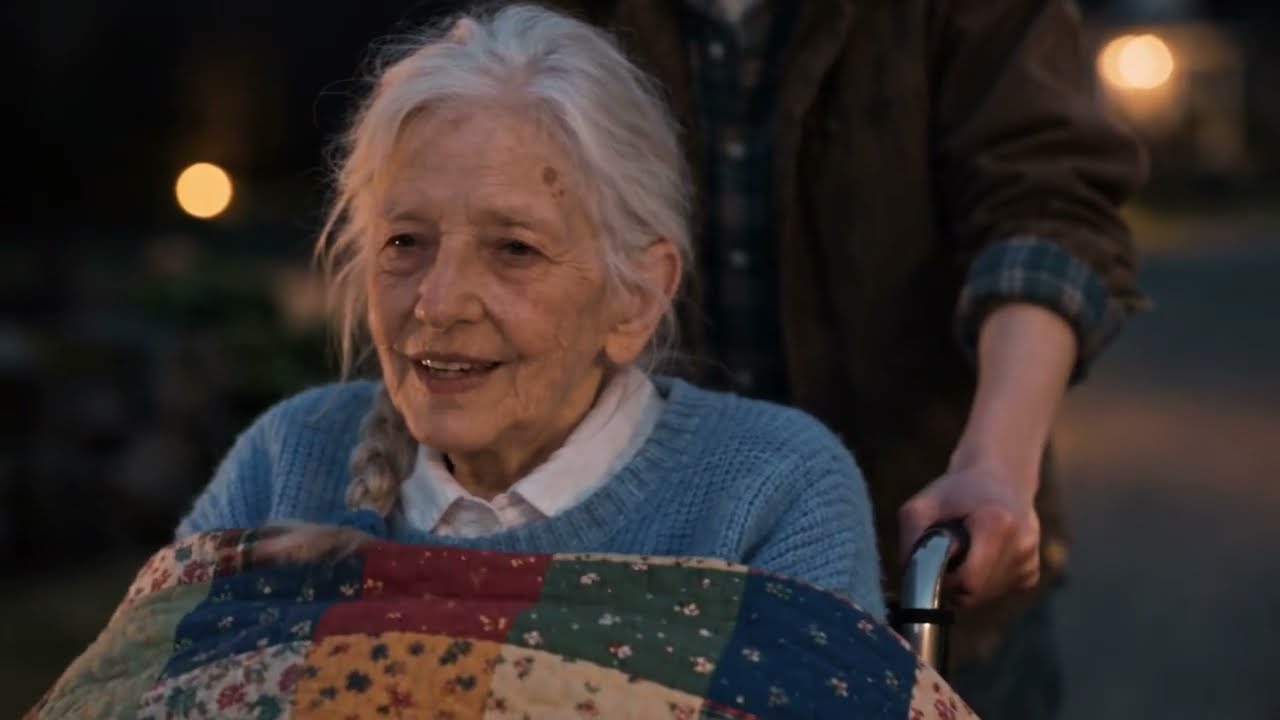
“Lucy,” Jo had whispered, her breath shallow, her clouded eyes suddenly focusing with absolute clarity. “Somebody is going to knock. A stranger with a letter or a key. You open that door. Promise me.”
“I promise, Grandma,” Lucy had replied, smoothing back Jo’s white hair.
“Is it snowing at Sparrow Hill?” Jo had asked, staring past Lucy into the corner of the ceiling.
“It’s snowing everywhere, Grandma. Go to sleep.”
Now, sitting in the dark of Queens, Lucy wondered if the old woman’s mind had simply broken beneath the weight of age, or if the entire three-year ordeal had been an elaborate, cruel joke designed to prove that loyalty carried no tangible value in the world of the Harlands.
At precisely six in the morning, a heavy, deliberate knock echoed through the door.
Lucy froze. She stood up slowly, walked to the threshold, and looked through the brass peephole.
Standing in the dimly lit hallway was an older woman wearing a tailored charcoal wool coat and flat leather driving boots. Her hair was silver, pulled back in a severe, no-nonsense bun, and she carried a battered leather briefcase under one arm.
Lucy turned the deadbolt and cracked the door open, keeping the chain engaged. “Can I help you?”
“Lucy Harland?” the woman asked. Her voice was calm, resonant, and entirely devoid of hesitation. “I am Miriam Banks. I was your grandmother’s attorney for thirty-eight years.”
Lucy blinked, her pulse quickening. “Arthur Vance is the family attorney. He read the will yesterday.”
“Arthur Vance was Gordon’s attorney, hired to handle the public probate of the 74th Street house,” the woman replied, her expression unwavering. “He knew only what Josephine wanted him to know. My appointment downstairs is for seven o’clock. Pack a bag for three days, bring warm clothes, and bring the dollar.”
“Why didn’t you come to the reading yesterday?” Lucy asked. “If you represented my grandmother, why leave me in that room alone?”
“Nobody invited me,” Miriam Banks stated simply. “And Josephine’s business with me was never meant for the family lawyers. I will be at the curb in a dark blue sedan. Do not be late.”
The Route North
Forty minutes later, Lucy descended the concrete steps of the Queens apartment building with an old duffel bag slung over her shoulder. The blue sedan was idling at the curb, its exhaust curling into the damp morning air.
Miriam Banks reached across from the driver’s seat and pushed open the passenger door. “Seat belt,” she said as Lucy slid in.
As the car merged onto the highway, leaving the sprawl of the city behind for the ascending hills of upstate New York, Lucy stared at the dashboard. “Where are we going?”
“A place called Sparrow Hill,” Miriam answered. “You heard your grandmother say the name in her last days, did you not? You simply did not know what it was.”
“Why did she do it like that yesterday?” Lucy asked, the raw humiliation of the conference room still burning behind her eyes. “In front of Gordon, Celeste, and Wade? Why give them the pleasure of laughing at me?”
Miriam kept her eyes on the road ahead, her hands steady on the steering wheel. “Your grandmother wanted to see if you would break in that room. Crying was acceptable; she expected you to be hurt. But she wanted to know if you would beg. She wanted to know if you would turn cruel, or if you would hire an aggressive litigator to tear the family apart out of sheer spite. If you had shown that you were made of the same material as Gordon, you would not be in this car right now.”
“Why couldn’t she just tell me while she was alive?”
“Because people who carry a secret walk differently,” Miriam said dryly. “And your uncle Gordon has spent fifty years smelling opportunity and advantage from across a room. If you had known what was coming, he would have realized it within ten minutes of seeing your face. He would have filed an injunction before Josephine drew her last breath.”
Miriam glanced at Lucy in the rearview mirror. “Over the past three years, Josephine had me drive her to three independent neurologists and forensic psychiatrists in the state. Every single visit, they ran comprehensive cognitive evaluations. They asked her the date, the season, to identify drawings of animals, and to count backward from one hundred by sevens. She did every test in black pen. In the waiting room, while waiting for the results, she solved the New York Times crossword puzzle—also in pen. I have three separate medical certifications signed by board-certified department heads stating she was of sound mind, iron memory, and completely free of undue influence.”
“Why would she do that if she was leaving everything to Gordon?” Lucy asked.
“She wasn’t doing it for herself,” Miriam answered. “She was doing it for Gordon. She knew precisely what he would attempt to do once he discovered the truth.”
Sparrow Hill
Three hours north of the city, the highway gave way to county two-lane blacktop, then to a winding gravel road lined with ancient, towering hemlocks and stone walls overgrown with wild blackberry brambles.
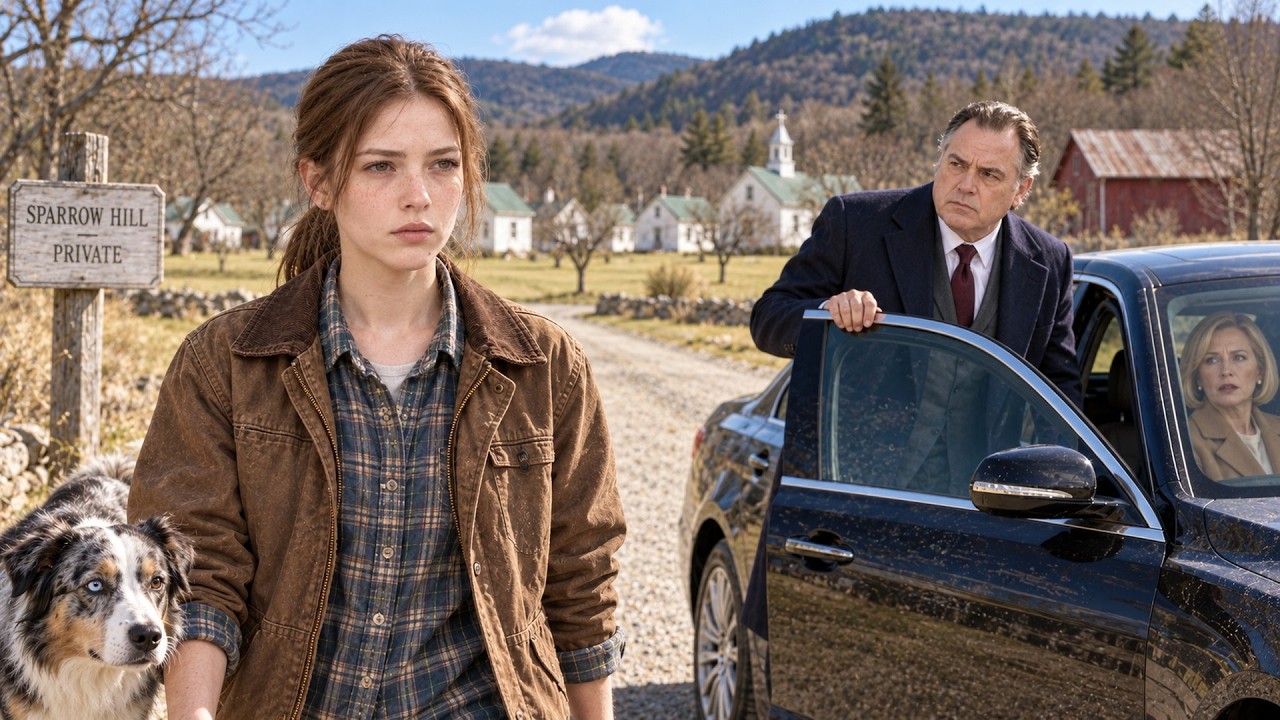
The car turned through a modest entrance marked by two simple fieldstone pillars. A weathered wooden sign swung gently from an iron post: Sparrow Hill.
Beyond the gate lay an expanse of rolling, snow-dusted meadows, dense groves of pine, and a quiet cluster of twelve stone-and-timber cottages surrounding a central commons building and a modest clapboard chapel. Smoke rose in thin, steady plumes from several chimneys, drifting into the crisp mountain air.
As the car pulled to a stop before the main lodge, a border collie bounded down the porch steps, barking with low, welcoming yips.
“That’s Pepper,” Miriam said, turning off the ignition. “She knew you were coming before we cleared the lower bend. Just like your grandmother.”
An older woman stepped onto the wide timber porch, wiping flour from her hands onto a blue gingham apron. Her hair was gathered in a thick braid, her face deeply lined with decades of exposure to wind and sun. She walked with a sturdy, deliberate gate, her sharp eyes studying Lucy as she stepped out of the vehicle.
“Come up here,” the woman commanded, her tone direct but not unkind. “Let me look at you.”
Lucy climbed the porch steps, feeling the woman’s gaze take in every detail of her worn winter coat and tired eyes.
“So you’re the granddaughter,” the woman murmured, the lines around her mouth softening. “One weekend every month, Josephine would drive up here, sit in that rocker by the hearth, and talk about you half the night. Then she got too sick to travel, and for three years, all we received were letters about you. When you were nine years old, did you receive a Christmas envelope containing a pressed blue violet?”
Lucy’s eyes widened. “Yes. I still have it kept in my Bible.”
“That was me,” the woman said. “I am Opal. I was your grandmother’s friend long before she built all of this.”
Opal turned, gesturing toward the cluster of cottages across the commons. “You need to know who lives here, Lucy. Over in Cottage Three is Auggie. Thirty-nine years working the upstate rail lines until an engine crane crushed his hip. He can fix any boiler or generator within twenty miles, but his son hasn’t picked up the phone to call him in four years. Over in Cottage Five is Sister Francis. She plays the violin every single evening at dusk—terribly, mind you, but none of us have the heart to tell her to stop. In Cottage One is a couple who were married for fifty-three years; their children sold their dairy farm out from beneath them through power of attorney and never left a forwarding address. In Cottage Seven is Dr. Mayfield. She was a family practitioner who treated poor farmers for half a century for bushels of apples and firewood; now the nights are getting difficult for her to remember where she is. Twelve houses. Ten residents right now. Every single one of them was left at somebody’s door.”
The Accounting
Miriam Banks led Lucy inside the central commons, where a long oak trestle table was covered in ledgers, survey maps, and legal bindings. A fire crackled in the river-rock hearth, throwing shadows across the yellowed pages of county deeds.
“Here is the reality of Josephine Harland’s estate,” Miriam said, tapping a thick stack of blue-backed legal instruments. “Two hundred and eighty acres of deeded, unencumbered land. Every building on it, fully constructed and maintained. An endowment trust containing three point six million dollars in conservative municipal bonds and fixed-income assets. Under the terms of the private trust executed six years ago, you are the sole beneficiary and the sole trustee.”
Lucy stared at the numbers, her breath catching. “Three point six million dollars? But Gordon—”
“Gordon received what he valued: a house he will sell to developers and stocks he will gamble away in bad commercial ventures,” Miriam interrupted sharply. “Now, listen to the rest of the ledger, Lucy, because this is not a windfall. It is a burden.”
Miriam pulled forward a ledger written in Josephine’s distinct, firm script.
“The trust generates approximately one hundred and eighty thousand dollars a year in yield,” Miriam explained, her finger tracing down the column of figures. “It costs six hundred thousand dollars a year to operate Sparrow Hill. We employ licensed visiting nurses, overnight personal care aides, maintain the private water system, pay property taxes, cover winter heating oil, and fund the Thursday clinic doctor. Every twelve months, this sanctuary runs an operating deficit of over four hundred thousand dollars. We are eating the investment principal every single month. At the current burn rate, without substantial intervention, the money will be completely exhausted within seven years.”
The room fell dead silent except for the crackle of pine logs in the fireplace.
“She knew the mathematics,” Miriam continued, looking directly into Lucy’s eyes. “And she insisted that you know them before you accepted a single responsibility. There is one non-negotiable condition attached to the trusteeship: you must serve as the on-site administrator for one full year before you have the legal power to sell the land or close the doors. After twelve months, it is your call. You can shut it down, auction off the parcels to developers, and walk away with several million dollars in personal wealth. Nobody can alter these terms without a supreme court petition. And if you choose to refuse the trust today, I am legally obligated to run the property until the final dollar is spent, after which the county will take wardship of the residents and distribute them to state-run nursing homes across the region.”
Lucy turned her head toward the frost-etched window. Across the snow, an elderly man in a heavy chore coat was carrying a basket of kindling up the steps of Cottage Three, his limp pronounced against the white drifts.
“None of them have anywhere else to go, do they?” Lucy asked quietly.
“We have spent months searching for family alternatives,” Miriam said. “There are none.”
Lucy pulled the crumpled dollar bill from her coat pocket and set it down in the center of the survey map.
“My grandmother said this wasn’t an inheritance,” Lucy whispered. “She said it was a receipt.”
“It is a receipt for a contract,” Miriam agreed. “The question is whether you intend to honor it.”
Lucy drew a long, slow breath of cold air. “Give me three months. Then we will talk about the rest of the year. It took my grandmother decades to build this. I will give it ninety days to prove whether it can survive.”
“The clock starts today,” Miriam said, sliding the trustee registration across the table. “Sign your name.”
The Crisis at Cottage Seven
The reality of managing Sparrow Hill set in not as a grand administrative endeavor, but as an unending succession of physical labor, cold dawns, and relentless logistical friction.
Lucy moved into the small attic room above the central office. By four-thirty every morning, she was in the main kitchen helping Opal start the wood stoves and brew industrial-sized kettles of coffee. By six, she was organizing medication trays for the visiting nurse, cross-checking prescription schedules, and balancing accounts payable against an endowment balance that fell by thousands of dollars each week.
On a freezing morning in early winter, the fragile equilibrium broke.
Lucy was reviewing heating oil invoices at the kitchen table when Opal rushed into the room, her coat unbuttoned, breath coming in white plumes.
“It’s Dr. Mayfield,” Opal said, her voice shaking. “Number Seven is empty. Her front door was hanging open, and her walking shoes are still sitting on the porch mat. The creek is running high from the thaw.”
Panic spiked through Lucy’s chest. Outside, the temperature hovered near eighteen degrees, with a cutting north wind sweeping across the meadows.
“Get Auggie and Sister Francis to check the chapel and the outbuildings,” Lucy commanded, grabbing heavy woolen blankets and a heavy work flashlight. “Call the emergency squad. I’m taking the creek trail.”
Lucy sprinted down the frozen dirt track that skirted the perimeter of the property. Snow crunched beneath her boots as she scanned the tree line, her breath burning in her lungs. The creek rushed violently along the bottom of the ravine, swollen with meltwater and choked with jagged chunks of shelf ice.
A hundred yards into the timber, Lucy caught sight of a pale blue cardigan snagged on a thorn bush.
Ten yards further, sitting on a frost-covered boulder at the water’s edge, was Dr. Mayfield. Her hands were bare, purple from the cold, and her thin cotton nightgown was soaked through at the hem. She was staring blankly into the rushing water, shivering violently.
“Dr. Mayfield!” Lucy cried, sliding down the embankment on her heels.
The older woman looked up, her gaze vacant, teeth chattering so hard she could barely form words. “I… I have to wait here. My son said he was picking me up after his shift. I’m going to be late for the clinic.”
Lucy wrapped the thick woolen blankets tightly around the trembling woman, pulling her against her own chest to share body warmth. “Dr. Mayfield, it’s Lucy. Josephine’s granddaughter. Your son called—he said you should come back up to the house and get warm by the kitchen stove. We’re going to call him together.”
Dr. Mayfield blinked slowly, confusion warring with the instinct to find warmth. “Josephine? Is Josephine in the kitchen?”
“She has coffee waiting,” Lucy lied gently, wrapping her arms beneath the woman’s shoulders and hauling her to her feet. “Lean on me. Step by step.”
By the time Lucy dragged the doctor back up the embankment to the main drive, the county ambulance was screaming up the road, its red lights sweeping across the bare branches of the pines.
In the small infirmary room behind the commons, the paramedic checked Dr. Mayfield’s core temperature and wrapped her in warming pads. “Mild hypothermia,” the paramedic reported, sighing as he packed away his monitoring kit. “Nothing broken, but another twenty minutes down by that creek and her heart would have arrested. Miss Harland, this woman cannot be left alone in an unmonitored cottage anymore. She needs dedicated memory care. Alarms on every exit, continuous overnight monitoring, and two specialized aides on rotating shifts. That’s going to run you at least six to eight thousand dollars a month on top of what you’re already spending.”
Lucy sat by the bed, holding Dr. Mayfield’s warming hand, feeling the crushing weight of the numbers closing in. The trust was already hemorraging thirty-five thousand dollars a month. Adding private memory care would shorten their survival window from seven years to less than four.
The Intrusion
Before Lucy could resolve the medical budget, the gravel driveway crunched beneath the tires of a luxury black SUV.
Lucy stepped onto the porch as the car doors opened. Gordon Harland stepped out, wearing a sheepskin-lined designer coat and polished leather boots entirely unsuited for the muddy yard. Behind him trailed his son, Wade, his face pale and drawn, his collar turned up against the cold.
Gordon surveyed the property with the cold, assessing eye of an auctioneer. “Three hours through the woods for a glorified mud farm,” he muttered, turning to Wade. “Look at this acreage. If you clear the timber and get the wetlands surveyed, you could carve this into fifty five-acre recreational lots. Two hundred grand a parcel, minimum. That’s ten to twelve million for the entire footprint.”
Gordon looked up, noticing Lucy standing on the porch. A smirk spread across his face as he walked toward the steps.
“Well, well,” Gordon said, resting a boot on the bottom riser. “The family martyr in her natural habitat. I have to hand it to you, Lucy. You played Vance like a fiddle. You let me take the 74th Street house with all its deferred maintenance, while you quietly snuck up here to claim two hundred and eighty acres of prime Sullivan County real estate.”
“Grandma didn’t leave this land to me to sell, Uncle Gordon,” Lucy said, her voice completely level. “She left it to protect the people who live here.”
Gordon gave a loud, dismissive bark of laughter. “Don’t preach to me about charity. My attorney pulled the county deed filings three days ago. The trust named you sole trustee, with Miriam Banks as administrator. And I also had an accountant look at the public filings for this operation. This place is an economic suicide pact. You’re bleeding cash faster than a wounded animal.”
He stepped up another stair, pulling a legal document from his breast pocket.
“Here is how this works,” Gordon said, lowering his voice into a conspiratorial pitch. “We sign an agreement today. A private purchase option. The sale closes the exact day your mandatory one-year trusteeship expires. I give you five hundred thousand dollars in cash today, out of my personal account. When the land closes, you receive another two and a half million dollars clear. You go finish your nursing degree, buy a nice condo in Brooklyn, and live your life. As for these ten old folks living in the huts, I’ll pay for the county to place them in licensed state facilities for two full years. Everybody wins. Everybody is taken care of.”
Lucy looked past Gordon to the cottages, where Auggie stood quietly by the woodshed, watching the confrontation with a heavy wrench held in his calloused hand.
“You think this is land, Gordon,” Lucy said, refusing to use his familial title. “You think it’s square footage and timber rights. It isn’t. It’s an unbroken promise. For forty years, my grandmother kept a roof over people you wouldn’t bother to step over on the sidewalk. You keep asking what it’s worth. It doesn’t have a price.”
Gordon’s face darkened, the veneer of pleasant negotiation peeling away instantly. “Then I will see you in county surrogate court, little girl. I will file an action to break this trust before the week is out. Lack of testamentary capacity, elder abuse, undue influence by that dried-up lawyer Miriam Banks. I’ll subpoena every medical record Josephine ever signed.”
“You should speak to Miriam before you waste your money,” Lucy answered coldly. “Every single medical record has already been certified by three independent heads of psychiatry. Josephine took those tests specifically so your lawsuits would be thrown out at the first hearing. She didn’t take those tests to protect herself from you, Gordon. She took them to ensure that every cent you spent fighting her would come straight out of your own pocket.”
Miriam Banks stepped onto the porch from the office, holding a folder of certified court abstracts. “And Gordon,” Miriam added with icy precision, “before you spend fifty thousand dollars on a retainer, you might want to look at your own company’s filings. You have three commercial liens filed against your firm in Manhattan, and the bank initiated foreclosure proceedings on your Madison Avenue lines of credit yesterday morning. You don’t have the money to sue a dog, let alone this trust.”
Gordon’s mouth pressed into a thin, violent line. He stared at the two women, then turned on his heel toward his SUV. “Get in the car, Wade,” he snapped.
Wade stood frozen near the wellhouse, his eyes fixed on the frozen ground. He did not move.
“Wade! I said get in the damn car!” Gordon bellowed.
“No,” Wade said. The single syllable was quiet, but it hung in the cold air like a shot.
Gordon turned, his face flushed with rage. “What did you say to me?”
“I’m not getting in,” Wade said, looking up. His voice shook, but his jaw was set. “I’ve been sleeping in my car in a Walmart parking lot in Secaucus for three weeks. You fired me from the company in November when the accounts went red. You cut off my credit cards in December. Celeste changed the locks on the apartment in January. I only came up here today because you told me you were going to collect a debt.”
Gordon stared at his son with disgust. “You pathetic, drunken little failure. You think this farm is going to save you?”
“Get off this property, Gordon,” Miriam Banks said, her voice dropping into a register of absolute legal authority. “If your vehicle is not past those stone pillars in sixty seconds, I am calling the county sheriff to have you arrested for criminal trespass.”
Gordon climbed into the driver’s seat, slammed the door, and sprayed gravel and slush as he spun the vehicle around and roared out through the stone gates.
The Defector
Wade stood alone in the driveway, his hands shoved into the pockets of a light wool coat that offered no defense against the freezing upstate wind. He was shivering, his breath ragged, staring down at his worn dress shoes.
“I laughed at you,” Wade whispered, not looking at Lucy. “At the reading. I laughed because for the first time in my life, I wasn’t the one sitting at the absolute bottom of the list. He spent twenty years telling me I was worthless, and when the money started running out, he threw me away like an old shoe.”
Lucy walked down the porch steps, stopping a few feet from her cousin. She could see the deep dark circles under his eyes, the slight tremor in his fingers, and the unmistakable grey pallor of chronic malnutrition and exhaustion.
“Number Four is empty,” Lucy said quietly. “Auggie put fresh split oak beside the stove this morning. There’s soup in the kitchen.”
Wade looked up, his eyes glassy with unshed tears. “Lucy, I don’t have a dollar to my name. I don’t have anywhere to go.”
“Then stay tonight,” Lucy replied. “We will figure out tomorrow when tomorrow comes.”
The next morning, Wade was sitting at the pine table in the commons before sunrise, holding a steaming mug of black coffee with both hands. When Lucy came down the stairs, he pushed a lined yellow legal pad toward her.
“I spent two years in trust structuring at that midtown firm before Gordon pulled me into his real estate mess,” Wade said, his voice quiet but focused. “I know how these non-profit healthcare vehicles are set up. Josephine’s trust has an airtight operating shell, but it’s structured as a closed private instrument. That’s why you can’t accept public foundation money or tax-deductible healthcare grants. You’re locked out of the entire non-profit funding apparatus.”
Lucy sat down opposite him, studying the neat, meticulous financial flowcharts he had drawn during the night.
“What does that mean in practice?” she asked.
“It means we file a petition under the state estates, powers, and trusts laws to amend the trust’s administrative provisions,” Wade explained, pointing with a pen. “We don’t touch the land covenant—the one-year rule and the ban on commercial development stay completely intact. But we modify the operational language to allow third-party programmatic support. There is a state rural health grant due in eleven weeks that provides two hundred and forty thousand dollars over three years for remote memory care. And my former division head in Manhattan sits on the board of a private geriatric foundation. If we present them with a restructured care model and professional financial controls, they can underwrite the nursing salaries directly.”
Wade looked at Lucy, his hands trembling slightly as he set the pen down. “Give me sixty days at this table. If I can’t secure the bridge funding, I will pack my bag and walk down to the highway. But let me work.”
Lucy looked at the boy who had mocked her twenty-four hours earlier, seeing beneath the arrogance the wreckage of a child raised by Gordon Harland.
“Number Four is yours,” Lucy said. “You pay rent by doing the accounting. You cut firewood with Auggie every afternoon. And there is an open support meeting in the basement of the Methodist church in town on Tuesday evenings. Today is Tuesday. You will be there at seven o’clock.”
Wade swallowed hard and nodded. “Seven o’clock.”
The Reconstruction
Over the next six months, the rhythm of Sparrow Hill changed from a slow retreat against inevitable bankruptcy into an organized, determined campaign for survival.
Wade Harland worked eighteen hours a day at the oak table, his laptop surrounded by stacks of municipal grant applications, tax returns, and financial projections. He attended the church meetings every Tuesday without fail, his eyes gradually clearing, the tremor leaving his hands as his muscles thickened from hauling firewood and repairing roof shingles alongside Auggie.
In late spring, the state surrogate court granted the petition to amend the administrative provisions of the Harland Trust, formally enabling the sanctuary to receive non-profit medical subsidies.
Three weeks later, a formal letter arrived from the state health department: the rural memory care grant had been approved in full, providing eighty thousand dollars annually for three years to establish a dedicated, secure care suite for Dr. Mayfield and future residents requiring advanced cognitive support. By mid-summer, Wade’s former firm helped broker a ten-year matching endowment from a regional healthcare foundation, committing one hundred and fifty thousand dollars annually toward licensed nursing salaries.
Combined with community clinic partnerships, local agricultural exemptions, and an upstate farm-share program operated out of the lower meadows, the annual operating deficit plummeted from four hundred thousand dollars to less than eighty thousand—an amount easily covered by the trust’s baseline investment income.
The financial bleed had stopped. The principal was secure for generations.
The Fall of the House
While Sparrow Hill stabilized, the collapse of Gordon Harland’s empire accelerated with brutal momentum.
Bereft of the upstate acreage he had promised to private equity developers, Gordon’s creditors moved in with ruthless efficiency. His commercial real estate ventures defaulted on their mezzanine loans, triggering cross-default clauses across his entire portfolio.
Within eight months of the reading of the will, the brownstone on East 74th Street was seized under a judicial order of foreclosure to satisfy a nine-million-dollar judgment held by a commercial bank. Celeste filed for divorce, successfully petitioning for the liquidation of the six family oil paintings to settle her personal liabilities before departing for an apartment in Florida.
On a rainy afternoon in late autumn, the office telephone at Sparrow Hill rang. Lucy picked it up.
“Lucy?”
The voice on the other end was barely recognizable—haggard, slurred, and stripped of all its former booming arrogance.
“Uncle Gordon?”
A ragged sigh came through the receiver. “The bank took the house yesterday. The company was placed into Chapter 7 receivership on Friday. I’m… I’m staying in a motor lodge near LaGuardia. Your grandmother ruined me. She planned this. She knew if I didn’t get that upstate land, the entire house of cards would come down.”
“Grandma didn’t ruin you, Uncle Gordon,” Lucy said quietly, looking out the window at the meadow where the first leaves of October were turning gold. “She just refused to let you ruin Sparrow Hill to save yourself.”
Silence hung on the line for nearly a minute.
“Is Wade still there?” Gordon asked, his voice cracking with humiliation.
“He is,” Lucy answered. “He runs our financial operations. He hasn’t had a drink in eight months. When you are sober, Gordon, you can take a bus up here. There is an empty cottage. There is work to be done. Your son is here.”
Gordon did not answer. The line went dead.
The Full Circle
Exactly one year from the morning Miriam Banks had driven Lucy through the stone gates, the residents of Sparrow Hill gathered in the small clapboard chapel on the commons.
The morning air was crisp, carrying the scent of woodsmoke and damp cedar. Ten elderly residents sat in the front rows, accompanied by three full-time nursing aides. Opal sat beside Sister Francis, who held her violin resting across her knees. Dr. Mayfield sat comfortably in a warm cardigan, her hand resting peacefully in Wade’s.
Miriam Banks stepped to the lectern, unrolling a formal legal document with the red seal of the state surrogate court.
“As of today,” Miriam announced to the room, her voice carrying through the quiet sanctuary, “the designated trustee, Lucy Harland, has completed the mandatory twelve-month administrative term required under the deed of trust. Under the specific terms established by Josephine Harland, the trustee now possesses the absolute, unilateral legal power to sell the land, liquidate the assets, and dissolve this facility.”
Miriam looked across the aisle at Lucy, who stood beside the altar wearing her standard work clothes—denim, heavy boots, and her grandmother’s silver wristwatch.
“Miss Harland,” Miriam asked formally, “what is your instruction to this court?”
Lucy stepped forward, looking at the faces looking back at her from the pews. She looked at Auggie, whose hands were resting on his wooden cane; at Opal, who had sheltered a frightened nineteen-year-old Josephine on her porch sixty-five years before; and at Wade, whose life had been pulled back from the brink of destruction within these walls.
“We are not selling,” Lucy said clearly. “We are staying.”
A soft, collective breath moved through the chapel. Sister Francis raised her bow to the strings of her instrument, playing a low, imperfect, beautiful melody that echoed into the timber rafters.
Miriam nodded, setting the paper down. “Then there is one final instruction to be executed. Josephine left a second sealed envelope, to be opened only if her son Gordon ever presented himself at these gates.”
The chapel door at the back creaked open.
Standing in the doorway, his silhouette framed against the morning light, was Gordon Harland. He wore a frayed canvas coat, his hair completely white, his posture stooped. He carried a single battered suitcase, his face marked by months of bitter defeat and the hard, humbling beginnings of sobriety.
Gordon walked slowly down the center aisle, stopping five paces from the altar. He did not look at the residents; his eyes remained fixed on the floorboards between his worn shoes.
Miriam opened the heavy manila envelope and withdrew a single piece of paper, reading Josephine’s final words aloud:
“To my son, Gordon. If you are hearing these words, it means your empire has failed you, your pride has bankrupted you, and you have finally run out of places to run. In this envelope is one dollar. It is the exact same dollar I left your niece Lucy.
It will not buy you a single meal at a restaurant, and it will not buy you a night in a hotel. But at Sparrow Hill, it buys you an open door—if your niece chooses to unlock it for you.”
The room was completely still.
Gordon stood trembling, his head bowed, waiting for the mockery, the laughter, and the revenge he knew he deserved. He waited for Lucy to repeat the words he had sneered at her in the Madison Avenue high-rise—to tell him to take his dollar and let it sink in.
Lucy stepped down from the altar, walked directly to her uncle, and extended her hand.
“Breakfast is served at seven-thirty, Uncle Gordon,” Lucy said gently. “You’re on the wood detail with Auggie. And you can start by lighting the stove in Cottage Four.”
Gordon’s shoulders hitched. He took his niece’s hand with both of his own, his knees giving way as he wept silently in the center of the chapel aisle, the single dollar bill falling harmlessly onto the wooden floor between them.
The Legacy
Years later, the stone pillars at the entrance of Sparrow Hill remained unchanged, weathered by winter frosts and summer rains, standing guard over the quiet valley.
The sanctuary had expanded carefully, adding a community garden, a fully accredited rural memory clinic, and six additional cottages tucked discreetly along the pine ridges. It remained fully funded, operating entirely through independent charitable trusts, community partnerships, and state healthcare grants administered by Wade Harland, who had become one of the region’s leading advocates for non-profit elder care reform.
Every morning at five o’clock, Lucy walked the perimeter path that connected the cottages to the main commons.
She would pause at the edge of the creek where she had once pulled Dr. Mayfield from the freezing water, listening to the rushing current and the wind moving through the hemlocks. In her coat pocket, she still carried the worn, folded one-dollar bill that had once been intended as an insult.
It had never been money. It had never been an inheritance. It was simply the price of keeping a promise—a receipt for a sanctuary built for those who had nowhere left to go, proving that what is discarded by the world can become the foundation of an unbreakable home.