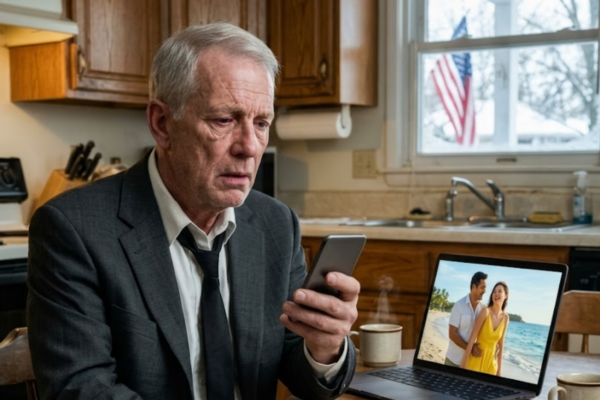
Grandma needed emergency surgery. I called my parents: “She’s in critical condition. Please come.” Neither showed up. Dad just texted, “You’re already there. We’ll come if she actually dies.” Grandma didn’t survive. A week later, at her funeral, Dad sat in the front pew, wiping his eyes with a handkerchief for everyone to see…
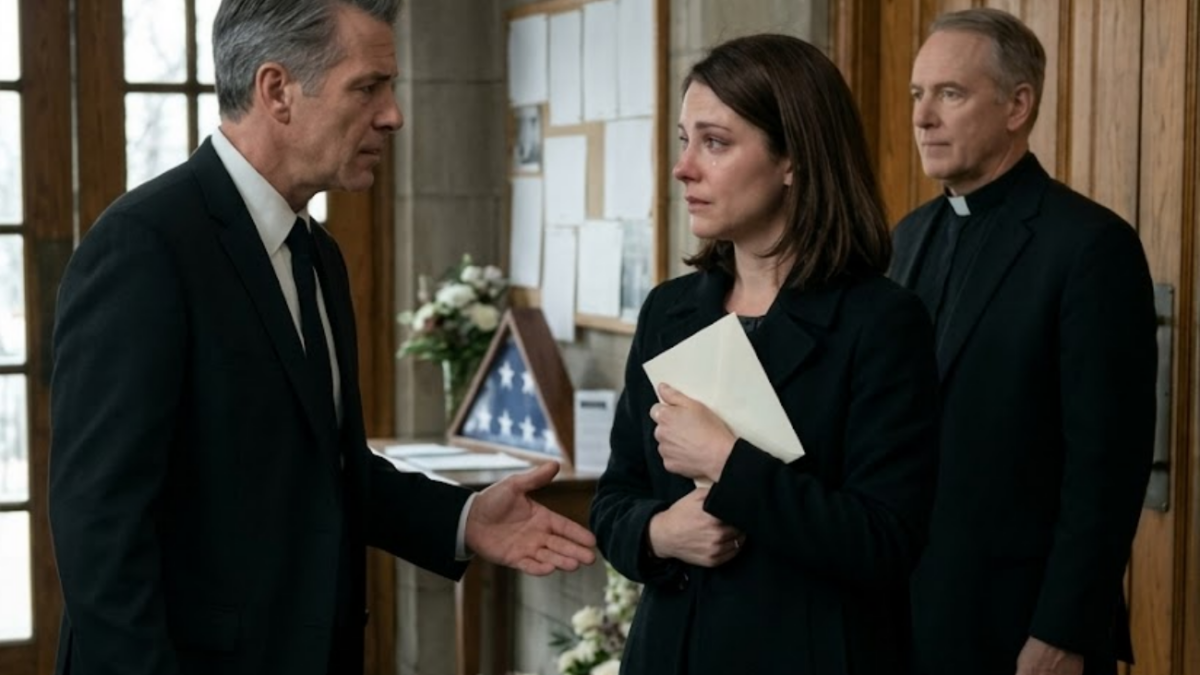
Grandma needed emergency surgery. I called my parents: “She’s in critical condition. Please come.” Neither showed up. Dad just texted, “You’re already there. We’ll come if she actually dies.” Grandma didn’t survive. A week later, at her funeral, Dad sat in the front pew, wiping his eyes with a handkerchief for everyone to see…
The Letter My Grandmother Left Behind
My father finally answered after the surgeon told me my grandmother was gone.
“Dad,” I said. “She didn’t make it.”
For a moment, all I heard was a television.
“Okay,” he said. “We’ll handle the arrangements tomorrow.”
I waited for him to ask whether I was still at the hospital. Whether someone was with me. Whether I could drive.
Instead, he said, “Anything else?”
Seven days later, he stood beside her casket and told people he wished he could have been there.
I still had his text on my phone.
What I didn’t know that night was that my grandmother had left instructions for the funeral, too. One of them began with my father’s name.
If John is here, do not let him speak for me.
My name is Maria Schaffer. I was thirty-four when Eleanor died, and I had spent eleven years working as a nurse, most of them in hospice care in Pittsburgh.
I knew how to sit beside a frightened family. I knew how to explain the things people were afraid to ask.
None of that prepared me to be the granddaughter alone in the waiting room.
The call came at 4:32 on Thursday, January 16, 2025.
I was finishing documentation at the hospice office when a nurse from UPMC Presbyterian asked whether I was Eleanor Schaffer’s designated health care agent.
“Yes. Is she there?”
She transferred me to Dr. Laura Fitzpatrick.
My grandmother had arrived by ambulance with severe abdominal pain. Testing showed a perforated bowel and a serious infection. The surgical team was preparing to operate.
“Your grandmother has been able to speak with us,” the doctor said. “She understands this is dangerous and wants us to proceed. She asked us to call you.”
“Can I talk to her?”
“Briefly. We’re still getting her ready.”
There was a rustle, then Grandma’s voice.
“Maria?”
“I’m coming.”
“Don’t drive like a fool.”
I pressed my hand over my mouth.
“Okay.”
“They have my papers,” she said. “The ones in the blue folder.”
“I know.”
“I don’t want you worrying about that.”
Even then, she was trying to take one thing off my shoulders.
A nurse needed the phone back. I told Grandma I loved her, and she said it back before the line changed hands.
I called my father at 4:44. Then my mother. Neither answered.
I left messages explaining where Grandma was and that she needed emergency surgery. At 4:51, I put the same information in our family group chat.
Grandma is at Presbyterian. Emergency bowel surgery. The doctor says it’s high risk. Please come.
I told my supervisor, handed over the work I couldn’t finish, and left.
The hospice office was in the city, but afternoon traffic made the drive longer than usual. My phone buzzed while I was stopped at a light.
I waited until I had parked to read it.
My father’s reply had arrived at 5:02.
You’re already there. We’ll come if she actually dies.
I called him again from the garage.
No answer.
I sent one more message.
She is alive right now. That’s why you need to come.
By the time I reached the surgical waiting area, it was almost 5:30.
A nurse named Bethany helped me find the right desk. She checked my name against the contact information in Grandma’s chart and brought me a visitor badge.
“Anyone joining you?”
“I’ve called her son.”
It was the most honest answer I could manage.
Dr. Fitzpatrick spoke with me before they took Grandma upstairs. Eleanor was eighty-one, with a history of heart disease and a stroke years earlier. The infection was putting her body under considerable strain.
“We’re treating her aggressively,” she said. “But I need you to understand how sick she is.”
“I do.”
I understood every word. I wanted her to say something else anyway.
They let me see Grandma for a minute.
Her hair was flattened on one side. Someone had removed her glasses, and she kept looking toward my voice.
I took her hand.
“Your purse is safe,” I told her.
She tried to smile. She was the sort of woman who could be headed into emergency surgery and still worry about a purse.
“House key’s in the little pocket.”
“I have my own.”
“Oh. Right.”
Her fingers tightened around mine.
I leaned down and kissed her forehead. Then the staff needed to move her, and I stepped back.
At 6:11, a nurse told me the operation had begun.
I texted my parents.
She’s in surgery now.
My mother replied eleven minutes later.
Keep us posted.
Nothing about coming.
I sat beneath a television with the sound turned down. Across from me, two brothers passed a phone back and forth, calling relatives. A woman in a winter coat slept with her head against her husband’s shoulder.
I kept checking the hallway.
At seven, I called my father again. At eight, I sent an update saying there was no news.
Eventually, I stopped holding the phone and put it in my bag.
Bethany came through near the end of her shift.
“Have you eaten?”
I shook my head.
She brought crackers and a cup of water.
“Is there someone we can call for you?”
“They know where I am.”
She stayed for a moment, then touched my shoulder before returning to work.
I had offered that same gesture to other people. Until then, I hadn’t understood how much care could fit into it.
At 10:06, Dr. Fitzpatrick came into the waiting area with another member of the surgical team.
I stood before she reached me.
They had repaired the perforation, she explained, but Grandma’s condition had continued to deteriorate. Her heart had stopped. Despite their efforts, they had not been able to bring her back.
Her time of death was 9:51 p.m.
“Was she aware?”
“She was under anesthesia. We kept her comfortable.”
I nodded. Asked a question she had already answered. Apologized for asking it.
“You don’t need to apologize,” she said.
Later, they brought me to a quiet room where I could sit with Grandma.
There was no emergency left to manage. No decision waiting for me. I held her hand and noticed a tiny patch of flour-colored dry skin near her thumb.
She had been making biscuits when I visited the previous Sunday.
I had taken four home in a plastic container. Two were still in my refrigerator.
That was what finally made me cry.
Not the monitors or the doctor’s words. Two biscuits I could still eat, made by a woman I would never speak to again.
I called my parents afterward from a bench near the elevators.
My father told me we would handle arrangements tomorrow.
When I asked why he hadn’t come, he sighed.
“Maria, you were there. You know how to deal with these things.”
“She was my grandmother.”
“And she was my mother.”
“Then where were you?”
He said he wasn’t going to argue that night.
My mother answered when I called her separately.
“Oh, honey,” she said. “At her age, with her heart—”
“This wasn’t something we expected today.”
“I know. I’m just saying.”
“Are you coming?”
A pause.
“To the hospital?”
“Yes.”
“But she’s already gone.”
I looked down at the visitor badge clipped to my sweater.
“I know she is.”
Neither of them came.
***
The next morning, my father called with the name of a funeral home.
“Kowalski,” he said. “Your grandmother mentioned it before. You can coordinate with them.”
“I need to call work.”
“You’re taking time off, aren’t you?”
“Yes. Because she died.”
“Well, then.”
I was too tired to explain the difference between having time available and having nothing else to carry.
Raymond Kowalski met me that afternoon. He offered coffee, then changed it to tea when he saw my hands shaking.
Before we discussed anything, he opened a folder.
“Your grandmother came in earlier this month,” he said. “She made selections and arranged payment. There are still decisions to confirm, but she handled quite a bit.”
I stared at him.
“She didn’t tell me.”
“She said you would try to talk her into waiting.”
That sounded like her.
She had chosen a plain casket, two hymns, and burial beside my grandfather. She wanted her brown wool coat over her blue dress if the cemetery was cold.
I laughed once, unexpectedly.
“She hated being cold.”
Raymond waited while I found a tissue.
He also explained that she had signed instructions naming me to oversee her funeral arrangements. My father could participate, but Grandma had made clear who should speak for her if there was disagreement.
“She wanted things kept simple,” Raymond said.
I thought of my father telling me he would handle everything tomorrow.
Grandma had handled it before either of us knew there would be a tomorrow like this.
Her pastor, Father Callahan, called that evening. We scheduled the funeral for January 23.
“Eleanor left a letter with me,” he said. “I’ll give it to you after the service.”
“What kind of letter?”
“A personal one. She also gave me instructions concerning the remembrances.”
“About my father?”
He was quiet briefly.
“We’ll talk when you come in.”
On Sunday, I went to Grandma’s house to choose her clothes.
Her kitchen looked as though she had stepped out for milk. A grocery list lay beneath a magnet shaped like a tomato. Her reading glasses sat on the yellow Formica table beside an envelope.
Maria — personal papers. Please keep.
The envelope wasn’t sealed.
Inside was a letter dated January 10, copies of bank statements, an old appointment calendar, and a small flash drive.
Maria,
My heart appointment went well enough, but Dr. Patel asked whether my emergency papers were current. That sent me looking through everything else.
I have put off some decisions because I didn’t want to hurt your father. I am taking care of them now.
Gerald has the legal documents. These are things I want you to understand, especially if John tells you I didn’t know what I was doing.
I sat down without taking off my coat.
Gerald Puit had been Grandma’s attorney since my grandfather died. I knew his name from the folder where she kept her property tax bills and insurance papers.
The next paragraph concerned her stroke in 2017.
I wasn’t imagining how little he came, Grandma had written. I kept telling myself I was.
The calendar covered six weeks of rehabilitation after her initial hospital stay. She had marked therapy appointments, church visits, and the days I came after work.
Beside October 3, she had written:
John. About fifteen minutes. Asked about house.
There were nine entries with my name.
I remembered those visits. I was twenty-six, working rotating shifts, bringing clean nightgowns and trying to make Grandma laugh while she struggled with a stubborn left foot.
I also remembered my father telling me he was “taking care of things.”
I had assumed he came when I wasn’t there.
The calendar wasn’t a hospital record. It couldn’t tell me every person who had walked through every door. But it told me what Grandma had noticed.
I took out the bank statements.
A check for $3,200 in March 2019. Another for $1,800 in 2022. Both made out to my father.
Paper-clipped to them were notes in Grandma’s handwriting: what he said the money was for, when he promised to repay it, and the dates she had asked.
On the flash drive were saved voicemails.
In one, my father asked for help with a home repair.
In another, he said, “I haven’t forgotten what I owe you, Mom. We’re just tight right now.”
A message from her rehabilitation period concerned a real estate agent.
“He thinks you’d get a good price. You ought to consider it before the house becomes too much.”
I stopped playback.
Wanting an older parent to consider a smaller home wasn’t cruelty by itself. Borrowing money wasn’t proof of anything by itself, either.
But Grandma had asked him to come. In the margins of her calendar, she had written that down, too.
Called John. Said maybe Sunday.
Then, beneath Sunday:
Didn’t come.
I read that entry several times.
For years, I had helped excuse him. He was busy. He wasn’t comfortable around illness. He showed affection differently.
Grandma had been making the same excuses in a room where she was learning to walk again.
I put the papers back in their original order.
At home, I saved copies of the messages from the night she died. I wrote a brief timeline while I could still remember it clearly.
I didn’t call it evidence. I didn’t know whether any of it would ever matter outside our family.
I only knew how quickly my father could turn something he had done into something everyone else had misunderstood.
***
The morning of the funeral, snow lay in gray ridges along the church parking lot.
My parents arrived together.
My mother wore navy and the pearl earrings Grandma had given her years earlier. My father carried a folded handkerchief.
He embraced me near the entrance.
“This is hard on all of us,” he said.
I stood stiffly until he released me.
The service was beautiful in a way I had not expected to be able to bear. Father Callahan spoke about the woman who brought extra jars of tomatoes to the parish food collection because, according to her, canned soup needed help.
He mentioned her garden, her late husband, and the grandchildren’s photographs she carried long after everyone had phones.
He didn’t describe a saint.
He described Grandma.
After the concluding prayers, before people began leaving for the cemetery, my father stepped toward him.
“I’d like to say a few words.”
Father Callahan spoke quietly enough that only those near the front could hear.
“Eleanor asked that the remembrances follow the arrangements we discussed.”
“I’m her son.”
“I understand.”
My father glanced at me.
“What arrangements?”
Father Callahan didn’t argue. He thanked everyone for coming and explained where the procession would form.
In the vestibule, he handed me the envelope.
“I read her instructions before the service,” he said. “The letter inside is for you.”
On the separate instruction sheet, Grandma had written:
If John is here, do not let him speak for me. Please keep the service about my life. Give Maria the enclosed letter privately.
My father saw the envelope.
“What’s that?”
“Something she left me.”
“Let me see.”
I put it inside my bag.
At the cemetery, he stood close to the casket and cried. I couldn’t tell whether his tears were sincere. I no longer wanted the job of deciding.
Afterward, while people returned to their cars, I sat in mine and opened Grandma’s letter.
Maria,
If John is upset because he wasn’t invited to speak, please don’t take responsibility for my decision.
I have heard him tell other people how much he does for me. I have sat beside him while he told those stories.
I didn’t want my funeral to become another occasion when I had to listen without correcting him.
My eyes blurred.
She wrote about the house next.
Gerald is preparing the paperwork to leave the house and the remainder of my estate to you. By the time you read this, he should have the signed original.
You did not ask for it. I know that matters to you, so I am putting it plainly.
I have considered John. I have not forgotten him. I am making a choice he will dislike.
She hadn’t promised that everything would be easy.
She knew him too well.
If he tells you I was confused, speak to Gerald. If he tells you that you owe him the house, do not agree to anything because he is upset.
You may share the part about my decision if you need to. The rest is yours.
The final paragraph was about a Tuesday I barely remembered.
Apparently, I had come over after a bad shift and fallen asleep in her armchair while she watched a baking show.
You apologized when you woke up. I was glad you had stayed. I liked having someone in the house who didn’t need anything from me.
I pressed the letter against my coat.
That afternoon, relatives gathered at Grandma’s house. There were foil pans on the counter, coats across the spare bed, and too many people asking whether I had eaten.
My father stood in the living room telling my aunt Carolyn about the hospital.
“We didn’t realize it was that serious,” he said. “Maria was keeping us informed, but it all happened so fast.”
I stopped in the doorway.
“I told you the surgeon said she might not survive.”
He looked irritated before he looked sad.
“Maria, please.”
“You knew.”
Several people moved away from the food table.
My mother set down her cup.
“This isn’t the place.”
“He’s telling people you didn’t know.”
My father lowered his voice.
“We were going to come.”
I took out my phone.
I didn’t hand it around the room. I held it where he could see his own words.
“You said you would come if she died.”
He looked at the screen, then at the people behind me.
“You’re taking that the wrong way.”
“How was I supposed to take it?”
No one answered.
I put the phone away.
“Grandma left a letter. She said I could share the part about her estate if I needed to.”
“Her estate?” he said.
I read only the paragraphs concerning the house and her decision. I left the Tuesday afternoon and the armchair to myself.
When I finished, my father stared at the envelope.
“She wouldn’t have done that.”
“Gerald has the documents.”
“What did you say to her?”
“Nothing.”
“You were over here all the time.”
“Yes,” I said. “I was.”
Carolyn, my father’s sister, came to stand beside me.
“John. Go home.”
He looked at her as though she had betrayed him.
Then he took his coat from the bedroom. My mother followed him.
I went into the kitchen and started covering the food.
Carolyn took the plastic wrap out of my hands.
“Sit down, Maria.”
For once, I did.
***
Gerald met with me the following Monday.
He explained that Grandma had named him executor. He would submit her will for probate and handle the estate’s obligations before distributions could be completed.
The house wasn’t mine to dispose of that afternoon. There were bills, taxes, notices, and procedures.
“But her wishes are clear,” he said.
“When did she change it?”
“She signed the new will on January eleventh. We had discussed the changes privately before that.”
“Was I supposed to know?”
“She specifically asked me not to tell you.”
I felt relieved and guilty at the same time.
Gerald slid a tissue box closer.
“Maria, knowing that she wanted you to have something isn’t the same as asking her for it.”
On January 30, one week after the funeral, he gave me another envelope.
“She requested a little space between the service and this,” he said. “I think she wanted you to watch it when you weren’t surrounded by people.”
Inside were a flash drive and a note.
I tried writing this three times. It sounded like a complaint each time. I thought you might do better hearing my voice.
There are instructions for the house computer, too. Gerald knows you have my permission to retrieve my personal files.
I watched the video that evening at my kitchen table.
Grandma sat in her living room wearing a green cardigan. One sleeve was folded back farther than the other.
She leaned forward, checking the screen.
“Is this working?”
A pause.
“Well, I hope so.”
I laughed before I began crying.
“My name is Eleanor Grace Schaffer. It’s January eighth, 2025. I’m recording this for my granddaughter, Maria.”
She took off her glasses.
“I have been putting my affairs in order. I’m not expecting to die tomorrow. I would like several more years, actually.”
That was Grandma, bargaining politely with the universe.
“But I’ve reached an age when leaving things vague is a nuisance to everyone.”
She explained that she wanted me to have the house. She knew what she owned. She knew John was her son. She knew her choice would surprise him.
“I love him,” she said, looking down at her hands. “I wish that made the rest easier.”
She didn’t call him a monster. She described waiting for visits, accepting explanations, and learning to stop asking.
“I don’t know what John feels. I know what he does. I can make decisions from that.”
Then she looked back at the camera.
“Maria, you came because you wanted to see me. Sometimes we talked. Sometimes you fixed the television. Sometimes you ate the good leftovers and left me the carrots.”
I covered my face.
“I noticed,” she said.
At the end, her voice softened.
“Thank you for being my daughter when I needed one most. I love you.”
She reached toward the device and the recording stopped.
I watched it twice.
The second time, I noticed the security camera on the bookcase behind her.
I knew that camera. I had helped her set it up the previous spring after she fell near the front door and lay there for nearly an hour before she could reach her phone.
It covered the entrance and part of the living room.
Grandma had insisted on telling everyone who regularly came over. When we enabled sound, she sent a message explaining exactly what it recorded.
My father had replied, Fine with me.
My mother had written, Whatever helps keep you safe.
Grandma kept their replies. I remembered helping her print them because she liked having important things on paper.
The camera wasn’t a secret.
What I hadn’t known was that she had saved anything from it.
Her instructions directed me to a folder on her house computer. Gerald had authorized me to collect the personal files described in her note.
I went over the following afternoon.
The folder contained family photographs, a scan of her marriage certificate, and a video file labeled December 19 — living room.
There was also a short text document.
Saved from camera card on December 20. Watch before you decide whether I have been unfair.
I sat in her chair and opened it.
My parents were standing beside the couch. Grandma wasn’t there.
I remembered that day. She had been at a parish lunch. My father had offered to let a furnace technician in while she was out.
On the recording, my mother glanced toward the bookcase.
“Is that thing still working?”
“Not online,” my father said. “The router’s unplugged for the guy downstairs.”
He was right about the internet. He had forgotten the memory card.
My mother put her purse on the couch.
“What did the agent say?”
“Somewhere around four-fifty. Maybe more if we clear it out and paint.”
“And your mother agreed to sell?”
“No. I’m talking about later.”
My mother said nothing.
My father walked toward the front window.
“We can finally pay down the house. Maybe take that trip.”
“What about Maria?”
“What about her?”
“She’s here constantly.”
“She has an apartment. She’ll be fine.”
My mother folded her arms.
“What if Eleanor changed the will?”
“She hasn’t said anything about it.”
“That doesn’t mean she hasn’t.”
“Diane. She’s still got papers from when Dad was alive in the same drawer. You’re worrying about nothing.”
The conversation moved to repairs, commissions, and whether the dining room furniture was worth keeping.
Then my mother said, “If she gets sick again, you can’t leave everything to Maria.”
“She’s a nurse.”
“She’s also your daughter.”
“And she knows what to do. I don’t.”
My mother looked toward the kitchen.
“I just don’t want it looking like we weren’t there.”
“We’ll be there when it matters,” he said. “The service. Everything afterward.”
I stopped the recording.
There was no dramatic announcement, no perfect speech explaining every selfish thing my father had ever done.
They were discussing a house they did not own and counting on me to absorb whatever came before they could sell it.
My mother had understood enough to object.
Then she had stayed and discussed the furniture.
I called Gerald.
“I found something she saved.”
“Don’t edit it,” he said. “Don’t send it around. Bring the original file and her instructions. We’ll preserve it properly.”
That night, I found the old messages about the camera. I sent those to him, too.
For the first time since the hospital, I wasn’t wondering whether I had misunderstood my parents.
I was wondering how much Grandma had understood while the rest of us kept telling her they were busy.
***
My father challenged the will in February.
His claim was that Grandma had become confused and dependent on me, and that I had used that dependence to influence her.
The papers arrived while I was sorting sympathy cards.
I read the phrase undue influence and put the pages down.
For years, being available had been my assigned role. Now that Grandma had left me something, the same availability had become suspicious.
Gerald referred me to a separate attorney to represent my interests as beneficiary. He continued handling the estate and provided the records concerning Grandma’s instructions and the signing.
No one told me the case was impossible to lose.
My attorney asked uncomfortable questions.
Had I discussed inheriting the house?
No.
Had Grandma asked me to call Gerald?
Once, years earlier, about a property tax notice. Not about the new will.
Did I manage her bank accounts?
No. I picked up groceries and sometimes helped her read a bill. She signed her own checks and kept her own records.
Did I ever speak for her at medical appointments?
“When she asked me to clarify something,” I said. “I didn’t answer questions she could answer herself.”
We went through calendars, messages, and the dates of my visits.
The work was slow. Much of it was ordinary.
There was no single folder we could drop onto a desk to end everything.
Gerald’s records mattered because they showed that Grandma had contacted him herself and met with him without me. His notes recorded her reasons for the change and the questions he had asked.
The people present when she signed could describe what they had seen.
Dr. Patel’s records from her recent appointment were obtained through the appropriate process. They did not magically declare her capable of every legal decision, but they did not support my father’s story of a woman unable to understand her life.
My father pointed to her forgetting a neighbor’s name.
Her neighbor testified that Grandma had also corrected a mistake in the church luncheon schedule that same week.
“She forgot my brother’s name, too,” the woman said. “I’ve known him seventy years. Sometimes I forget it myself.”
My attorney didn’t build the case around whether my father was a good son.
“The issue is Eleanor’s decision,” she told me. “Keep coming back to that.”
The voicemails and bank records helped explain the family history. The camera recording helped establish why Grandma had felt the need to act.
But none of those things substituted for a valid will.
I learned to make that distinction even when I was angry.
In March, Kathleen Briggs, the notary who had attended the January signing, told Gerald about another visit.
My father had come to her office on January 28 carrying a document he described as an older will. It supposedly divided the estate between us.
He wanted her to add a notarial certificate with a 2023 date.
She had refused.
Eleanor could no longer appear before her, and Kathleen had not witnessed or acknowledged a signature in 2023. She could not certify an event that had not happened.
My father had argued that she was only “fixing paperwork.”
She had made a dated note of the encounter and retained the email he sent afterward asking whether another notary might help.
When my attorney explained this to me, I said, “So he forged it.”
“We don’t know who prepared that document,” she said. “We know what he asked her to do. Those are different statements.”
I hated the correction.
Then I wrote it down.
I had spent too much time listening to my father stretch facts. I wasn’t going to win by doing the same thing.
The supposed older will was requested during the exchange of documents. My father never produced an original that displaced the January will. Even the date he claimed was earlier than the will Gerald had prepared.
The notary’s account became another matter my father had to explain, rather than the instant criminal case I had imagined in my anger.
Spring passed while the lawyers collected records and arranged testimony.
I went back to work.
Some days, a patient’s daughter would thank me for staying late, and I would have to stand in the supply room until my face was steady.
On Sundays, I checked Grandma’s house. I ran the taps, sorted the mail, and made sure the heat stayed on.
I didn’t move in. I didn’t replace her furniture or spend money I had not received.
Once, I found my father in the driveway.
He had a cardboard box in the back seat.
“I want some of Mom’s things,” he said.
“Tell Gerald what you’re asking for.”
“You need an attorney’s permission to give me my own father’s tools?”
“They aren’t mine to hand out right now.”
He looked at the porch.
“You always did know how to make yourself useful.”
I had heard praise in that sentence most of my life.
That day, I heard the condition attached to it.
“I need to lock up,” I said.
He moved his car. I waited until he was gone before I came down the steps.
***
The hearing took place in September.
My attorney had prepared me for the possibility that it would be postponed. When it actually began, I felt almost unready.
Gerald testified about his private meetings with Grandma. The signing witnesses described her questions and her instructions.
Kathleen explained what she had done in January and what she had refused to do afterward.
The court heard evidence about Grandma’s independent daily life and her longstanding relationship with me. The relevant recordings had been preserved and reviewed; their use was handled through the attorneys rather than treated as something I could simply play because I wanted to.
My father’s attorney questioned why the will had been changed so close to her death.
Gerald explained that her death had been unexpected. The appointments were part of a review she had begun after discussing emergency planning with her physician.
I sat with my hands folded in my lap.
That ordinary fact mattered more than any speech I could have made.
Grandma had not been making a last-minute bargain with a granddaughter at her bedside. She had gone to her lawyer because she was tired of postponing something difficult.
My father testified that she had always intended him to inherit the house.
On questioning, he admitted he had not attended her recent legal appointments and did not know what she had told Gerald privately.
He said I had “taken over.”
My attorney asked him for examples.
He mentioned groceries. Driving her to appointments. Helping set up the camera.
Tasks he had been content to leave to me.
The court did not issue a decision that afternoon.
We waited several more weeks.
When my attorney called in October, I was in the hospice parking lot eating a sandwich before an afternoon visit.
The challenge had been denied. The court upheld the January will.
She explained the written decision, including the evidence supporting Eleanor’s understanding and independent wishes.
I listened until she finished.
Then I asked her to repeat the part where it was over.
“The will stands, Maria.”
I put my sandwich back in its wrapper.
I had imagined feeling triumphant.
Mostly, I wanted to call Grandma and tell her I was coming over.
***
The estate still took time.
There were final expenses, tax matters, and paperwork I would once have assumed disappeared when a judge signed an order.
By winter, enough had been completed for the house to be distributed to me. I kept a reserve for repairs and the costs of owning it.
It was a valuable inheritance. It was not an endless supply of money.
My father did not contact me directly again.
My mother called in November.
“I’ve moved in with Carolyn for now,” she said.
“Why?”
“I left your father.”
I sat down on the edge of my bed.
She told me there had been arguments about money. About the case. About what he expected her to say.
Then she began, “I didn’t understand everything that was happening—”
“Mom.”
She stopped.
“You got my messages from the hospital.”
“Yes.”
“You knew what he was planning with the house.”
A long silence.
“Yes.”
I let her sit with it.
“I kept telling myself you were better at it,” she said eventually. “Hospitals. Your grandmother. All of it.”
“I was scared that night.”
“I know that now.”
“You knew it then. I told you.”
She began crying.
I didn’t comfort her. I also didn’t hang up.
After a while, she said, “I’m sorry I left you there.”
It was the first thing she had said that didn’t contain an explanation.
“Thank you for saying that.”
“Could I see you sometime?”
“I’m not ready.”
“All right.”
She didn’t ask me to send money or speak to my father. She didn’t ask whether leaving him changed anything about the will.
We ended the call quietly.
Over the next few months, she sent occasional messages. A birthday card. A note saying she had found a photograph of Grandma holding me as a baby.
I asked her to mail the photograph.
That was as far as I could go.
***
I moved into Grandma’s house on February 14, 2026.
The steps were icy, and the movers tracked salt onto the hallway floor. I spent my first evening there wiping it up with one of Grandma’s old towels.
I had expected the house to feel unbearably empty.
Instead, I kept finding things that needed doing.
A cabinet hinge was loose. The bathroom faucet dripped. There were three opened boxes of baking soda in the refrigerator.
I left her yellow kitchen table where it was.
In the living room, I put up photographs: Grandma at my graduation, Grandma holding a ridiculous zucchini, Grandma and Grandpa on a beach with their trousers rolled above their knees.
The legal papers went in a secure drawer.
I didn’t frame the worst night of my life.
I did keep the visitor badge, tucked into the envelope with her letter. For a long time, I couldn’t throw it away. I no longer felt obliged to look at it every morning.
In April, when the ground had warmed, I planted yellow roses.
Carolyn came over with a shovel and told me I had dug the first hole too shallow.
“Your grandmother would have made you do that again.”
“She would’ve waited until I finished all three.”
“That sounds right.”
We worked until our backs hurt, then ate sandwiches at the kitchen table with dirt beneath our nails.
A few weeks later, the Eleanor Schaffer Dignity Fund began accepting referrals through an established local community organization.
I had spent the winter discussing what I could responsibly contribute and what help already existed. I didn’t need to build an entire nonprofit from my living room.
The first grant came from a portion of the cash Grandma had left after the estate’s obligations and my own reserves were accounted for. Carolyn contributed. So did several people from the parish.
We started small.
Transportation to legal appointments. Fees for straightforward planning documents when no free service was available. Help connecting older adults with legal aid, social workers, and appropriate community resources.
I volunteered outside work. Qualified professionals handled the matters that required their expertise.
We didn’t promise to recover every missing dollar or fix every family.
One of the first people referred was Dorothy, an eighty-one-year-old woman whose son had been handling her bills.
She arrived carrying a grocery bag full of envelopes.
“I feel stupid,” she told the intake volunteer.
I was setting out coffee cups nearby.
“You brought the papers,” I said. “That’s a useful place to start.”
Her case went to a legal aid attorney. It took months to untangle what had happened with her accounts. Some questions were still unresolved when I saw her again.
But she had copies of her statements, someone explaining her options, and an arrangement she understood for paying her bills.
She looked less frightened.
That mattered.
Another man, Harold, wanted someone other than his daughter to make medical decisions if he became unable to speak.
The attorney helping him asked what he wanted, rather than what the family expected.
His grandson drove him to the appointments.
Afterward, Harold came to a volunteer lunch and complained that all the sandwiches had mustard.
We ordered him one without it.
Grandma would have approved of that more than any plaque.
At work, I became more careful about the assumptions I made.
An absent relative might live across the country. Someone could be exhausted, disabled, or caring for children. I had seen enough families to know an empty chair didn’t explain itself.
But when a patient wanted to talk privately about who should receive information, or who was pressuring them about money, I made time.
I documented what belonged in the clinical record and involved the right people.
I didn’t turn their bedside into my family’s story.
I asked what they wanted.
***
By June, the first yellow rose had opened beside the porch.
I brought my coffee outside and sat on the top step, where Grandma used to wait for me when she knew I was coming.
My phone rang.
For a second, I expected the familiar tightening in my stomach.
It was Carolyn asking whether I wanted the extra folding chairs from her basement for our next volunteer meeting.
“Yes,” I said. “But only if you help me carry them.”
“Your grandmother never made me carry chairs.”
“She told me you’d say that.”
Carolyn laughed.
After we hung up, I went inside to find the photograph my mother had mailed.
Grandma was younger than I had ever remembered her, holding a bundled baby on the porch. My father stood beside her, barely an adult himself.
I studied his face for a while.
There had been a life before the text message. There had been chances for things to turn out differently.
I put the photograph with the others.
Then I opened Grandma’s video on my laptop.
I didn’t play the whole thing. I watched the part where she accused me of eating the good leftovers.
Her smile appeared slowly, as though she knew I would argue.
“You left the carrots,” she said.
“I did,” I answered in the empty kitchen.
The video continued.
“Maria, I love you.”
I let it finish, then closed the laptop.
Outside, a delivery truck stopped in front of the house. The driver brought a carton of supplies for the next meeting, and I held the screen door while he set it inside.
He checked the address.
“Schaffer?”
“Yes.”
After he left, I carried the box to the kitchen.
There was mail to sort, coffee to reheat, and a chair that needed tightening before anyone sat in it.
I opened the drawer where Grandma kept her tools.
For once, I knew exactly where to look.