A Bus Driver Risked Her Job to Help a Lost Old Man During a Blizzard—Unaware He Was the Man Who Had Once Saved Her Life!
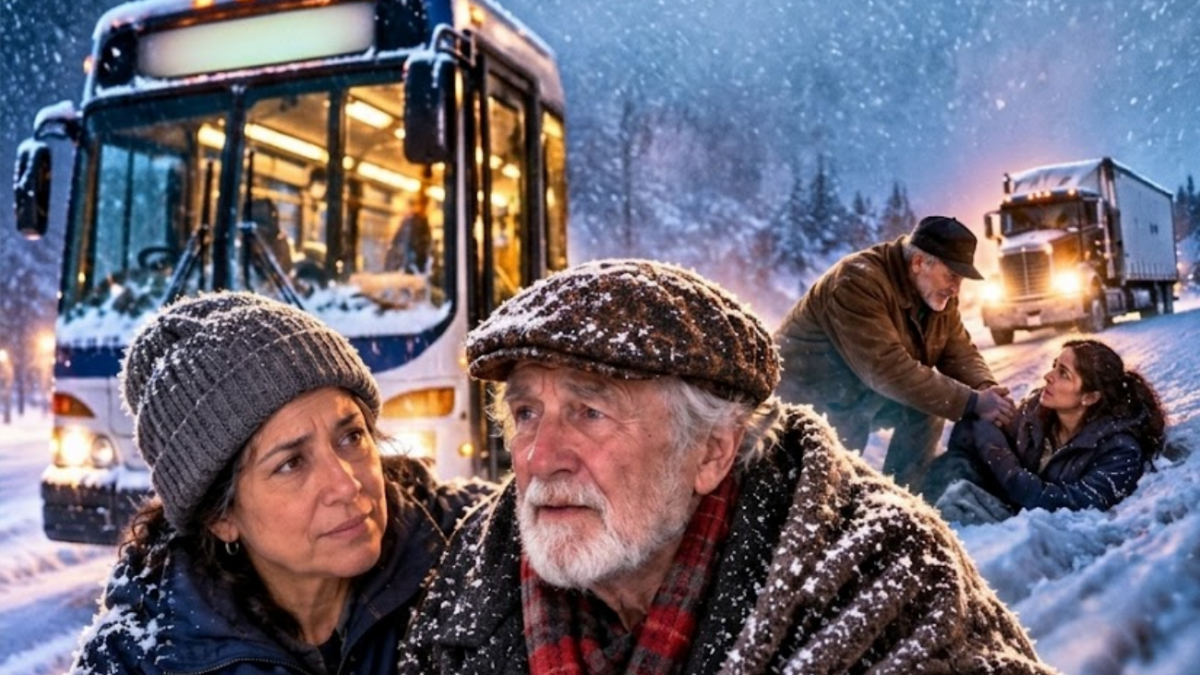
A Bus Driver Risked Her Job to Help a Lost Old Man During a Blizzard—Unaware He Was the Man Who Had Once Saved Her Life!
Come on. Come on. 20 more minutes, Mama. Just 20 more. No! No! Come on. Please. Okay. Okay. Don’t panic. Hey! Stop! Please! Last run, little bird. Then home.
Unit 9, dispatch. Rosa, you copy? I copy, Kyle. Leaving Millbrook now. Route 40 shut. Big pileup by the river. Stay on Route 9. No extra stops. No detours. Clear? When have I ever Twice this month. Hale has your file on his desk. One more late log and you’re done. I hear you. Do you? Because I’m the one who has to sign it.
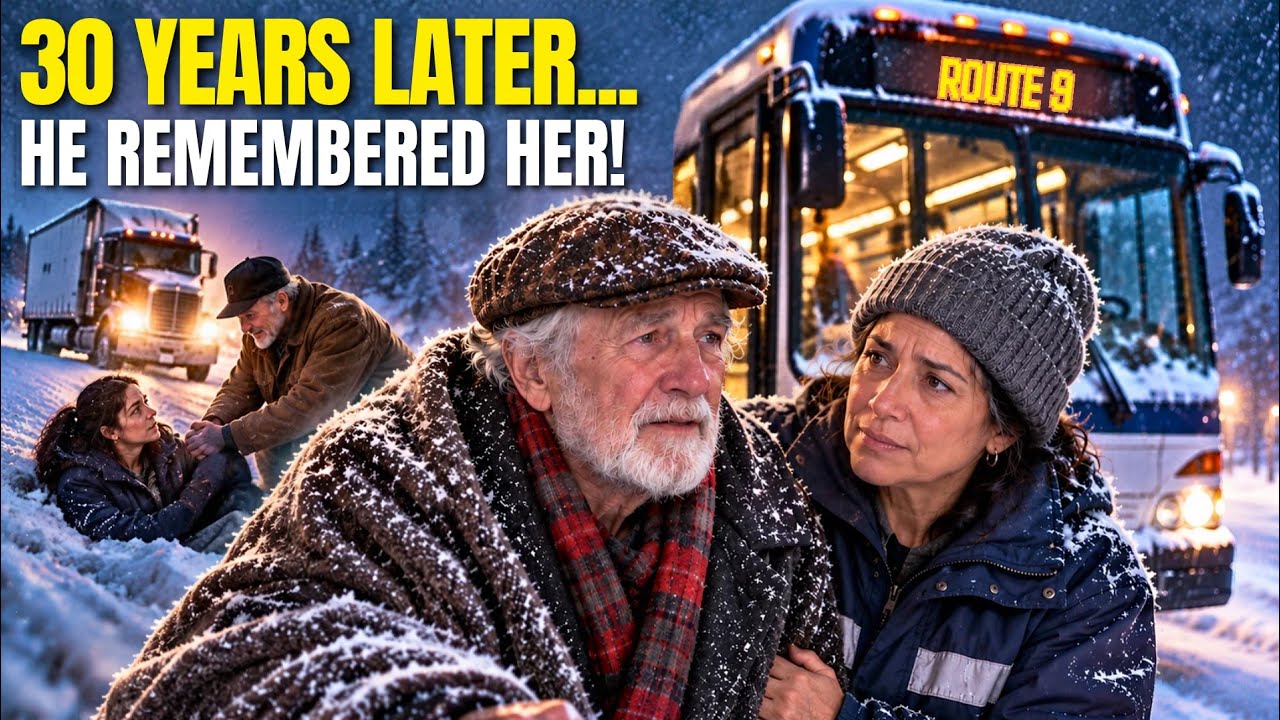
Does this go home? Goes to Cedar Bend. That home? Yes, I think so. Don’t worry about it. Storm night special. Go sit by the heater. That’s a sparrow. Good eye. Most people say it’s a pigeon. Cedar, isn’t it? You can tell by the grain. Couldn’t tell you. Had it 30 years. Somebody gave it to me.
Somebody? A stranger. Long story. Bad curve coming by the big pine. You know this road? I used to drive it. Trucks. Trucks, huh? Hard life. Good life. Cold coffee, long nights, good life. Ma’am, you hurt? No, the engine’s dead. I’m fine. You’re not fine, you’re blue. My cab’s warm.
I’ll take you where you’re going. I don’t even know you. No, ma’am. But it’s 10 below. I’ll leave the door open. You decide. Ah! My boot! Oh, come on. Here. Biggest sock in Montana. Fits any foot. Hahaha. Cedar Bend, last stop, folks. Well, folk, Sir, this is the end of the line. Yes, thank you.
I’ll get off at my stop. This is everybody’s stop. Which street are you on? It’s the one with the I know it. I walk there every day. Hey, it’s okay. What’s your name? Henry. Henry Marsh. I’m Rosa. Do you have any idea on you, Henry? Maybe it says where you live and we can get you home. 412 Alder Road, Millbrook? Henry, you just came from Millbrook.
No. Diane sold that house. I live here now with Diane. Who’s Diane? My girl. Do you have her number? She writes things down for me. I don’t carry the phone. I lose it. Storm took the tower out again. Dispatch, unit nine. Go for dispatch. Elderly passenger at the depot, confused, doesn’t know his address.
Walk him to the police station on Main. I’d shock six, two blocks, then park the bus and clock out. Kyle, it’s a blizzard. He’s past 80. Then drive him two blocks, then park it. All units responding to Route 40. For emergencies, call 911. The police can close? Station’s empty, Kyle. Call county.
County says 3 hours, minimum. Everyone’s on the pileup. What do you remember about the house? Anything? There’s a dog. Biscuit. He’s not my dog. He’s Diane’s. And bells. Church bells from the kitchen, every hour. Drives me crazy. Now, that’s something. Kyle, I’m going to find his house. He remembers bells and a dog.
No. That bus does not leave the depot. Company bus, off route, after hours. That’s not a write-up, Rosa. That’s termination. My car’s under 3 ft of snow. Want me to carry him? I want you to follow procedure for once. Log it, Kyle. Whatever you have to log. Did I get you in trouble? Henry, I was born in trouble.
Hold on to something. Coffee. It’s terrible, but it’s hot. Thank you. Really. Where were you headed? Billings. Should have been there by 6:00. Billings is the other way. Yep. Won’t you get in trouble? Dispatcher said one more late load and I’m done. Then turn around. Someone else will stop. Nobody else stopped, did they? Sweetheart, I was born in trouble.
Two churches in town. St. Anne’s on Hill Street, First Baptist by the river. Mine play a little song. St. Anne’s does the chimes. Baptist just bongs. Then it’s the song one. Hill Street it is. It’s almost 1:00. If we’re close, we’ll hear it. Shh, listen. That’s it. Those are my bells.
Okay. Now we just need a dog named Biscuit. The door is red. Diane painted it. Says it’s cheerful. It’s not cheerful. It’s red. Bells, Biscuit, we’re basically detectives. My wife loved detective shows. Always guessed the ending first. Is she 9 years now. I’m sorry. She’d like you. You’re stubborn.
She likes stubborn. And stone frogs. Don’t ask. Red door, right by the church. Henry, is that it? Maybe. Maybe it is. Wait. This isn’t mine. Mine has a knocker. A brass fish. A brass fish. You could have led with the fish. I just remembered. Things come late. Your hands are ice. Diane gives me pills at night.
Little white ones. For my heart. What time? With the 10:00 news. Okay, we have to move faster. Unit 9, your GPS has you on Hill Street. Hill called me at home. He’s watching the tracker. Depot in 30 minutes or don’t come in Monday. Kyle, he missed his heart medication. Then that’s for 911. 911 is 3 hours out.
I’m turning you off now, Kyle. Take me back. I’ll sit at your station. I don’t want you losing your work. Not happening. I mean it. I’ve been a lot of trouble for people this year. Sit down, Henry. Somebody once lost a lot more than a bus route for me. Who? Never knew his name. You’re holding that seat like it owes you money.
I just went into a ditch, so Want to know a secret? I sing to her on the bad curves. To who? Her. You sing to your truck. Sure do. Want to hear? Fine. Hold on, little sparrow. The night won’t last. The road’s got a turning and the storm will pass. That’s a lullaby. Made it up for my girl when she was little.
She’s 20. Still makes me sing it. Henry, what’s that you’re humming? Hm? Just an old thing I made up. You made it up? For my girl, a long time ago. No. Lots of songs sound alike. You’re tired, Rosa. You look like you saw a ghost. First, we get you home. Then I want to ask you something. Marty knows everyone in this town.
If anybody’s seen you, it’s Marty. Henry? What are you doing out in this? Rosa? You two know each other? Since Millbrook. He can’t remember his address. Peppermints every morning, 7:00 sharp. Address? No idea. But his daughter came in his first week, said she sewed a card inside his coat. Sewed? What are you doing in my coat? Detective work, Henry.
If found, please call The number’s gone. Lyndon Street. No house number. Lyndon’s right behind St. Anne’s, past the water tower. 20 new houses. 20 doors. Fine. On the house, Henry. You’re a good man, Marty. Tell my wife. He looks gray, Rosa. I know. Road to the hospital? Closed till morning.
Hale’s going to have your head for this. Hale can get in line. Lyndon. Red door, brass fish, a dog named Biscuit. Eyes open, Henry. Why do they build them all the same? So people like you get lost and people like me get to be heroes. Red door. Number eight. No knocker. No fish. No fish. Next.
No, no, no. Come on, girl. We’re stuck. Don’t gun it. Reverse. Then forward. Easy. Rocker. You know buses, too? I know snow. Easy, easy. Like a cradle. Henry, you beautiful man. 31 years on the road. Where’s Margaret? I need to call Margaret. Henry, it’s Rosa. We’re finding Diane. Who are you? Why am I on a bus? Let me off.
Henry! Hen- stop. Let’s get you back inside. I have to get home. My girl’s waiting. It’s Christmas. I promised her a present. Henry, look at me. Let’s get you warm. I gave it away, her present. I gave it to a girl in a ditch. What did you say? Diane Sparrow. I carved it all month. She was so scared.
Okay, I’ve got you. Lean on me. One step. Sometimes I go somewhere else. Did I scare you? Little bit. You scared me a little bit. What’s your name? Doesn’t matter. Your mama’s waiting. Go on. For being brave on the curves. I wasn’t brave, I was terrified. Same thing, mostly. It’s beautiful.
Who was it for? My girl. She’s got a whole shelf of them. You keep it. I didn’t even get your name. Henry, can I tell you a story while we look? I like stories. Christmas Eve, 1996. Driving home from college to my mom. My car went off the road. Right here, Route 9. Bad winter, ’96. Worst I ever drove. A trucker stopped. Nobody else did.
He put me in his cab. And you lost your boot climbing up. How do you know that? Stuck in the snow. I gave you my sock. Biggest sock in Montana. I still have that sock. 30 years. The scared girl on the curves. You gave me this. It’s been on every bus I’ve ever driven. Cedar. The left wing’s chipped.
My knife slipped. It’s always been chipped. Little sparrow. I looked for you. My mom asked about you till the year she died. You said one more late load. Did he fire you? He warned me every month. That time he meant it. You lost your job because of me. Lost a job. Found a better one by spring.
You turned out all right, didn’t you? And now you’re losing yours for me. Born in trouble. I used to say that. I know. Now let’s get you home to your girl. Brass fish. Diane says it’s tacky. Margaret bought it. 15, no knocker. 19, blue door. Wait. Listen. Biscuit! That’s Biscuit! Red door.
Brass fish. Henry, we found it! Where’s Diane? Why is it dark? Diane’s always home. Spare key? Under the mat? A plant pot? It’s under the under the the frog! Margaret’s frog! Henry, I could kiss you. Biscuit! Hey, boy. Biscuit. Nice to finally meet you. If a dose is missed, take it when remembered.
Okay. Down the hatch. Dispatch, Kyle. I found house. 23 Linden. He’s warm. He’s had his meds. I’ve been calling for 40 minutes. Milbrook PD called. A woman reported her father missing. Her name’s Diane Mercer. I gave them your GPS. She’s been driving Route 9 behind you. You sent her my GPS? Procedure says report a found person to police. I just made sure it was fast.
And I told Hale everything. Mrs. Mercer’s calling him now. Kyle Brooks. Who knew? Dad! You scared me to death. There’s my girl. [laughter and gasps] I paid at the diner and you were gone. It’s right across from the depot. I was going home. You’re Rosa. Police said 3 hours in this. He did most of it.
He remembered the frog. Dad, where did you get that? It came back, Diane. This is the Christmas sparrow. This is the Christmas sparrow? You know it? Christmas morning, 1996. Dad came home with no job and no present. Mom was furious. He gave my sparrow to a girl who needed it more. I was 20 and I sulked all year.
I’m that girl. Little sparrow, meet my girl. My girl, meet little sparrow. He told that story every Christmas. Even after he started forgetting everything else. Last Christmas he asked me, “Do you think she turned out okay?” The girl from the ditch? Well, did you? I drive a bus. I’m stubborn.
I sing to it on the bad curves. It’s yours. It was always yours. No. It went exactly where it was supposed to. Keep it on your mirror. Dad would like knowing it still rides route 9. Cedar holds up. Told you. You look terrible. And you look younger than you sound. Hale wants to see you.
Relax. Mrs. Mercer talked to him 40 minutes. He’s writing you a commendation. And the detour? He says the commendation covers the detour. Barely. I’m sorry about last night. I thought following the rules meant doing the right thing. Most nights it does. Last night it didn’t.
You figured that out faster than most. Somebody had to. Little sparrow. Tuesday already? Every Tuesday, Henry. I told you. Thought maybe you’d teach me. My hands shake now. He hasn’t carved in 5 years. Then I’ll hold the knife. You tell me where. Easy. The wing goes thin. Not too thin. Like the left one. 30 years in my drawer.
Biggest sock in Montana. Biggest sock in Montana. Hear that? My bells. Hold on, little sparrow. Little sparrow, the night won’t night won’t last.
The blizzard did not descend upon the mountain pass with a whisper; it struck with the violent, shuddering impact of an avalanche in motion.
Behind the oversized steering wheel of Unit 9—a thirty-five-foot municipal transit coach battered by years of highway grit and road salt—Rosa Alvarez leaned forward until her forehead was nearly pressed against the vibrating safety glass. The dual air-actuated windshield wipers hammered in frantic, mechanical agony, clearing a fleeting crescent of visibility before the gale plastered the windshield with wet, blinding sheets of white. The outdoor temperature gauge on the dashboard panel read eleven degrees below zero, dropping two degrees with every passing mile.
Beneath the bus, the tires groaned against hard-packed ruts of black ice along Route 9. Outside, the world was gone. The jagged pine forests of western Montana had vanished into a suffocating shroud of swirling drifts, and the guardrails had disappeared beneath three-foot windrows of wind-sculpted powder.
A harsh burst of static tore through the two-way radio mounted beside the farebox.
“Unit 9, dispatch. Rosa, you copy? Over.”
Rosa keyed the heavy black microphone with her gloved thumb, her breath fogging in the drafty cab. “I copy, Kyle. Rolling past the Millbrook junction now. Visibility is less than twenty feet.”
“Listen to me carefully, Rosa,” the dispatcher’s voice crackled, tense and thin against the atmospheric hum. “Interstate 40 is completely shut down. We have a thirty-car pileup down by the river gorge. Multiple fatalities, power lines snapped across both lanes. Every county plow, state trooper, and emergency squad from three jurisdictions is tied up on the interstate. Route 9 is your only corridor. Mr. Hail is monitoring the terminal board from home on his laptop. He made it clear: no unauthorized stops, no detours, and no mercy on the schedule. You arrive at Cedar Bend depot on time, park that coach, and clock out. You copy?”
“I hear you, Kyle,” Rosa said, keeping her eyes glued to the faint yellow glow of her fog lamps.
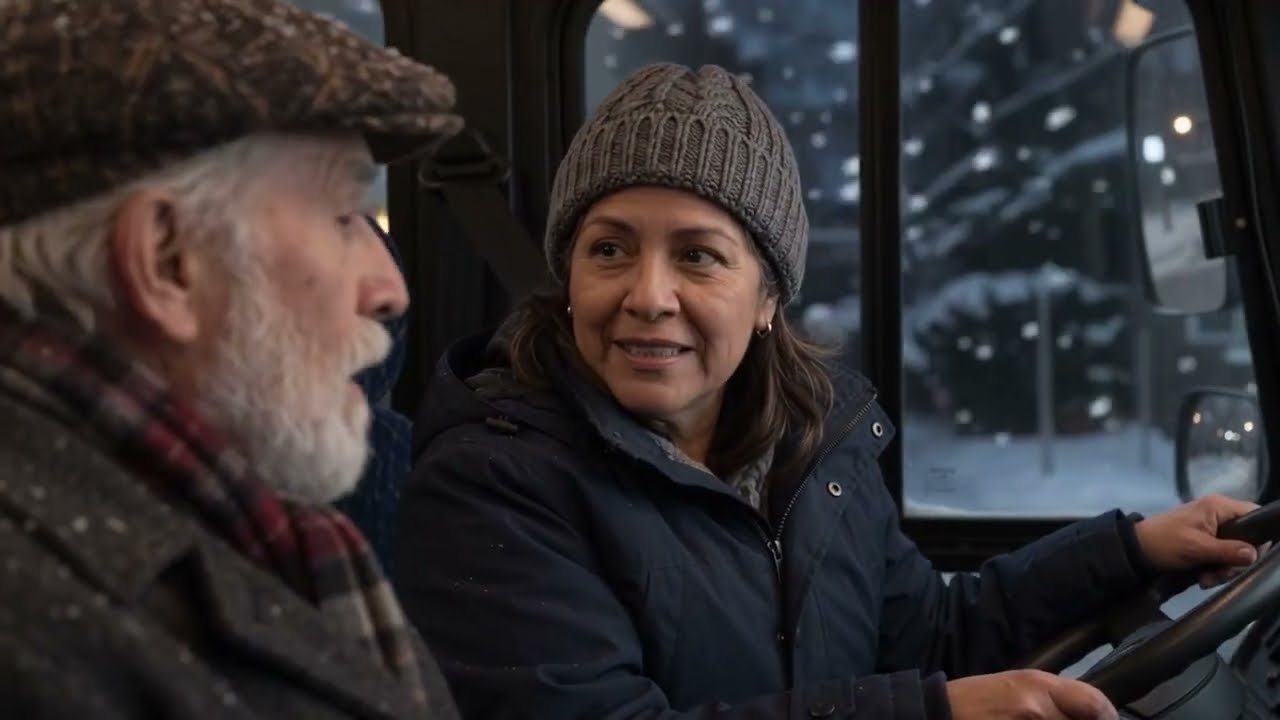
“I need more than an ‘I hear you,’ Rosa,” Kyle pressed, the stress bleeding through his words. “Hail has your personnel file open on his desk right now. You’ve logged two late arrivals this month for helping disabled passengers on the rural spurs. One more deviation from company protocol and your route is revoked. You’re done. And I’m the shift supervisor who has to sign the termination slip. Keep your head down and drive.”
Rosa released the key without answering. She hung the microphone on its dash hook, her jaw tightening.
She knew the stakes better than Kyle did. At fifty-two, driving a rural transit bus was not merely an hourly wage; it was her life’s anchor. Her modest, two-bedroom ranch house near the railyards carried a mortgage that allowed no room for error, and the health insurance provided by the regional transit authority was the only barrier standing between her and financial ruin.
Above the rearview mirror, swinging gently on a leather cord from the metal bracket of the sun visor, was a small, hand-carved wooden bird. It was roughly four inches long, whittled from a dense piece of aromatic cedar. Its surface was smoothed by decades of nervous touch, the rich red grain showing through the natural oil of the wood. The left wingtip was slightly blunt, marked by the faint slip of a carving blade that had nicked the edge long before it came into her possession.
Rosa reached up, her thumb brushing the chipped wing out of habit.
“Last run, little bird,” she whispered over the roar of the diesel engine. “Then we head home.”
The Stranger at the Curb
Three miles outside Millbrook, where the county blacktop intersected an unlit logging spur, a solitary dark shape materialized through the swirling snow.
Rosa tapped the air brakes, the coach hissing as its weight settled back on the suspension.
Standing on the shoulder, buried up to his shins in a fresh drift, was an elderly man. He wore an unbuttoned, threadbare canvas barn coat over an acrylic cardigan, work trousers soaked to the knees, and no gloves. His bare hands were tucked deep into his armpits, his shoulders hunched against the stinging wind, his white hair plastered to his scalp like wet parchment. He held no luggage, carried no flashlight, and stood beneath an abandoned road sign, shivering so violently that Rosa could see the vibration of his frame from thirty feet away.
She brought Unit 9 to a halt, engaged the parking brake, and hit the pneumatic door lever.
The double doors folded open with a mechanical hiss, admitting a blast of arctic air that sent a shudder through the interior cabin.
The old man looked up, squinting into the warm yellow interior light of the stairwell. His face was a roadmap of deep, weathered creases, his lips a faint, chilling blue. He mounted the bottom step with agonizing slowness, his boots slipping on the ribbed rubber treads.
“Does this… does this coach go home?” the man asked. His voice was frail, wavering like dry grass in a breeze, clouded by the confusion of hypothermia.
Rosa looked past him into the empty, howling darkness of the highway. “This bus terminates at Cedar Bend depot, sir. Is Cedar Bend your home?”
The man blinked slowly, his brow furrowing as he tried to grasp the name. “Cedar Bend… yes. Yes, I think so. That sounds right. Diane said… she told me to stay put, but the house got so cold.”
“Come up out of the wind,” Rosa said gently, stepping down to the second riser to take his elbow. His coat felt like wet cardboard beneath her fingers, freezing to the touch. “Don’t worry about the fare tonight. It’s a storm-night special. Go sit directly over the heater vent in the third row.”
The man nodded gratefully, his knees trembling as he shuffled down the ribbed aisle. He lowered himself onto the vinyl seat directly above the under-floor radiator, letting out a long, ragged sigh that ended in a rattling cough.
Rosa pulled the door lever shut, cutting off the gale, disengaged the air brake, and guided the heavy coach back into the tracks of drifting snow.
Through the overhead mirror, Rosa watched her solitary passenger. As the cab heater began to thaw his frozen clothes, the man’s eyes drifted toward the ceiling, eventually coming to rest on the small wooden bird dangling from the sun visor.
He stared at it with an odd, fixed intensity.
“That’s a sparrow,” the man called out softly over the hum of the engine.
Rosa glanced into the glass. “Good eye, sir. Most folks glance up there and ask why I have a wooden pigeon hanging from my mirror.”
The old man leaned his head back against the vinyl seat, a faint, distant warmth flickering across his weathered features. “It’s cedar, isn’t it? Western red cedar. You can tell by the straightness of the grain across the breast feathers. And the way the oil holds the light.”
“Couldn’t tell you the species of wood for sure,” Rosa replied, keeping her hands steady at ten-and-two as the bus crested a wind-scoured ridge. “I’ve had it for thirty years. Somebody gave it to me.”
“Somebody?” the old man asked.
“A stranger,” Rosa murmured, her eyes fixed on the white abyss ahead. “A very long story on a very cold night.”
The old man nodded slowly, his gaze drifting toward the frost-etched windowpane. “Bad curve coming up by the twin pines. The camber falls away toward the ditch. You have to keep the drive wheels on the crown of the asphalt.”
Rosa tapped the brakes, slowing the coach as the familiar silhouette of two massive, wind-bent ponderosa pines loomed through the squall. The road sloped sharply, exactly as he had described.
“You know this highway, sir?” she asked.
“Used to drive it,” he murmured, his voice growing raspy. “Long time ago. Semi-tractors. Freight. Over the pass to Spokane and down to Billings. Hard life.”
“Cold coffee and endless asphalt,” Rosa remarked with a faint smile.
“Good life, though,” the old man whispered, his eyes closing as the warmth of the heater seeped into his bones. “Cold coffee, long nights… but a good life.”
The End of the Line
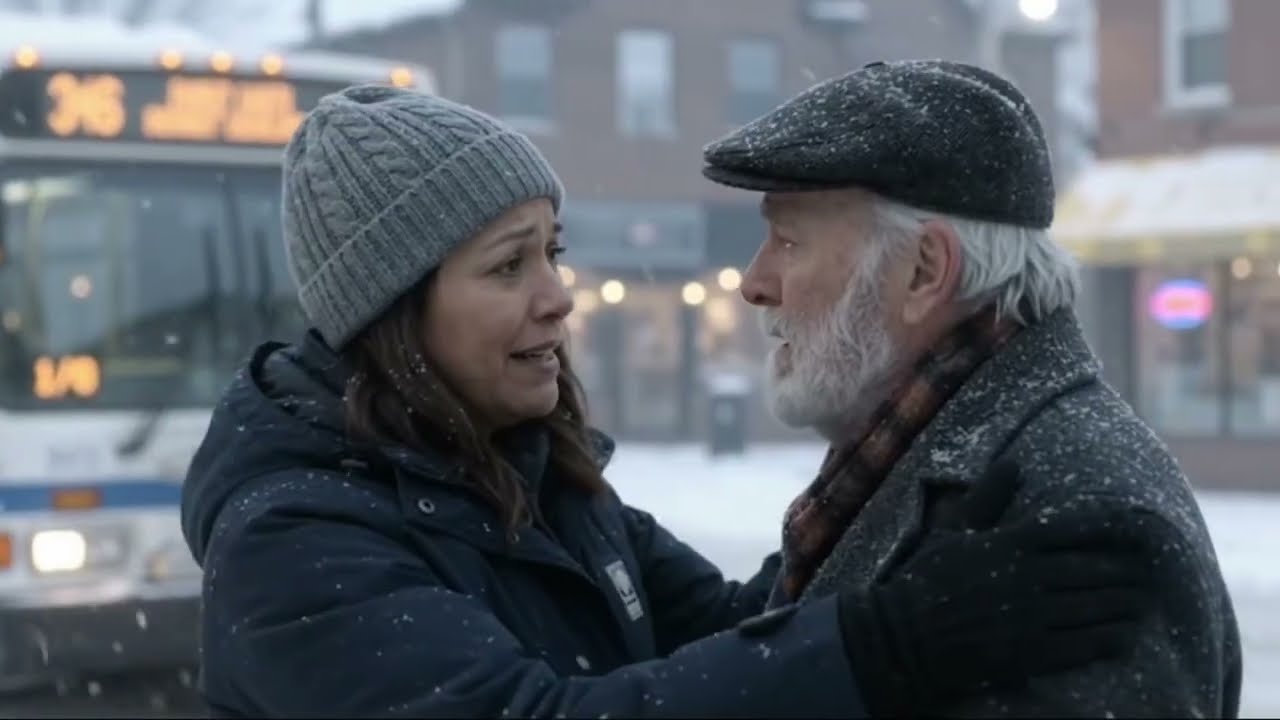
The municipal bus depot at Cedar Bend was nothing more than an unheated cinderblock waiting shelter, a gravel loop, and an asphalt parking pad flanked by a chain-link fence.
When Unit 9 swung into the turnaround, the depot was completely deserted. The security floodlights hummed overhead, casting a sickly sodium-yellow glow through the blinding sheets of horizontal snow. The ticket counter was dark, the waiting room doors padlocked against the storm, and the parking lot was buried beneath fourteen inches of unplowed powder.
Rosa pulled the coach up against the concrete curb, set the air brake, and killed the engine. The interior lights flickered to auxiliary power, casting long, quiet shadows down the center aisle.
“Cedar Bend, folks,” Rosa announced, turning in her high-backed driver’s seat. “End of the line.”
The old man did not move. He sat with his hands folded in his lap, staring blankly at the dark linoleum floor between his boots.
Rosa stood up, walked down the aisle, and knelt in the space beside his row. “Sir? We’re at the depot. This is as far as Unit 9 goes.”
The man looked up, startled, his eyes clouding with an overwhelming, childlike confusion that made Rosa’s stomach drop.
“Yes… thank you,” he said politely, attempting to push himself up from the seat, his arms shaking under his own weight. “I’ll just… I’ll step off at my street. Which stop is mine?”
“This is everybody’s stop, sir,” Rosa said softly, placing a steadying hand on his forearm. “This is the terminus. Which street do you live on?”
The man looked toward the frosted window, his breathing shallow. “It’s… it’s the one with the… I know it. I walk down to the mailbox every afternoon. Diane tells me to stay on the sidewalk, but I know the way. It’s right near the…” His voice trailed off, his jaw working silently as panic began to surface in his eyes. “Where is the porch?”
“Hey, it’s alright,” Rosa said, her tone steady, deliberate, soothing. “Take a breath. What is your name?”
“Henry,” he said after a long hesitation. “Henry Marsh.”
“Alright, Henry. I’m Rosa. Do you have a wallet or an identification card in your coat? Something that shows an address so we can call someone to pick you up?”
Henry patted his pockets with trembling fingers. From an inner coat pocket, he produced a worn leather card case held together by an elastic band. Inside was an expired commercial driver’s license, laminated decades ago, and a faded social security card.
Rosa held the license beneath the interior reading light.
Henry A. Marsh. 412 Alder Road, Millbrook, Montana.
Rosa looked up, her heart sinking. “Henry… this address says 412 Alder Road in Millbrook. That’s fifteen miles back down the highway. That’s where you boarded the bus.”
“No,” Henry said firmly, shaking his head with sudden agitation. “No, Diane sold that house two years ago. When my hip went out. I live here now. With Diane.”
“Who is Diane, Henry?”
“My girl,” he whispered, a tear escaping the corner of his eye and cutting a clean path through the grime on his cheek. “My daughter. She takes care of me. She writes everything down on the yellow pad on the counter, but I… I walked to the store to get her some peppermints, and the snow came up, and I couldn’t find the corner.”
“Do you have her phone number, Henry?”
“She wrote it down,” he said, patting his empty pockets again, his breathing growing ragged. “She put it on a card. But I don’t carry the cellular telephone. I drop it. I lose things, Rosa. I lose everything.”
Rosa pulled her mobile phone from her pocket. The screen displayed five bars of signal, but as she watched, the icon flashed and vanished entirely, replaced by the dreaded message: NO SERVICE.
The gale had finally taken down the microwave relay tower on the ridge.
The Radio Ultimatums
Rosa stepped back to the driver’s console, lifted the heavy microphone, and keyed the transit frequency.
“Unit 9 to dispatch. Kyle, you copy?”
The static groaned for several seconds before Kyle’s voice emerged, clipped and frantic. “Go for dispatch. Rosa, tell me you’re parked at the depot.”
“I’m at the Cedar Bend terminal, Kyle,” Rosa said, keeping her voice low so Henry wouldn’t hear. “Listen to me. I have an elderly passenger on board. He’s in his eighties, severely disoriented, suffering from early-stage hypothermia and cognitive memory loss. His identification lists an old address in Millbrook, but he claims he lives here in Cedar Bend with his daughter Diane. The depot is locked, cellular service is completely down across the valley, and he has nowhere to go.”
“Walk him over to the town police sub-station on Main Street,” Kyle answered without a second’s hesitation. “It’s two blocks south. Drop him at the desk, log the handoff, deadhead the coach to the maintenance yard, and punch out.”
“Kyle, listen to the wind outside!” Rosa fired back, her frustration boiling over. “The police station on Main is a satellite desk! It’s shuttered on weekends and during storm emergencies! The entire county emergency dispatch is routed to the Interstate 40 pileup! There is nobody at that desk!”
“Then call county social services on the landline at the depot!”
“The depot is locked, Kyle! There are padlocks on the chain-link gates! The power is flickering! If I leave this man on the sidewalk in negative-fifteen-degree windchill, he will be frozen to death before the morning plow passes!”
A long, agonizing silence hummed over the frequency.
When Kyle returned, his voice was no longer that of a colleague; it was the flat, defensive drone of a middle manager terrified of losing his own position.
“Rosa, Mr. Hail called dispatch ten minutes ago. He is watching the fleet GPS board from his study. He saw you sitting at the terminal loop. He reminded me that operating a municipal coach off-route, outside revenue hours, without a certified dispatcher clearance, is an automatic Class-A safety violation. That’s immediate termination without severance. If that bus moves anywhere except the maintenance garage, you are fired before you put it in reverse.”
Rosa gripped the microphone until the plastic creaked in her fist. Through the windshield, the snow was piling against the bumper, drifting in soft, deadly dunes against the tires.
Behind her in the third row, Henry sat shivering, his hands tucked inside his sleeves, staring out the window with the wide, terrified eyes of a child lost in a department store.
“Kyle,” Rosa said, her voice dropping into a register of terrifying calm. “My car at the park-and-ride is buried under three feet of drift. I couldn’t dig it out tonight if I had a backhoe. Do you expect me to carry an eighty-four-year-old man on my back through a blizzard to find a house he can’t name?”
“I expect you to follow procedure, Rosa!” Kyle shouted over the static. “The transit authority is not an elder-care ambulance! We operate scheduled fixed-route transit! Follow the manual!”
“Log it, Kyle,” Rosa whispered into the microphone. “Log whatever you have to put in your book.”
“Rosa, don’t do this! If you put that coach in drive, you don’t have a job on Monday morning!”
Rosa reached beneath the dash console, found the primary power toggle for the two-way communications radio, and snapped it down.
The green LED lights died. The static ceased.
The only sound remaining in the cavernous interior of the coach was the deep, rhythmic rumble of the diesel engine, the rattle of the side windows against the storm, and Henry’s faint, shallow breathing.
Rosa turned around, her face illuminated by the amber glow of the instrument panel.
“Henry,” she called out, walking down the aisle. “Did I get you in trouble?”
The old man looked up at her, his voice trembling with profound regret. “I heard that box talking, Rosa. That man was angry. Did I cause you trouble?”
Rosa reached out, her gloved hand resting gently on his thin shoulder.
“Henry,” she smiled, a fierce, defiant spark igniting in her dark eyes. “I was born in trouble. Now hold onto that handrail. We’re going to find your girl.”
The Map of Memories
Rosa climbed back into the driver’s seat, pulled the pneumatic knob to release the air brakes with a loud shhh-clack, and dropped the transmission into second gear.
The heavy coach rocked forward, its tire chains biting into the packed snow, cutting through the virgin drifts of the terminal loop and turning out onto the unplowed, deserted streets of Cedar Bend.
“Alright, Henry,” Rosa called over her shoulder, keeping the high beams cutting through the whiteout. “We’re going to be detectives tonight. Close your eyes and think about that house. Don’t think about street names or numbers. What do you hear when you sit in Diane’s kitchen in the morning?”
Henry closed his eyes, his weathered brow creasing as he fought to pull fragments of reality from the fog in his mind.
“Bells,” he whispered after a moment. “Church bells. Every hour, on the hour. They play a little tune… not just a bong-bong sound. A little song. It drives Diane crazy when she’s trying to work on her computer, but I like it. Reminds me of my mother.”
Rosa’s mind raced through the geography of the small mountain town. Cedar Bend had four religious congregations, but only two possessed operational bell towers: First Baptist down by the river flats, and St. Ann’s Catholic Church perched high on the eastern bluff near Hill Street.
“First Baptist only rings a single bell for Sunday service,” Rosa murmured, turning the heavy wheel to navigate a snow-choked intersection. “St. Ann’s has the carillon chimes. They play the hymn on the hour. That means Hill Street. What else, Henry? What does the front of the house look like?”
“The door is red,” Henry said, a faint smile touching his lips. “Bright red. Diane painted it last summer. Said it looked cheerful. I told her it looked like a fire engine, but she wouldn’t listen. She’s stubborn, Rosa. Just like her mother was.”
“Red door, church bells,” Rosa noted, her eyes scanning the dark, snow-covered bungalows lining the avenue. “What about an animal? Is there a pet?”
“Biscuit,” Henry said instantly. “A golden retriever with one floppy ear. He’s not my dog—he’s Diane’s dog. But he sleeps on the rug right by my boots every night so I don’t wander off. He’s a good boy.”
“A red door, a dog named Biscuit, and the carillon bells of St. Ann’s,” Rosa said, shifting the coach into low as they began the steep, winding ascent up Hill Street. “We can work with that, Henry. That’s a real trail.”
The bus crawled up the incline, its engine roaring in protest against the heavy snow. The wind on the bluff was ferocious, howling across the open pastures and slamming into the side panels of the coach like physical blows.
Suddenly, Henry gasped from the third row, leaning his forehead against the glass.
“There! Stop the bus! Right there!”
Rosa touched the brakes, bringing the coach to a halt beside a stone retaining wall. Through the storm, fifty yards from the towering granite bell tower of St. Ann’s, stood a tidy, single-story craftsman home. The exterior coach light was illuminated, casting a warm halo over a freshly painted, bright red front door.
“Is that it, Henry?” Rosa asked, hope surging in her chest. “Look at the porch.”
Henry squinted through the frost, his face falling as he reached the bottom of the windowpane.
“No,” he whispered, his voice cracking with crushing disappointment. “No… that’s not it. Mine has a knocker. A heavy brass knocker shaped like a leaping fish. Margaret bought it on our twenty-fifth anniversary in Seattle. Diane moved it to the new house so I’d know which door was ours.”
Rosa let out a slow, steady breath, tapping her fingers against the steering wheel. “A brass fish knocker. Okay. We’re close, Henry. The bells are right here.”
Henry reached into his coat pocket, his hands trembling violently. “My chest feels tight, Rosa. Like a belt pulling across my ribs.”
Rosa stood up, alarm spiking through her veins. “Henry, do you take medication for your heart?”
“Little white pills,” he whispered, his breathing growing shallow and rapid. “Diane gives them to me every night at ten o’clock with a glass of water. When the news comes on the television. I… I missed them, didn’t I?”
Rosa glanced at the dashboard clock. It was twenty minutes past eleven.
“Yes, Henry,” Rosa said, her voice tight with urgency. “You missed them. We have to move faster.”
The Memory of 1996
The coach crawled through the residential grid surrounding St. Ann’s, its tires churning through knee-deep powder on streets that had not seen a municipal plow in eight hours.
On the third circuit around the parish block, the dashboard radio speaker crackled to life. It was not Kyle. It was a secondary emergency frequency patched through the transit authority’s central mainframe.
“Unit 9, this is Director Hail,” a cold, clipped voice cut through the cab. “Rosa Alvarez, I am looking at your vehicle transponder on my home terminal. You are three miles off your designated route, operating on a residential side street in the middle of a Level-3 blizzard warning. You have willfully severed two-way radio contact with dispatch. If that coach is not parked at the central barn within twenty minutes, I am notifying the county sheriff that municipal equipment has been misappropriated, and you will be terminated with cause and referred for prosecution. Acknowledge this transmission immediately.”
Rosa did not reach for the microphone. She looked at Henry, who was leaning against the window, his lips growing paler, his breath coming in dry, rattling gasps.
She reached beneath the panel, found the emergency GPS transponder lead behind the fuse block, gripped the wire harness with her gloved fingers, and yanked it free.
The small red diagnostic light on the dash blinked twice and went dark.
“Unit 9 is off the grid,” Rosa whispered to herself.
From the third row, Henry let out a low, frail sound. It was not a moan of pain, but a melody.
His eyes were closed, his head resting against the cold glass, his dry lips moving in rhythm with the vibration of the road. He was humming a slow, lilting tune—a melody that was simple, plaintive, and hauntingly familiar.
Rosa’s hands locked onto the steering wheel. A shockwave traveled down her spine, raising the hairs on her arms beneath her heavy wool uniform coat.
She knew that song.
She did not know it from the radio; she did not know it from church or records. She knew it from the darkest, most terrifying night of her entire life.
“Henry,” Rosa called out, her voice barely louder than a whisper, her heart hammering against her ribs. “What are you humming?”
Henry blinked, opening his clouded eyes slowly. “Just an old thing… an old tune I made up. For my girl when she was little. Used to sing it to her when the thunder shook the house. Used to sing it to the truck on the bad curves over the pass.”
Rosa’s vision blurred. The dark, snowy streets of Cedar Bend seemed to dissolve, replaced by the memory of a frozen mountain ditch thirty years in the past.
It had been Christmas Eve, 1996.
Rosa had been twenty-two years old, driving an ancient, rusted station wagon home from her first semester of community college, desperate to make it back to her widowed mother’s house before the mountain passes closed. The blizzard of ’96 had been the worst storm in forty years. On a treacherous, unbanked curve along Route 9, her bald tires had hit a sheet of river ice, sending the station wagon careening through a wooden guardrail and down a forty-foot embankment into a frozen creek bed.
The engine had died instantly, crushed against a boulder. Her driver’s side door was jammed shut by twisted metal, the windshield shattered, and her left boot had been torn from her foot in the impact, lost somewhere in the snow beneath the floorboards.
For three hours, Rosa had huddled in the wreckage, the sub-zero wind howling through the broken glass, her body temperature plummeting into fatal hypothermia. She had watched the headlights of dozens of cars and commercial trucks sweep across the highway above, none of them stopping, none of them seeing the faint tracks leading into the ravine.
She had been ten minutes from death when the air brakes of an eighteen-wheeler had groaned on the shoulder above.
A towering man in a canvas coat had scrambled down the icy embankment on his hands and knees, sliding through the snow, carrying a heavy iron tire thumper. He had pried open the crushed passenger door, wrapped her shivering frame in a massive wool blanket, and carried her up the forty-foot cliff on his back, his own boots slipping in the frozen shale.
When they reached the warmth of his idling semi-truck cab, Rosa had been sobbing hysterically, her left foot blue with frostbite. The trucker had reached into his duffel bag, pulled out an enormous, hand-knit woolen sock—thick, gray, and coarse—and pulled it over her frozen foot.
“Biggest sock in Montana,” the man had chuckled with deep, rumbling warmth. “Fits any foot that needs it.”
As he put the heavy rig in gear, battling the mountain curves through the blizzard to reach the emergency room in Millbrook, the girl had been trembling so violently she could barely speak. To keep her from slipping into unconsciousness, the trucker had sung to his truck, his deep baritone cutting through the howling gale:
Hold on, little sparrow, the night won’t last,
The road’s got a turning and the storm will pass…
When they finally arrived at the hospital entrance, emergency nurses had rushed out into the snow with a wheelchair. In the confusion, as they lifted Rosa onto the gurney, the driver had reached into his coat and pressed a small, freshly carved wooden bird into her palm.
“For being brave on the curves,” he had said.
“I wasn’t brave,” Rosa had wept. “I was terrified.”
“Same thing, mostly,” he had answered with a wink.
Before she could ask his name, he had climbed back into his cab and disappeared into the storm. On the seat of the station wagon she had abandoned, she had found his spare work log. He had been hours behind schedule to make that stop. Years later, Rosa had tried to locate the driver through freight registries, but the small independent trucking firm had gone under, and the name on the dispatch sheet had been smudged with diesel oil.
All she had left of that night was the wool sock she kept in her cedar chest, and the hand-carved sparrow hanging from her rearview mirror.
The Awakening
Rosa pulled the bus onto the shoulder of Linden Street, threw the transmission into neutral, and stood up.
Her legs were shaking so violently she had to hold onto the metal stanchion bars to steady herself. She walked down the aisle, her boots echoing on the ribbed rubber floor, and stopped beside the old man.
She reached into her coat, lifted the leather cord from her neck, and held the hand-carved cedar sparrow directly in front of Henry’s face.
Henry’s breath caught in his throat.
His eyes widened, the cloudy haze of dementia parting for a single, miraculous second of absolute lucidity. His gnarled, trembling fingers reached out, his calloused thumb tracing the straight red grain across the chest feathers, coming to rest on the blunt, chipped edge of the left wingtip.
“The wing,” Henry whispered, his voice cracking into a dry, breathless sob. “My knife slipped… on the cedar knot. I was rushing to finish it before Christmas morning. For my girl Diane.”
Rosa dropped to her knees in the aisle, taking his freezing, weathered hands into hers, her tears spilling freely onto his sleeves.
“You gave it to a girl in a ditch, Henry,” Rosa wept, looking up into his face. “Christmas Eve, 1996. Route 9. A red station wagon crushed against a boulder in the creek bed.”
Henry stared at her, his lips parting in stunned, disbelieving wonder. He looked at her dark hair, her tear-streaked face, and the stubborn, fierce line of her jaw.
“The girl who lost her boot,” Henry breathed, his hand coming up to touch her cheek with the tenderness of a father. “The scared little bird on the mountain curves. You… you kept the sparrow?”
“Thirty years, Henry,” Rosa sobbed, pressing her forehead against his knuckles. “It has been on every bus, every truck, and every car I have ever driven. My mother asked about you until the day she died. You saved my life.”
Henry leaned his head back against the seat, a profound, peaceful smile breaking across his weathered face.
“I always wondered,” the old man whispered, tears streaming down into the creases of his cheeks. “Every Christmas morning, when Diane opened her gifts, I’d look out at the snow and think: Did that little girl make it home to her mama? Did she turn out alright?”
“I turned out stubborn, Henry,” Rosa smiled through her tears, squeezing his hands. “I drive a bus. And I sing to it on the bad curves.”
Henry let out a weak, raspy chuckle that turned into a painful cough. He clutched his chest, his face tightening with sudden agony. “Rosa… the belt. It’s pulling tight.”
Rosa stood up, the adrenaline surging through her veins with terrifying clarity. “Not tonight, Henry. You pulled me out of the ditch thirty years ago. I am getting you to that red door.”
The House on Linden Street
Rosa sprinted back to the driver’s seat.
Linden Street was a newly developed residential loop tucked directly behind the St. Ann’s water tower—twenty identical craftsman homes built along a curved cul-de-sac. Because the subdivision was new, the county snowplows had bypassed it entirely, leaving eighteen inches of unbroken snow across the asphalt.
Rosa slammed the transmission into gear, floored the accelerator, and let the heavy transit coach act as a battering ram. The steel bumper plowed through the drifts, spraying plumes of white powder twenty feet into the air.
“Eyes open, Henry!” Rosa shouted over the roar of the engine. “Look for the brass fish!”
The bus plowed past house number eight. Red door, but a standard round knocker.
House number twelve. Blue door.
House number sixteen. A dark porch, no knocker.
At the apex of the cul-de-sac, the headlights illuminated house number twenty-three. It was a dark green craftsman bungalow with a freshly painted, bright red front door. Flanking the front steps were two large ornamental stone planters, and resting on the porch floor beside the mailbox was a hand-carved concrete garden frog.
Mounted dead center on the red timber was a heavy, polished brass knocker shaped like a leaping salmon.
Inside the front window, the silhouette of a golden retriever stood on its hind legs, its paws pressed against the glass, barking frantically into the storm.
“Biscuit!” Henry cried out, his voice surging with joy. “That’s Biscuit! That’s my girl’s house!”
Rosa hit the brakes, the coach sliding to a halt directly before the driveway.
Before she could disengage the doors, the front door of the bungalow flew open. A woman in her late forties, wearing an unzipped ski jacket over pajamas, sprinted barefoot down the snow-covered walkway, her face wild with terror and exhaustion.
Rosa hit the door lever. The doors folded open, and Rosa helped Henry down the three steps into the howling wind.
“Dad!” the woman screamed, collapsing into the snow and wrapping her arms around the old man’s waist. “Dad! Oh God, Dad! Where were you? The police said the roads were closed! I drove to Millbrook and back through the blizzard searching the ditches! I thought you were dead!”
“I took the bus, Diane,” Henry murmured, patting her hair with a trembling hand, his voice frail and soft. “Rosa brought me home. She had the sparrow.”
Diane looked up through her tears, her eyes locking onto Rosa, who stood on the bottom step of the coach, her uniform dusted with snow.
In Diane’s trembling hand was an empty pill bottle. “His heart medication… he missed his dose at ten. He needs it right now.”
“Get him inside,” Rosa commanded, stepping into the drift to take Henry’s other side. “I’ll carry him up the steps.”
Together, the two women hauled the eighty-four-year-old veteran up the porch and into the warm, brightly lit living room. The golden retriever bounded around them, whining with joy, licking Henry’s cold hands as they lowered him onto the sofa.
Diane rushed to the kitchen, returning with a glass of water and two small white tablets. Henry swallowed them with difficulty, leaning his head back into the cushions, his breathing gradually deepening as the warmth of the hearth surrounded him.
Diane stood in the center of the living room, wiping tears from her cheeks, looking at Rosa with an expression of stunned, disbelieving awe.
On the coffee table beside Henry’s boots lay the hand-carved cedar sparrow.
Diane picked it up, her fingers trembling as she touched the chipped wing. “This… this is the Christmas sparrow. From 1996.”
“You know about it?” Rosa asked quietly.
“Know about it?” Diane’s voice broke into a sob. “Christmas morning, thirty years ago, my father walked into our kitchen in his stocking feet. He had lost his job because he was four hours late to the freight terminal in Billings. He had no paycheck, and he had no present for me. My mother was furious with him for months. He sat me on his knee and told me that he had given my sparrow to a terrified girl in a ditch on Route 9 because she needed a miracle more than I needed a wooden toy.”
Diane looked from the wooden bird to Rosa’s face.
“He told that story every single Christmas Eve for thirty years,” Diane whispered. “Even when the dementia took his memories, even when he forgot what year it was… he would look out the window at the snow and ask: ‘Do you think that little sparrow made it home?'”
Rosa covered her face with her gloved hands, weeping silently in the warm living room, thirty years of unspoken gratitude washing over her like a summer tide.
“I made it home, Diane,” Rosa choked out. “Your father brought me home twice.”
The Reckoning
At six o’clock the following morning, the blizzard had passed, leaving behind a crystalline, blinding blue sky over the snow-draped mountains of western Montana.
Rosa Alvarez walked into the central administrative offices of the regional transit authority in Millbrook. Her boots were stained with dried road salt, her eyes rimmed with exhaustion, her uniform wrinkled from twenty hours on duty.
Inside the glass-walled conference room at the end of the hall, Director Arthur Hail sat behind a polished mahogany table, flanked by Kyle, the lead dispatcher. On the table between them lay a thick red personnel folder, a printout of Unit 9’s severed GPS telemetry, and a formal termination notice awaiting signature.
Hail looked up, his jaw set like an iron vice. “Miss Alvarez. Sit down.”
Rosa remained standing in the doorway, her shoulders back, her hands resting calmly at her sides.
“I assume you know why you’re here,” Hail said, his voice flat, devoid of emotion. “Last night, you willfully disobeyed a direct radio order from your supervisor. You operated a thirty-five-foot municipal vehicle off-route during a catastrophic Level-3 storm emergency. You intentionally severed the vehicle’s tracking system, exposing this authority to astronomical insurance liabilities. That constitutes gross negligence and misappropriation of public equipment.”
Kyle kept his eyes glued to the floor, refusing to look at Rosa.
“Before you sign that document, Mr. Hail,” Rosa said, her voice clear, resonant, and entirely free of fear, “I want you to know that the passenger was returned safely to his home at 23 Linden Street. He was an eighty-four-year-old retired freight driver suffering from hypothermia and acute heart failure. If I had followed your procedure, he would have been a frozen corpse on the depot curb by midnight.”
Hail picked up his pen. “The transit authority is not a charitable emergency service, Miss Alvarez. We run a scheduled transportation network governed by strict state liability codes. If every driver decided to become a vigilante social worker—”
The heavy oak door of the conference room swung open with sudden, unannounced force.
Standing in the entryway, supported by a polished wooden cane, was Henry Marsh. He was dressed in a clean wool sweater, his hair neatly combed, his color restored, looking every inch the dignified highway veteran who had crossed two million miles of American asphalt.
Beside him stood Diane Mercer, her eyes blazing with fierce, articulate authority, carrying a heavy leather briefcase.
Hail froze, his pen hovering an inch above the termination paper. “Excuse me. This is an internal administrative hearing. The public is not permitted—”
“My name is Diane Mercer,” she interrupted, stepping into the room and dropping a thick stack of legal documents onto the mahogany table directly over the termination notice. “I am the senior deputy legal counsel for the Montana State Department of Transportation. And this is my father, Henry Marsh.”
Hail’s face drained of color in an instant. His mouth opened slightly, his posture collapsing against the high back of his leather chair.
“Mr. Hail,” Diane continued, her voice cutting through the office with the precision of a scalpel. “At eleven o’clock last night, county emergency dispatch logs recorded that your office refused to notify state emergency services of a missing vulnerable elder stranded at your terminal. You ordered your driver to abandon an eighty-four-year-old man in sub-zero windchill to preserve an arbitrary schedule metric.”
Diane leaned across the table, her eyes drilling into the transit director.
“If Rosa Alvarez had not exercised independent, heroic professional judgment in the preservation of human life, your authority would currently be facing a multi-million-dollar wrongful death lawsuit and a state legislative investigation into criminal negligence. The Governor’s office has already been briefed on the events of last night.”
Hail swallowed hard, his hands trembling as he laid the pen down on the blotter. He looked at Kyle, who suddenly looked up with an expression of quiet, vindicated relief.
“Mrs. Mercer… I… we were operating under incomplete operational data during a regional crisis,” Hail stammered, wiping sweat from his forehead. “The safety of the fleet—”
“The safety of your fleet was secured by an exceptional driver,” Diane said firmly. “I expect to see an official commendation for valor placed in Miss Alvarez’s permanent file before the close of business today, along with a formal recommendation for her promotion to senior safety trainer for the mountain routes. And if I hear so much as a whisper of disciplinary retaliation regarding this detour, my office will initiate a comprehensive audit of your operating charter.”
Hail looked at Rosa, then down at the papers, and offered a stiff, humiliated nod. “The… the termination notice is withdrawn. Miss Alvarez, you are commended for your service.”
The Cedar Lullaby
Three months later, the spring thaw had transformed the mountain valleys of western Montana into an ocean of green grass, blooming chokecherries, and rushing mountain streams.
On a warm Tuesday afternoon, Rosa Alvarez sat on the sunny front porch of the green craftsman bungalow on Linden Street.
Biscuit, the golden retriever, lay stretched across her boots, his tail thumping rhythmically against the floorboards. On the small cedar table beside her rested two cups of steaming peppermint tea, a glass jar of sweet hard candies, and a set of professional wood-carving chisels.
Beside her sat Henry Marsh, his flannel sleeves rolled up to his forearms, holding a rectangular block of seasoned Montana red cedar in his left hand.
His hands still carried a slight tremor, but when his fingers touched the steel of the whittling knife, his touch was steady, confident, and intuitive.
“Easy on the grain across the breast feathers, Rosa,” Henry instructed softly, guiding her hand as she held the secondary gouge. “Wood has a memory. If you fight against the direction it grew, the timber splinters. But if you listen to where the grain wants to go… it will show you the bird hidden inside.”
Rosa smiled, making a slow, delicate shaving that curled off the cedar block like a ribbon, releasing a rich, forest fragrance into the spring breeze.
“How’s this wing look, Henry?” she asked.
Henry adjusted his reading glasses, inspecting the fine, tapered edge of the wood with the discerning eye of an old master.
“Perfection,” he murmured, his face breaking into that warm, deep smile that thirty years of storms could never wash away. “A little thin on the tip, just like the first one. A real mountain sparrow.”
From the nearby granite tower of St. Ann’s, the carillon bells began their hourly song, the chime floating across the roofs of the valley like a benediction.
Henry leaned back against the porch rail, closed his eyes, and began to sing softly to the mountain wind:
Hold on, little sparrow, the night won’t last,
The road’s got a turning and the storm will pass…
Rosa joined her voice with his, her hand resting on the smooth red cedar, knowing that no matter how dark the road or how fierce the blizzard, no soul that steps out into the cold for another is ever truly lost.