A Black Mechanic Fixed a Woman’s Car for Free—Then Froze When He Saw His Late Brother’s Name on the Title!
A Black Mechanic Fixed a Woman’s Car for Free—Then Froze When He Saw His Late Brother’s Name on the Title!
The engine died without warning. I don’t have anyone else to call. You’re not staying out here. Let me get it somewhere warm. My garage is six blocks away. I’ll tow you there and check it tonight. It’s almost closing time. I can wait until morning. Dad, the robotics payment closes at 8.
Did you remember? I remember, baby. I remember, baby. I just have one more car to handle. Please take something now. At least for the tow. Keep it. Safe first, numbers later. We locking up or did winter bring us one last problem. One last person, Leon. The problem comes second. That’s the last sensor. It belongs in the Trailblazer we’re selling Friday. I know exactly what it cost us.
Put it on her car. That sale covers Ava’s program fee. Then I’ll find another way. Don’t spend your daughter’s money on a stranger. A broken car in this cold isn’t a lesson I want her learning. Your daughter is lucky to have you. She’d say I’m late, stubborn, and terrible at packing lunch. Idol is steady. You got it.
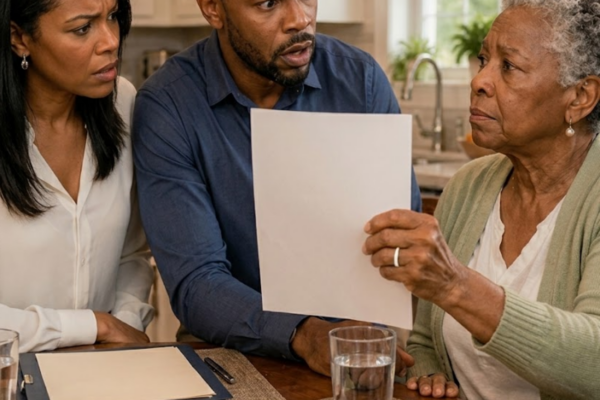
You gave up something important for me. I gave up a part, not my future. The registration should be inside that brown sleeve. Found it. I’ll copy the VIN for the repair record. Why is my brother’s name on your vehicle title? Your brother was Jamal Hill. Jamal died 13 years ago. Tell me how you knew him. I knew what he did for my husband, but not where his family went.
My husband kept saying he had to make something right. He had 13 years to find us. Your car is fixed. Take your papers and go home safely. You could hold the car until I answer you. That would make me wrong, too. My husband left this with one instruction. Find Jamal’s family. Then come back when you’re ready to tell me everything. Everything.
Keep the key tonight. I don’t take evidence from frightened people. I’m not frightened of you. I’m frightened of what we missed. You missed the payment window, didn’t you? I used the part we needed. I’m sorry. Was someone stuck outside? An older woman alone in the snow. Then you made the right choice. Jamal carved these the day we opened our first toolbox.
Maybe the woman recognized them before you recognized her papers. Calvin, what did you leave unfinished? I came back because kindness shouldn’t be answered with another silence. Then start with the picture. That’s Jamal’s jacket. He wore it until the elbows turned white. He stood beside my husband the day they tested the first rig.
I saw that mark in their workshop every week. Jamal said he was building something big. He never said with whom. Did your husband have anything to do with Jamal’s death? No. Jamal saved Calvin before he ever designed that device. A hoist cable snapped. Jamal shoved Calvin clear and shattered his own shoulder.
He told us it was a warehouse fall. He told us it was a warehouse fall. Why would he hide saving a man’s life from us? Because Calvin paid Calvin paid his medical bills and Jamal hated feeling indebted. Put down my father’s property and step away from my mother. She brought it here herself. She brought it here herself.
How much will make this sudden brother story disappear? You couldn’t afford the answer I’m looking for. Take both. I want truth, not leverage. And I intend to give it to you. Contact her again and our attorney will close this garage. I haven’t contacted her once. Check her call history. He repaired my car for free and let me leave with every document. That doesn’t prove his story.
Keep the picture safe. It’s the first new thing I’ve learned about Jamal in 13 years. It won’t be the last. This opens a bank box Calvin maintained until he died. Did he ever tell you what’s inside? Only that it belongs to two families. Dad’s box is private estate property. Then the executive of his estate is inviting Marcus to open it.
Set the appointment yourself. I’ll come if the bank says I belong there. That’s fair. More fair than we’ve been to you. If this is false, I’ll make sure everyone knows. If it’s true, make sure everyone knows that, too. Why didn’t you demand the key? Because grief doesn’t give me permission to become a bully.
Your uncle may have built a safety device nobody credit him for. Then finding the truth is bigger than finding money. The scholarship fund is empty, but I can hold Ava’s spot until Monday. Thank you. I would Monday. I won’t promise money I don’t have. Don’t sell the garage just to keep one club. I’m not losing the garage. I’m just late finding the answer.
There has to be a trail, Calvin. You kept every receipt. Your father mailed this six times. Every envelope came back. I never saw those. The garage address changed after the fire on Quincy and Calvin kept writing to the burned building. The bank confirmed the box.
Will you meet me tomorrow at 10:00? If they put my name on the appointment, I’ll be there. Let me open it first. No. Whatever is inside has waited long enough for both families. Mrs. Carter is the executive and Mr. Hill is her documented guest. Guest doesn’t mean beneficiary. Nobody said it did. I will leave you privacy, but nothing leaves before we log the inventory. Understood.
Calvin kept all of it. Don’t move anything until Miss Patel returns. This handwriting is Jamal’s. He made the sevens backward. Calvin used to tease him about that. Jamal saved my life, then helped me build the device that saved hundreds more. He carried this guilt into every quiet room of our marriage. My mother carried a different silence.
Neither family deserved it. This says 12% of inventor royalties. It says draft. We still need facts, not wishes. Please inventory everything and give each side identical certified copies. That is exactly how we’ll proceed. The originals remain sealed here until council agrees on release. Good. No one gets to lose them again.
This is serious evidence. But it isn’t a judgment yet. Tell us what it can prove. The signatures support intent. We still need the filed patent, license history, and final exhibit. Then we find all three. Calvin tried to contact the family for years. These returns explain delay, but they don’t settle the royalty accounting.
The papers may prove Uncle Jamal earned a share, but nothing is ours yet. His name is already ours. That’s the part nobody can deny. The filed patent uses the same linkage and redmarked revision. redm marked revision but only Calvin is listed right on the patent. Yes. Licensing continued for 9 years. The estate received inventor distributions every quarter. Then Jamal’s share was never paid.
One witness is named here. Darius Hol test supervisor. Can a memory after 13 years matter? If records support it. I remember Jamal Hill. I kept waiting for somebody from his family to call. This is his brother. Bring me the toolbox and the red circle drawing. I’ll show you what he changed. I’ll meet you at my garage tomorrow.
That box sat under Jamal’s bench every night. How can you be certain? I welded the broken left latch. Your brother scratched both your initials here after the accident. He never told me why that week mattered. The original lift could restart while a worker cleared a jam. This linkage forces a manual reset away from the danger zone.
Jamal designed that reset after he pulled Calvin from beneath the falling carriage. So saving him led to saving other workers. I watched both men sign this. The final exhibit listed every field test. Do you know where that exhibit went? Company archives. Why didn’t anyone come to us when Jamal died? Calvin tried. Your old shop burned, the phone disconnected, and grief made him retreat.
He could have tried harder. Yes. And I should have tried at all. Brent’s attorney sent a demand that you stop are that you stop using the Carter name publicly. I haven’t used it publicly. Send them that fact. One angry post could put them on defense. And turn Jamal’s truth into gossip. We do this clean. Then I’ll help make the place look worth trusting.
You don’t have to fix grown people’s mistakes. I’m helping you keep the door open. They accuse you of public claims, but cite none. We answer once and request the archive exhibit. No threats, just records. You threatened a man who protected my safety and your father’s reputation. I was protecting you from a claim I didn’t understand. Your father believed the Hill family deserved answers.
Then why didn’t he tell me? Because shame made him smaller. This was mailed before I joined the company. Marcus didn’t create this trail. Your father did. I saw mom alone, old papers, and a stranger asking questions. I panicked. Panic explains contempt. It doesn’t excuse it. I’ll withdraw the demand and authorize the archive search.
Then apologize to Marcus before you ask him for patience. I accused you without evidence and threatened your livelihood. I was wrong. Are you withdrawing the demand today? I don’t need you to like me. I need the records opened. You’ll have every archive file by Friday. Let me cover the repair and your lost part.
Pay the invoice after the truth is settled, not before. My price is simple. If Jamal earned credit, put his name back where it belongs. If the archive proves it, I will. This inventory lists the missing field test exhibit and assigned royalty schedule. Both match the bank copies. The evidence consistently identifies Jamal as co-developer and grants his estate 12%.
Say what that means in plain English. After fees and prior distributions, Jamal’s estate is owed $148,600 plus future quarterly royalties. $148,600. It should have reached your family years ago. My mother died thinking Jamal left nothing but debts. I can’t repair what your mother believed. No, but you can correct what the public record says.
Add Jamal as co-developer in the license history, training materials, and company archive. Agreed. Subject to accurate wording. I’ll draft it. Calvin wanted both families to benefit. Benefit begins with telling the truth about both men. This is Jamal’s estate money, not a gift and not hush money. Then I’ll use it like something he earned. Before I sign, the attribution clause stays permanent.
It survives any future license transfer. I check twice. I spent weeks protecting a story that wasn’t true. Now spend years protecting the record. That is the DMV cleared Jamal’s old co-owner entry without erasing the original record. Good. History shouldn’t trap you or disappear. Please let me pay the honest invoice now. Parts, 1-hour labor, no rescue fee.
We’re late, but the fee is covered. Her spot is still open. Thank you for holding it. Did the royalty pay for this? Your uncle’s work paid what it should have paid long ago. I can clear the shop debt, save your college fund, and still build something useful. A place where kids learn from Uncle Jamal. Free Saturday training for neighborhood teens. Safety first, skills second, pride always. Call it the Jamal Hill Apprenticeship.
I need an instructor who can teach breaks without terrifying 14-year-olds. So, not you. Good thing I’m available Saturdays. I can refer eight students if the safety plan passes district review. Send the inspector before you send one child. The company can donate a decommissioned demonstration rig and certify it for training only with no control over admissions or curriculum. Agreed.
This is the revision Jamal fought for. Then teach the first class why it mattered. I spent 13 years angry that you left without explaining. Maybe he was trying to finish the explanation. Truth came late. Late still means it came. We can do something with it. The original stays safe. I thought the family should keep this copy.
You are part of the family that carried it here. Eight students, two instructors, one nervous founder. Founders just isn’t standing here. One of them just isn’t standing here. The district inspector approved every station. Then the door opens on time. Co-developer Jamal Hill. The company archive uses the same words. Now, make sure the next generation understands why.
Jamal asked one question nobody else asked. Who protects the worker clearing the jam? That question built this room. You don’t owe this garage perfection. You owe one another attention, honesty, and safe hands. And closed toe shoes. Always. Interlock engaged. Manual reset required. Exactly. The machine waits until the person is safe. Your father wanted to find them.

Marcus found what dad couldn’t finish. Do you think Uncle Jamal would like this? He’d complain about the tool layout, then teach every kid here. A good name isn’t what opens doors for you. It’s what you build after the door opens. That’s our job now.
The piercing winter gale screamed across the industrial corridor of East Cleveland, driving needles of freezing sleet against the corrugated tin walls of Hill Auto Repair.
Inside the drafty two-bay garage, the ambient temperature hovered barely above freezing. Marcus Hill stood over the open engine bay of a battered Chevrolet Trailblazer, his breath pluming in white clouds under the harsh halogen work lamps. His large, calloused hands, deeply stained with graphite and motor oil, worked a ratchet with mechanical rhythm. He was forty-two years old, broad-shouldered, with eyes that carried the quiet, watchful vigilance of a man who had spent his entire adult life keeping wolves away from the family door.
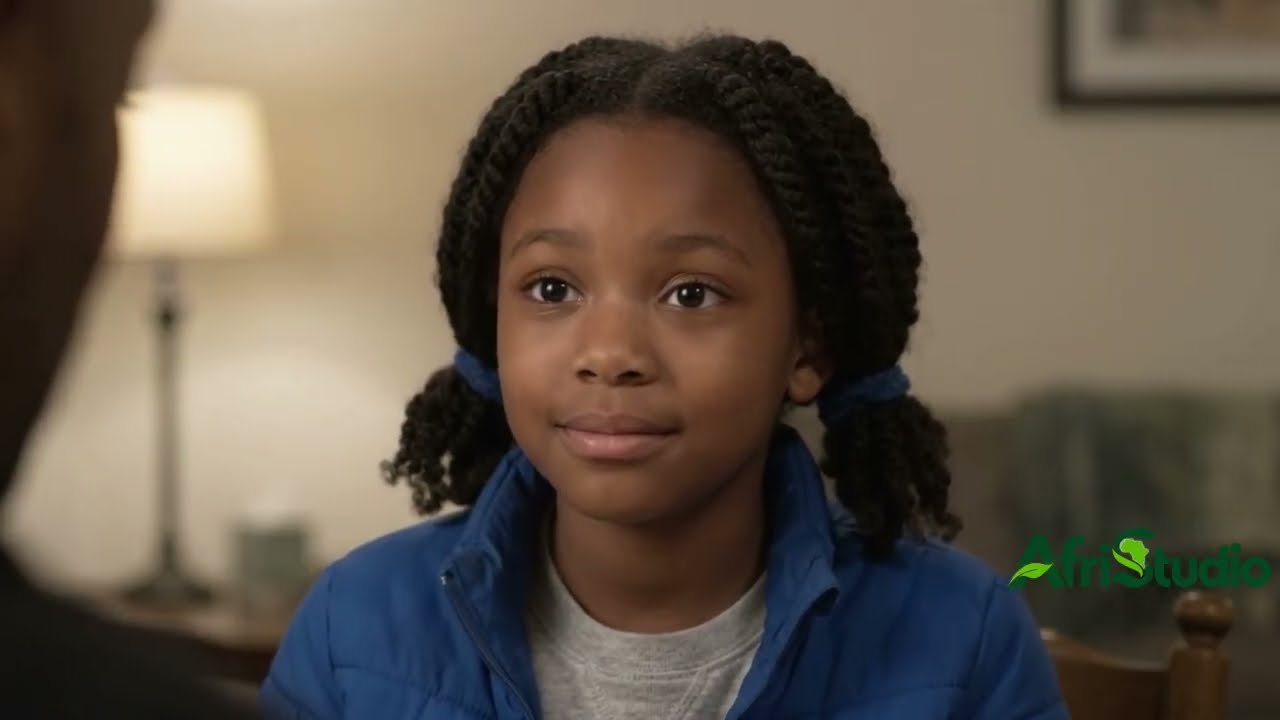
Beside the hydraulic lift, his fourteen-year-old daughter, Ava, stood bundled in an oversized quilted parka, clutching a worn spiral notebook to her chest. Her smartphone screen glowed in the dim light, displaying a countdown timer next to a banking portal.
“Dad,” Ava said softly, the tremor in her voice having little to do with the freezing draft. “The online enrollment deadline for the State STEM Robotics Academy locks at eight o’clock tonight. It’s seven-twenty. If the registration deposit isn’t cleared, they release my seat to the district waiting list.”
Marcus didn’t break his cadence with the wrench, but a muscle leaped along his jawline. “I know the hour, baby. I know exactly what it means. The buyer for this Trailblazer is bringing a certified cashier’s check at ten o’clock tomorrow morning. Three thousand dollars. The minute that check clears, we pay the tuition in full.”
“The portal doesn’t accept promises, Dad,” Ava murmured, looking down at the scuffed toes of her winter boots. “It’s automated. If the card isn’t processed by eight, the seat is gone.”
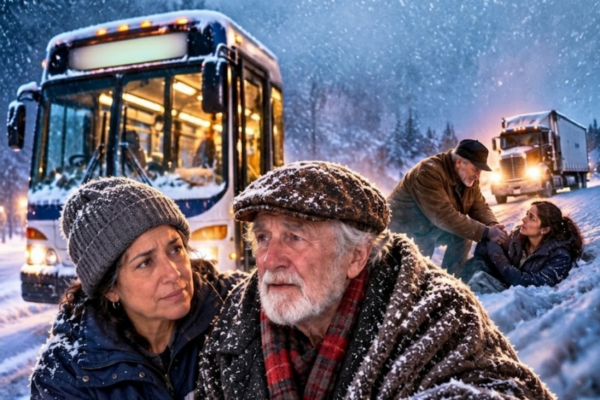
Before Marcus could answer, the piercing shriek of a dying serpentine belt shattered the quiet from the street outside. Through the snow-caked bay windows, headlights flickered erratically. A decade-old Buick sedan sputtered into the gravel apron, its engine backfiring with a metallic, sickening thud before coughing once and dying completely in a cloud of bitter, sulfurous steam.
Marcus lowered his ratchet, wiped his palms on a grease rag, and walked to the pedestrian door.
Standing in the swirling blizzard beside the dead vehicle was an elderly woman. She wore an expensive, tailored wool overcoat, but she had no winter boots, no gloves, and her silver hair was plastered to her temples by the freezing rain. Her frame was trembling so violently that her car keys clattered onto the ice beneath her feet.
Marcus threw open the door, stepping out into the biting subzero wind. “Ma’am! Get inside! Right now!“
He caught her by the elbow just as her knees buckled on the slick asphalt, guiding her through the doorway into the perimeter of heat thrown off by the shop’s kerosene torpedo blower.
“My… my engine simply stopped,” the woman stammered, her lips a faint, terrifying shade of lavender, her teeth clicking uncontrollably. “The dashboard went black on the highway overpass. Every commercial dispatch number I called had a two-hour automated recording. I saw your shop lights from the access ramp. Please… I can pay whatever you ask. Just don’t make me wait out there.“
Marcus pulled a heavy metal folding chair beside the blower, settled her into it, and draped his own flannel overshirt across her shivering shoulders. Ava immediately set her notebook aside, hurried into the tiny back office, and returned with a steaming ceramic mug of instant black coffee, placing it gently into the woman’s freezing hands.
“Drink that slow, ma’am,” Marcus said gently. “My name is Marcus Hill. You’re out of the storm. The car is metal; we can fix metal. Let’s get your core warm first.“
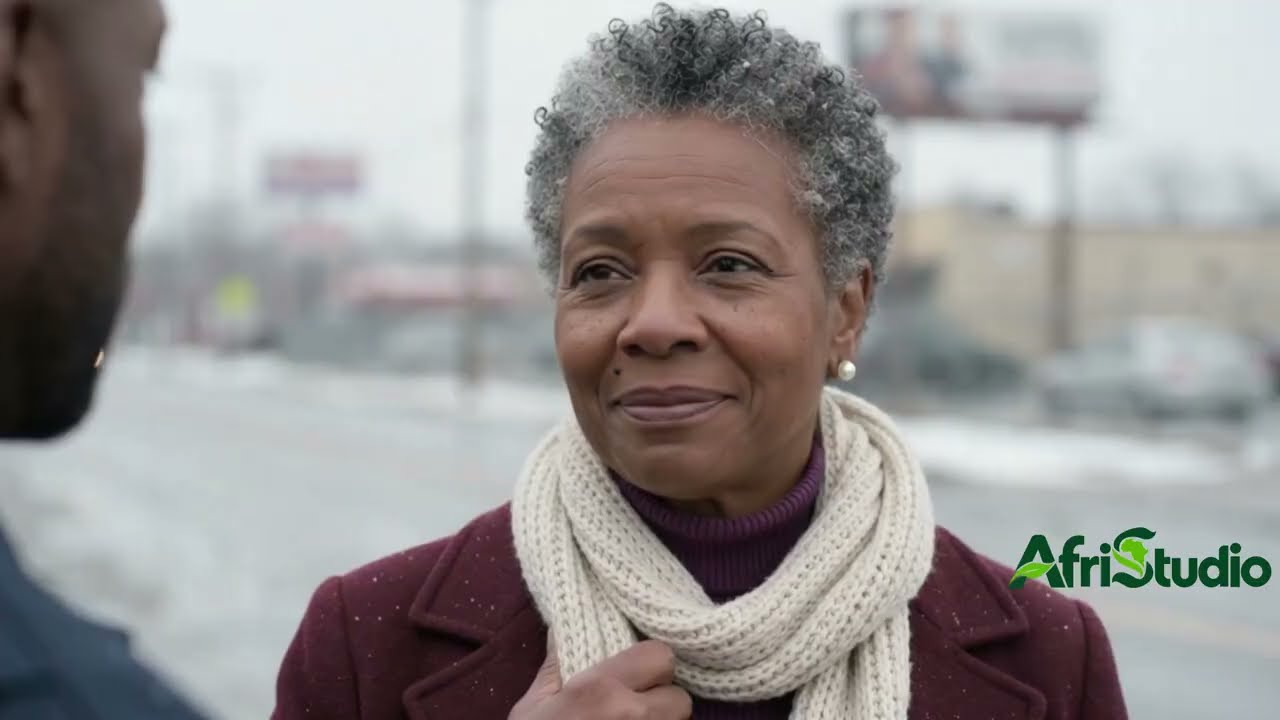
The woman looked up, her faded blue eyes welling with sudden, overwhelming tears. “I’m Evelyn. Evelyn Carter. God bless you, son. God bless you.“
Marcus walked back into the bay, where his lead technician, Leon—a sixty-year-old veteran mechanic who had worked these docks for three decades—was wiping down tools. Leon glanced toward the customer, then looked pointedly at the clock on the wall: 7:28 PM.
“We locking up, Marcus?” Leon muttered under his breath. “Or did winter just drop another unpaid charity case on our doorstep twenty minutes before the power grid fails?“
“One last person, Leon,” Marcus replied, his voice firm and even. “The business comes second to a life.“
Marcus grabbed his heavy hydraulic floor jack, hauled it out into the sleet, and hooked a heavy tow strap to the Buick’s front subframe. Working with brisk, brutal efficiency against the howling wind, he winched the dead sedan across the threshold and onto the concrete floor of Bay Two.
He popped the hood. The diagnostic was swift and merciless: a catastrophic failure of the primary crankshaft position sensor and a seized alternator bearing. The electronic timing was completely scrambled. Without a functioning sensor, the engine computer refused to pulse fuel to the cylinders.
Marcus walked over to the shop’s locked steel parts cabinet. Inside, sitting in a sealed plastic bag, was an OEM high-performance crankshaft sensor—a rare, expensive component that had taken three weeks to arrive via freight.
Leon stepped between Marcus and the cabinet, his face dark with warning. “Marcus, no. Absolutely not. That is the final component for the Trailblazer. That buyer tomorrow is paying three grand because that truck runs clean and passes emissions. If you strip that sensor, the Trailblazer doesn’t start, the buyer walks, and you don’t have Ava’s tuition money.“
Ava stood in the doorway of the office, holding her phone. The digital display read: 7:36 PM. She looked at the blue box in her father’s hands, then looked through the glass at the trembling, elderly woman holding the coffee mug by the kerosene heater.
Ava didn’t speak. She looked at her father with her mother’s dark, solemn eyes—eyes that understood the brutal mathematics of poverty, but also understood the moral lineage of the Hill family.
Marcus looked at his daughter. His throat tightened with an agony that felt like swallowed glass.
“Leon,” Marcus said softly, his voice brooking no argument. “Put the sensor in the Buick.“
“Marcus, you are burning your own child’s future for an absolute stranger!” Leon hissed.
“A broken vehicle in a negative-ten-degree blizzard isn’t a lesson I want my daughter learning,” Marcus answered, pushing past him. “We do the work in front of us. God will handle the morning.“
Working with surgical speed, Marcus dropped beneath the Buick’s chassis. Sleet dripped from the rusted frame into his hair, cold and foul with road brine, but his hands moved with flawless muscle memory. He unbolted the shattered sensor, spliced the weather-pack connector, installed the fresh unit, and torqued it to specification. He pulled a spare remanufactured alternator from his salvage rack, aligned the serpentine belt, and dropped the vehicle back onto its suspension.
“Key,” Marcus called out.
Ava brought the ignition key. Marcus reached through the driver’s window and turned the cylinder.
The starter engaged. The engine coughed once, caught its timing, and roared into a smooth, purring idle. The exhaust blew clean and clear.
Evelyn Carter stood up from the folding chair, clutching her handbag, her face luminous with relief. “It started! Heavenly Father, it actually started!” She fumbled through her leather purse, producing a thick fold of hundred-dollar bills. “Please. Take all of it. For the tow, the night work, the parts. Take it.“
Marcus gently pushed her hands back toward her coat. “Keep your money in your purse, Mrs. Carter. It’s an arctic emergency. I took an oath when I hung my sign over this door: nobody freezes on my watch. Keep your cash.“
“Sir, that is impossible,” she insisted, astonished. “You spent an hour under a filthy car! You used an expensive part! You have a business to run!“
“Safety first, numbers later,” Marcus said with a tired smile. “If you want to settle the ledger, do an act of kindness for someone else down the road.” He walked to the passenger side, opening the glovebox. “I just need your vehicle registration and certificate of title so I can log the VIN and component serial numbers into the municipal repair ledger. State regulatory requirement for emergency mechanical work.”
“Of course,” she said, pointing a trembling finger. “The original county title is inside that brown leather documentation folder. My late husband insisted on keeping the original in the vehicle.”
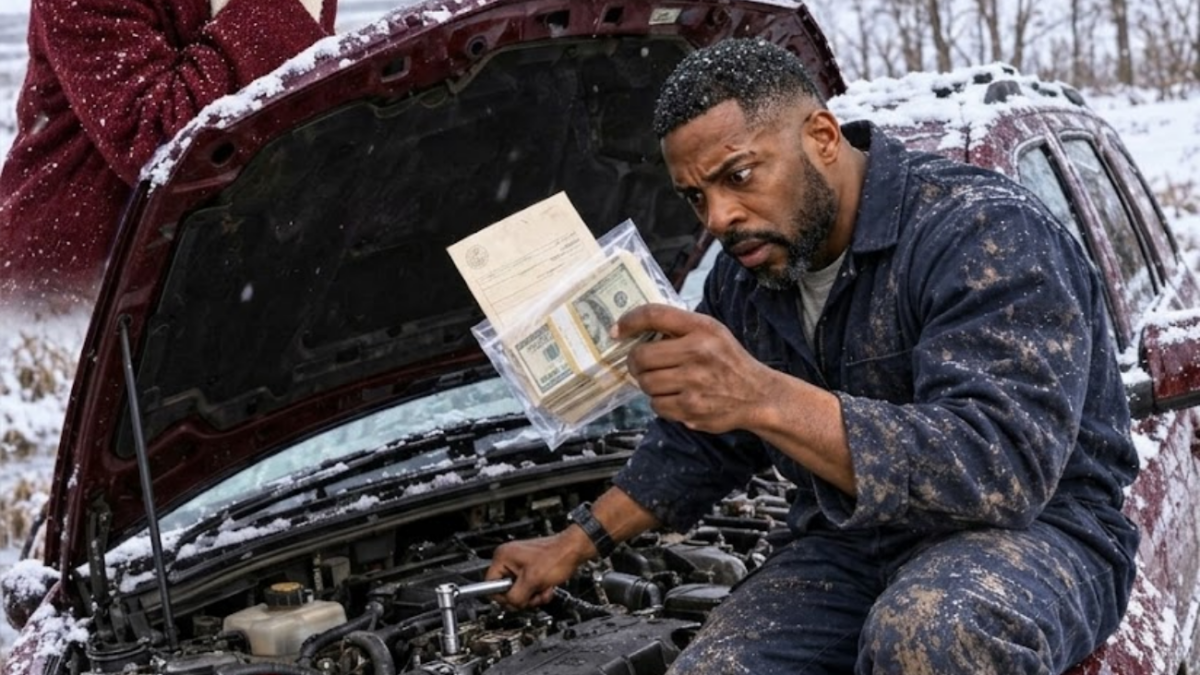
Marcus reached into the glove compartment, pulled out the weathered, brass-cornered leather sleeve, and unzipped the brass fastener.
He slid out the heavy, watermark-embossed Ohio Certificate of Title.
He flattened the aged document beneath the harsh white glare of the overhead halogen inspection lamp, his ballpoint pen poised over his clipboard to copy the seventeen-character vehicle identification number.
His eyes drifted upward across the pre-printed state registry boxes to the legal ownership declaration line.
The pen slipped from Marcus’s fingers, clattering loudly against the concrete floor.
The breath evacuated his lungs with the violent, concussive force of an explosion. The room seemed to warp, the sound of the idling engine fading into a deafening, high-pitched ringing that roared in his ears. The cold garage vanished, replaced by an abyss of pure, suffocating shock.
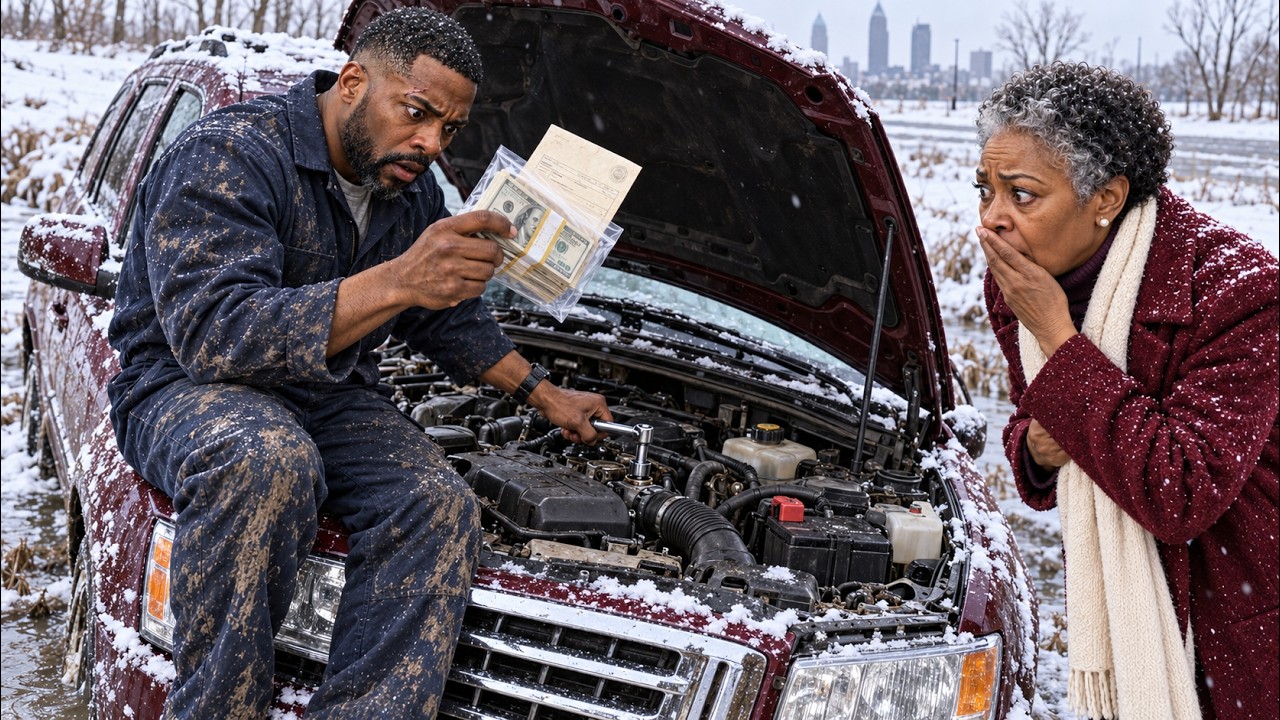
Typed into the official state registry, beneath the heavy embossed seal of the county recorder, were two names linked as joint co-owners:
CO-OWNER 1: CALVIN CARTER
CO-OWNER 2: JAMAL HILL
Beneath the second name, inscribed in dark blue fountain pen ink with the unmistakable, backward-slanting loops of a left-handed draftsman, was a signature that Marcus had memorized as a boy.
It was the signature of his older brother.
Jamal Hill.
The brilliant, tragic brother who had died in a squalid, unheated apartment thirteen years ago, buried in an unmarked county grave while leaving behind an impoverished mother, a broken family, and a mountain of unexplained debts.
Marcus stood completely rigid. His hands began to shake with an uncontainable, subterranean tremor that reached down into his marrow. He turned around slowly, his face drained of color, his dark eyes burning with a terrifying, unblinking intensity that made Evelyn Carter shrink back against the office door.
“Mrs. Carter,” Marcus whispered, his voice dropping into an octave so low, so dangerous, that even the idling engine seemed to quiet beneath it. “Why in God’s name is my dead brother’s name on your vehicle title?”
The Ghost in the Ledger
Evelyn Carter stopped breathing.
Her faded blue eyes widened in sheer, paralyzed disbelief. She looked at Marcus’s towering frame, then down at the aged title certificate in his shaking hands, and then toward the ceiling as if seeking divine intervention. Her hands flew to her throat, her lips parting in a dry, breathless gasp.
“Your… your brother?” she whispered, her voice barely carrying across the bay. “Your brother was Jamal Hill?”
“Jamal Hill died thirteen years ago,” Marcus said, taking half a step toward her. His knuckles were white against the clipboard. “He died broke. He died with his right shoulder shattered, living in a boarding house on eighty dollars a month from disability assistance. My mother spent the final five years of her life working overnight shifts in a hospital laundry just to pay off the collection notices for his medical treatments! And you drive into my garage in a four-thousand-dollar automobile with his legal signature stamped onto the property line?”
“Marcus, please,” Evelyn cried out, her eyes brimming with fresh tears, raising her frail hands in an open, non-threatening plea. “I didn’t know where to look! I swear on my mother’s soul, I didn’t know where your family went!”
“Who was Calvin Carter?” Marcus demanded, his voice echoing off the tin rafters with thunderous authority. “Tell me who he was!”
“Calvin was my husband,” Evelyn wept, clutching the back of the folding chair to steady her shaking knees. “He was a structural mechanical engineer. He died three months ago. For thirteen years, Marcus… for thirteen years, Calvin sat in our study late at night, staring at old blueprints, weeping into his hands, saying that he had to make something right before he met his Maker. He spent the last six months of his life searching for Jamal’s people, but your mother’s house was gone! The address on Quincy Avenue was a vacant lot! The phone numbers were disconnected!”
“Because the Quincy house burned to the ground!” Marcus fired back, the raw, ancient agony of his family’s displacement tearing out of his chest. “We lost everything in that fire! We were forced into the public housing projects on the west side! Jamal was in the ground, my mother was sick, and we had no forwarding address because nobody in this city gave a damn where poor Black folks ended up!”
He looked down at the document again, his chest heaving with fury and grief.
“Did your husband have something to do with how Jamal died?” Marcus asked, the question laced with a terrible, agonizing dread. “Did Calvin Carter kill my brother?”
“No! Heavenly Father, no!” Evelyn cried, reaching out toward him. “Jamal saved Calvin’s life!”
The garage went dead, suffocatingly quiet.
In the office doorway, Ava stood motionless, her eyes wide, the robotics deadline completely forgotten as the digital clock on the wall silently ticked past 8:00 PM.
“What did you just say?” Marcus whispered.
“It was fourteen years ago,” Evelyn said, her voice trembling with the weight of an unburdened confession. “At the industrial hoisting facility down in the Flats. Calvin was conducting high-load failure testing on a commercial freight elevator carriage. A five-ton steel counterweight snapped its primary cable. The safety catches sheared off. The carriage was plunging straight down the shaft toward the pit where Calvin was inspecting the hydraulic piston.”
Evelyn took a shuddering breath, wiping tears from her cheeks.
“Jamal was working as a contract certified welder on the lower framework,” she continued softly. “Nobody else moved. Everyone ran for the exits. But your brother… your brother dove into the pit. He slammed his body into Calvin, throwing my husband six feet clear of the drop zone into a concrete drainage alcove. A split second later, the five-ton steel carriage crushed the pit. A falling structural crossbeam caught Jamal across the upper back and shoulder, obliterating the joint.”
Marcus felt the concrete beneath his feet begin to sway.
He remembered that night. He remembered Jamal arriving at their mother’s kitchen table with his right arm pinned in a crude sling, his face gray with agony, claiming he had slipped on an icy warehouse loading dock while carrying salvage scrap. Jamal had adamantly refused to let them contact an attorney, claiming there was no insurance, no worker’s compensation, and no employer liability.
“Jamal told us it was an accidental fall,” Marcus said, his voice cracking with heartbreak. “Why would he lie to his own mother about saving a man’s life?”
“Because Calvin paid all of his emergency orthopedic surgeries out of our personal bank accounts,” Evelyn explained, her eyes pleading for understanding. “Calvin gave him fifteen thousand dollars in cash so the hospital wouldn’t turn him away. But you knew Jamal… you knew how fierce his pride was. He despised feeling indebted to anyone. He told Calvin: ‘I didn’t pull you out of that hole for a handout, old man. We’re even.’ But Calvin knew they weren’t even. Calvin knew that your brother had sacrificed his physical livelihood to keep my husband alive.”
Evelyn unclasped a small leather pouch from her purse and retrieved a heavy brass safety-deposit box key, offering it across the space between them.
“Calvin spent the next year in that workshop with Jamal,” Evelyn whispered. “They worked in secret. Jamal couldn’t lift heavy steel anymore because of his ruined shoulder, but his mind… Calvin said Jamal had the mind of a mathematical prophet. They designed something together, Marcus. A mechanical fail-safe device that could never be defeated by cable fatigue. And when Calvin passed away, he left this key with one instruction: ‘Find Jamal Hill’s family. Give them the box. And let them take what belongs to them.'”
The Ambush in the Bay
Before Marcus could touch the brass key, the gravel outside crunched violently under the heavy tread of an expensive vehicle.
A sleek, metallic-gray German luxury SUV pulled directly across the garage bay door, blocking both exits. The driver’s door flew open, and a man in his late thirties stepped into the garage, his expensive tailored cashmere overcoat unbuttoned, his silk tie askew, his face flushed with frantic, corporate rage.
Trailing behind him was a private security driver who lingered near the threshold, his hand resting conspicuously inside his jacket pocket.
“Mother!” the man bellowed, his voice echoing off the tin walls. “Have you completely lost your mind? Your phone tracking showed you stopped in an industrial ghetto off East 55th at eight o’clock at night! I’ve been scouring these back alleys for an hour!”
Evelyn straightened her shoulders, her frailty vanishing behind a wall of cold, matriarchal dignity. “Brent. Lower your voice. I experienced a catastrophic mechanical breakdown on the overpass. Mr. Hill towed my car, brought me out of the subzero wind, and repaired the vehicle with his own parts.”
Brent Carter—senior vice president of Carter Industrial Dynamics—barely spared the elderly woman a glance. His eyes swept across the grease-stained floor, taking in the hydraulic lifts, the toolboxes, and finally landing on Marcus Hill, who stood motionless beside the open hood of the Buick, holding the brown leather document sleeve.
Brent’s eyes locked onto the title certificate in Marcus’s hands. A flash of pure, predatory panic flared behind the executive’s designer glasses.
“Who authorized you to go through my mother’s private vehicular records?” Brent snapped, stepping aggressively into Marcus’s personal space. “Put those documents down on that workbench and step away from her immediately.”
Marcus didn’t blink. He stood six feet two inches tall, broad-chested, his arms crossed over his chest, looking down at the corporate heir with the calm, immovable disdain of a master craftsman addressing an insolent apprentice.
“Your mother handed me these documents to log the repair, Mr. Carter,” Marcus said calmly. “And unless you are carrying a municipal law enforcement badge in that expensive coat, you will lower your tone in my place of business.”
Brent let out a harsh, theatrical sneer, reaching into his breast pocket and pulling out a heavy alligator-skin checkbook.
“I know what this is,” Brent said, his voice dripping with venomous condescension. “Every two-bit shakedown artist in this city thinks an elderly woman driving an old sedan is an open target. How much do you want? Five thousand? Ten thousand? Name your price to hand over those documents, delete whatever photographs you just took on your phone, and make this ridiculous ‘long-lost brother’ fairy tale disappear forever.”
Ava stepped out of the office doorway, her eyes flashing with fury. “My father fixed her car for free! He gave away my school money so she wouldn’t freeze to death!”
“Quiet, Ava,” Marcus instructed gently, never taking his eyes off Brent.
Marcus picked up the brass safety-deposit key from the workbench, picked up the vehicle title, and handed both directly back to Evelyn Carter.
“Mr. Carter,” Marcus said, his voice dropping into a terrifying, crystalline calm. “There isn’t enough money in your corporate treasury to buy the answers I am looking for. I don’t take payoffs, I don’t deal with bullies, and I don’t negotiate my family’s name. Your mother’s car is operational. Take her home safely. But mark my words: this conversation is not over.”
Brent grabbed his mother’s arm, pulling her toward the luxury SUV. “If you ever contact my mother again, Hill, my corporate legal team will file an emergency civil injunction and have the city health and zoning departments shut this illegal tin shack down before noon tomorrow. Let’s go, Mother.”
Evelyn pulled her arm free from her son’s grip with shocking strength. She turned back to Marcus, her eyes burning with an unshakeable, sorrowful resolve.
“Do not listen to him, Marcus,” Evelyn said clearly. “Calvin’s box is at the National Trust Bank on Euclid Avenue. Box 414. The appointment is set for ten o’clock tomorrow morning. I am the executor of Calvin’s estate. You be there. And bring your brother’s memories with you.”
The Vault on Euclid
At nine-forty-five the following morning, Marcus Hill stood in the marble rotunda of the historic National Trust Bank building in downtown Cleveland.
He wore his Sunday church suit—a clean, pressed charcoal wool jacket and dark tie—accompanied by Ava, who carried an old, heavy wooden mechanic’s chest by its brass handle. The chest had belonged to Jamal; its corners were reinforced with hand-welded steel plates, and its oak lid was scarred with decades of machine oil.
Sitting on the leather banquette across the rotunda was Evelyn Carter, accompanied by a sharp, professional woman in her forties wearing a tailored navy suit—Diana Vance, senior partner at a prominent probate and intellectual property firm.
Brent Carter stood near the security stanchions, his arms crossed, flanked by an aggressive corporate litigator whose leather briefcase rested on the marble floor like an unexploded ordnance.
“Mrs. Carter is the sole legal executor of the Calvin Carter Estate,” Diana Vance stated to the bank’s vice president of trust management, Miss Patel. “Under Section 4 of the testamentary trust instrument, Mrs. Carter possesses unilateral legal authority to access Safe Deposit Box 414 and admit designated witnesses to review co-mingled intellectual property records.”
Brent’s attorney stepped forward, thrusting an index finger into the air. “We have filed an emergency petition for an ex-parte stay in county surrogate court! This mechanic is a non-beneficiary third party attempting to extort estate assets based on an unverified claim!”
“Show me the judicial injunction signed by a presiding judge, counselor,” Diana Vance countered with icy precision. “Unless you have a signed restraining order from Judge Holbrook, step aside and let the executor execute her fiduciary duties.”
Miss Patel inserted her master key into Box 414, turning it in tandem with Evelyn’s brass key.
The heavy steel drawer slid forward on greased rollers.
Inside the oversized safety deposit cavity lay a thick, faded canvas portfolio bound with heavy industrial leather straps.
Evelyn reached into the drawer, lifted the portfolio with both hands, and set it gently in the center of the mahogany consultation table.
“Open it, Marcus,” Evelyn whispered.
Marcus untied the leather straps. His breath caught in his throat.
Resting on top was a stack of six unopened legal envelopes addressed to Jamal Hill, Hill Mechanical Services, 1422 Quincy Avenue, Cleveland, Ohio. Every single envelope bore an official yellow postal sticker stamped: RETURN TO SENDER - FACILITY DESTROYED BY FIRE - UNABLE TO FORWARD.
Beneath the envelopes lay a massive, hand-drawn architectural blueprint rendered on heavy vellum drafting linen.
The title block in the bottom right corner read:
PROJECT GUARDIAN: DUAL-ACTION CABLELESS ELEVATOR INTERLOCK & ARREST SYSTEM
PATENT APPLICATION DRAFT: #US-884-219-B
CO-INVENTORS: CALVIN T. CARTER & JAMAL D. HILL
EQUITY & ROYALTY ALLOCATION: 88% CARTER / 12% HILL (PERPETUAL HEIRS & ASSIGNS)
Marcus traced his trembling fingers across the bottom of the vellum.
There, sketched in red drafting pencil, was an intricate mechanical sub-assembly: a secondary centrifugal safety wedge that engaged an independent guide-rail arrestor the microsecond an elevator hoist cable experienced slack.
Beside the red drafting circles, written in a bold, distinctive hand with backward-slanting numeral sevens, were three sentences that pierced Marcus’s soul:
“The machine must never restart while a worker is clearing a carriage jam. Safety isn’t an option you sell to the client; it’s the law you build into the steel. — J.D.H.”
Ava gasped, leaning over her father’s shoulder. “Dad… look at the sevens. Uncle Jamal always drew his sevens with that little hook on the top bar. You do the exact same thing on our invoices.”
Sitting beneath the blueprint was a formal, notarized memorandum of co-development, executed and signed on heavy legal bond fourteen years ago:
“I, Calvin T. Carter, do hereby certify under oath that the fundamental mechanical innovation underlying the Project Guardian kinetic arrestor was conceived, engineered, and mathematically verified by Jamal D. Hill following the industrial accident of November 14th.
Jamal gave his shoulder to save my physical life, and he gave his mechanical genius to protect thousands of industrial workers who will never know his name. Should I fail to secure his signature upon the final corporate licensing transfers prior to my death, twelve percent of all gross licensing distributions generated by Carter Industrial Dynamics under Patent #US-884-219-B shall be remitted directly to Jamal D. Hill, his mother Martha Hill, or their surviving lawful heirs.
May God forgive my cowardice in failing to settle this debt while my friend was alive.”
The room fell into an absolute, breathless hush.
Even Brent’s aggressive litigator took half a step backward, his jaw dropping as he stared at the certified, notarized signature of the corporate patriarch.
Brent’s face transformed from arrogant fury into sickly, ashen terror. “This… this is an unrecorded private draft! It was never registered with the United States Patent and Trademark Office! My father incorporated Carter Industrial Dynamics as the sole assignee!”
“It was incorporated as the sole assignee,” Diana Vance declared, her voice ringing like a bronze bell in the consultation room, “because your father utilized corporate licensing entities to obscure the co-inventor trail after Jamal’s death! But this sworn, notarized affidavit of co-development, combined with the unbroken chain of returned certified correspondence, establishes an open, active constructive trust under Ohio revised probate law.”
Diana pulled a financial ledger from her briefcase, her pen moving with lethal efficiency.
“For the past nine years, Carter Industrial Dynamics has licensed the Project Guardian braking mechanism to three multinational freight conglomerates—Otis, ThyssenKrupp, and Schindler. The gross royalty distributions received by the Carter Family Trust over that period total one million two hundred and thirty-eight thousand dollars.”
Diana turned the paper toward Brent Carter.
“Twelve percent of that distribution, compounded with statutory legal interest and forensic accounting penalties, amounts to precisely one hundred and forty-eight thousand six hundred dollars owed to the Estate of Jamal Hill today. Plus a mandatory twelve percent share of all future global licensing disbursements in perpetuity.”
Brent collapsed back into a leather armchair, running his trembling hands through his hair. “One hundred and forty-eight thousand dollars… that’s… that would bankrupt our secondary expansion line.”
“No, Brent,” Evelyn said, standing over her son, her voice carrying the absolute authority of an unbroken mother. “That money does not belong to your expansion line. It never did. It belongs to the family of the man who gave your father the breath to raise you.”
The Testimony in the Steel
Before the legal settlement could be signed, one crucial piece of evidentiary chain remained unverified: the physical prototype.
That afternoon, at Marcus’s request, the legal teams, Evelyn, Brent, and an independent master engineering witness convened at Hill Auto Repair.
The witness was Darius Holt—a seventy-four-year-old retired industrial test supervisor from the Flats who had overseen the heavy testing docks fourteen years ago. Supported by a wooden cane, the old machinist walked slowly into Bay One, his eyes widening as he spotted Jamal’s oak tool chest resting on the central steel workbench.
“I haven’t seen that chest in a decade and a half,” Darius whispered, his voice thick with emotion. “Jamal kept that box locked under his bench every night. He wouldn’t let the corporate apprentices touch it.”
“Darius,” Marcus asked, his voice shaking slightly. “How can you be certain this was Jamal’s box?”
Darius chuckled softly, stepping forward and tapping the heavy iron latch on the left corner of the chest. “Because the factory hinge sheared off during an overhead crane lift in the winter of 2011. Jamal didn’t buy a replacement; he fabricated a custom nickel-alloy latch and braze-welded it himself. Look right here beneath the lip.”
Marcus lifted the lid. There, etched cleanly into the brazed bronze weld with an electric engraving scribe, were four initials enclosed in a hand-drawn circle:
J.D.H. + M.T.H. — BROTHERS IN IRON
Marcus covered his mouth with his sleeve. He remembered the afternoon Jamal had come home with that engraving tool, laughing as he marked their toolboxes in the basement, telling twelve-year-old Marcus that an honest mechanic’s name on his steel is the only title deed that never fades.
Darius walked over to the workbench, where Marcus had laid out the original vellum blueprints from the bank vault beside a decommissioned industrial elevator interlock carriage that Diana Vance’s team had subpoenaed from the Carter corporate archives.
Darius pointed his calloused finger at the mechanical linkage inside the steel housing.
“Look here, gentlemen,” Darius explained to the attorneys. “The original Carter design relied on a single electrical micro-switch to disengage the lift. If an operator was clearing a mechanical jam in the elevator carriage and a power surge occurred, the carriage would drop like a stone. That’s what nearly crushed Calvin.”
The old supervisor traced the physical components with a screwdriver.
“Jamal took that design home for three weeks,” Darius said. “He redesigned the internal geometry. He added this secondary mechanical cam-lock. It physically drops a three-inch hardened steel pin through the drive gear the instant the carriage doors are pried open. The machine cannot move—cannot even physically rotate—until an operator steps twenty feet away and manually releases a safety tether.”
Darius looked directly at Brent Carter.
“Your father didn’t invent that cam-lock, young man,” Darius said, his voice hard as tempered iron. “Jamal Hill hammered that cam-lock out on an anvil with his left hand while his right shoulder was pinned in a surgical brace. I stood in the testing bay and watched him test it forty times until the steel glowed red. That linkage has saved hundreds of young warehouse workers from having their spines crushed across this country. And you had the audacity to call his brother a shakedown artist?”
Brent lowered his head, staring at the concrete floor in absolute, humiliating silence.
The Cleansing of the Record
The legal reckoning that unfolded inside Diana Vance’s downtown offices seventy-two hours later was absolute, transparent, and non-negotiable.
There were no private settlement agreements sealed with confidentiality nondisclosure clauses. Marcus refused to sign any instrument that contained a gag order.
“My brother lived in the dark for thirteen years,” Marcus declared across the mahogany conference table. “I will not take a single penny that requires his name to stay in the dark.”
Evelyn Carter backed him completely. Overriding her son’s corporate objections, she executed a comprehensive, binding restructuring of Carter Industrial Dynamics’ intellectual property portfolio:
First, Carter Industrial Dynamics formally submitted an amended filing with the United States Patent and Trademark Office, officially adding Jamal D. Hill as the posthumous Primary Co-Inventor on Patent #US-884-219-B.
Second, the company issued a full corporate restitution check for $148,600.00, payable directly to the newly established Jamal D. Hill Memorial Estate & Apprenticeship Trust, alongside an irrevocable binding assignment guaranteeing twelve percent of all future domestic and international licensing royalties in perpetuity.
Third, the company’s corporate communications division issued a formal public press release and historical correction, mandating that all future technical manuals, safety training films, and industrial brochures include the historical narrative of Jamal Hill’s sacrifice and co-development of the Guardian arrestor system.
And finally, at Evelyn’s insistence, the official Ohio Bureau of Motor Vehicles title registry for the Buick sedan was formally updated: Jamal Hill’s co-ownership designation was permanently retired into the historical archives with full legal honors, clearing the clean title solely to Evelyn Carter without erasing the original paper trail.
When the final document was signed, Brent Carter sat across the table, his hands folded, his face pale and subdued.
The corporate executive looked at Marcus, his voice devoid of its former arrogance. “Mr. Hill… I owe you, your daughter, and your brother an apology that words cannot cover. I panicked. I saw an elderly woman, old papers, and a stranger asking questions, and I let my fear make me cruel. I was wrong.”
Marcus looked at him for several seconds. The anger that had fueled his sleepless nights had settled into an unshakeable, profound peace.
“Panic explains contempt, Mr. Carter,” Marcus said softly. “It doesn’t excuse it. You spent years protecting a story that wasn’t true. Now, you have the rest of your life to protect the record that is.”
Evelyn Carter stepped forward, placing a warm envelope on the table before Marcus. “Marcus… this is the honest, itemized invoice for my car repair. Parts, one hour of emergency labor, and the tow. Please. Let me settle my debt.”
Marcus looked down at the invoice. The total was two hundred and eighty-four dollars.
He took the check, signed the receipt, and handed it back to her with a smile that carried the warmth of a summer morning. “Paid in full, Mrs. Carter. We are entirely even.”
The Jamal Hill Apprenticeship
Six months later, the early summer sunshine washed over East 55th Street, illuminating a massive, newly constructed timber and steel sign erected above the freshly painted facade of the expanded garage:
The expansion had been financed not by charity, but by the honest fruits of Jamal’s long-delayed intellectual labor.
Marcus had utilized the initial royalty settlement to pay off every cent of debt on the property, establish an unassailable college trust fund for Ava, and purchase the adjacent abandoned brick warehouse, knocking down the dividing walls to construct a state-of-the-art youth technical training facility.
Inside the gleaming, sunlit workshop, eight teenagers from the East Cleveland public school district—dressed in brand-new navy-blue canvas work aprons and steel-toed boots—stood in a neat semicircle around a heavy demonstration rig.
The rig had been donated, certified, and delivered by Carter Industrial Dynamics: a fully operational, cutaway cross-section of the Project Guardian commercial hoisting carriage.
Standing at the front of the class, wearing a crisp white polo shirt with the academy emblem embroidered over her heart, was fourteen-year-old Ava Hill. Beside her on the workbench sat the finished, glowing robotics chassis she had constructed after completing her summer term at the State STEM Academy—a competition-winning automated warehouse navigation unit that had earned her first-place honors across the region.
“Alright, team,” Ava called out, her voice clear, confident, and ringing through the rafters. “Rule number one of mechanical engineering: who can tell me the primary difference between a machine that runs and a machine that endures?”
A fifteen-year-old apprentice in the front row raised his hand. “The machine that endures waits until the human being is safe.”
“Exactly,” Ava beamed, pointing to the red mechanical cam-lock mounted to the demonstration carriage. “Interlock engaged. Manual reset required. This mechanism was engineered in this city by a man who understood that human life is the only asset that cannot be replaced.”
Standing in the shadow of the wide bay doors, Marcus Hill leaned against the doorframe, a mug of coffee in his hand, watching his daughter command the room.
Beside him stood Evelyn Carter, dressed in a comfortable linen dress, holding a tray of warm, fresh cinnamon pastries she had baked for the morning class.
“Calvin would be grinning from ear to ear, Marcus,” Evelyn whispered, her eyes shining with tears of joy. “He would be standing right beside those kids, showing them how to hone the pins.”
Marcus looked up at the brick wall above the primary tool bench.
Mounted beneath a sealed, protective glass display case hung the original vellum blueprint of Project Guardian, its red drafting marks glowing beneath an integrated picture lamp. Beside it hung Jamal’s heavy oak tool chest, its hand-welded bronze latch polished until it caught the morning light like gold.
And beneath the blueprint, etched into a solid bronze commemorative plaque, were the words Marcus had spoken on the cold winter night when destiny had towed an old Buick through his doors:
A good name is not what opens doors for you in this world.
A good name is what you build after the door opens.
From the training bay, the sharp, rhythmic ring of an apprentice’s hammer striking an iron anvil echoed across the neighborhood—a clear, singing note of honest labor that carried up into the vast, bright Ohio sky, telling the soul of Jamal Hill that his work was finally, permanently, home.