“Everyone Received a Year-End Bonus Except Me,” the Black Intern Cried—Then a Billionaire Handed Her an Envelope That Changed Everything!

“Everyone Received a Year-End Bonus Except Me,” the Black Intern Cried—Then a Billionaire Handed Her an Envelope That Changed Everything!“Everyone Received a Year-End Bonus Except Me,” the Black Intern Cried—Then a Billionaire Handed Her an Envelope That Changed Everything!
Everyone got a year-end bonus but me. Annie whispered through choking so pressing her forehead against the hallway wall. Her thin shoulders trembled as she struggled to keep herself from crying too loudly. Oh, would you look at that? A woman’s voice interrupted her.

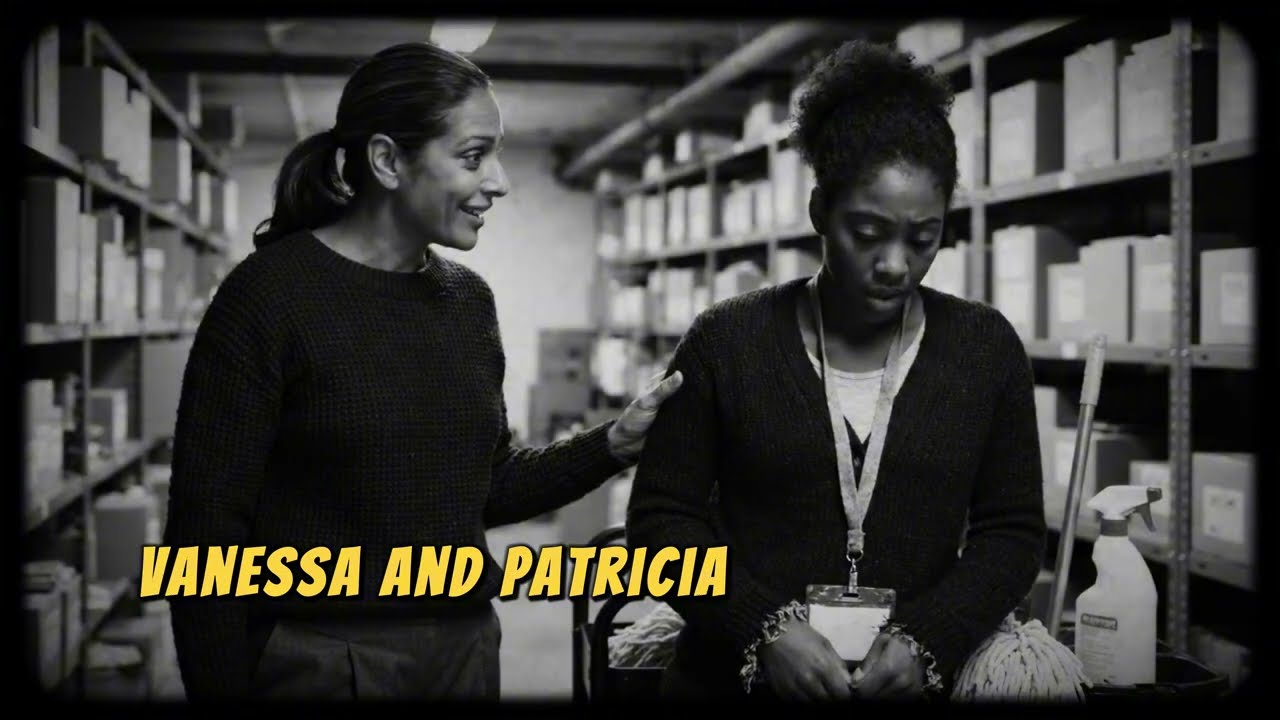
Are you seriously crying over a little Christmas bonus? Annie immediately wiped the tears from her cheeks with the sleeve of her worn navy blue cardigan. Three employees from the finance department had stopped beside her, each holding a thick white envelope they had just received at the company’s year-end celebration. Vanessa Collins, a senior financial analyst, looked Annie up and down with a nasty smile.
Sweetheart, bonuses are for people who actually hold important positions. People who sit in proper offices, make important decisions, and actually bring value to this corporation. They’re not for someone who spends half her time carrying documents around and cleaning up everyone else’s messes. Annie lowered her head, her fingers tightened around the white employee badge hanging from her navy blue lanyard.
I’m sorry, Miz Collins. I wasn’t trying to complain. I just thought my name might be on the night shift recognition list. Vanessa glanced at Annie’s faded cardigan and the canvas bag hanging beside her leg. Recognition for what exactly? You’re an unpaid intern who doubles as a janitor whenever someone needs one. I bet even a $5 Christmas envelope would seem like a fortune to someone like you.
The woman standing beside her. Patricia Wells crossed her arms and examined Annie’s worn canvas shoes. Exactly. What were you expecting? Were you planning to cry until someone in management took pity on you? Look at those shoes. You’ve practically had to stitch them back together yourself. And you think you deserve to stand alongside the full-time employees.
Instinctively, Annie moved one foot backward. The stitching along the edge of her left shoe had come apart and she had repaired it herself using thread from her mother’s sewing kit. She pulled the hem of her cream colored trousers a little lower, hoping to hide it. Ma’am, please. I’m not asking for anything I haven’t earned. I only wanted to doublech checkck the list.
And that’s exactly your problem. Bradley Turner, the third employee, said, “You don’t understand how things work around here. Interns run errands. Our names appear on financial reports because we have degrees and positions. What exactly do you have, a mop or that plastic bucket sitting in the corner?” Annie parted her lips, but no words came out.
She had spent countless sleepless nights organizing financial documents, correcting spreadsheets, and helping employees who rarely remembered to thank her. Standing before these three people, she was too overwhelmed to explain what she had actually contributed. Vanessa stepped closer, holding her thick bonus envelope between two fingers. She lightly tapped it against Annie’s shoulder. Here’s some advice. Go downstairs and clean that basement storage room properly.
Maybe next Christmas. If you work hard enough, we’ll take pity on you and toss you a little spare change. Patricia smiled, assuming she’s still here next Christmas. Annie looked toward the elevators, hoping they would leave, but Bradley remained where he was, casually watching her struggle to hold back her tears. I really need this job.
Annie finally managed to say, “My mother is sick, and I was hoping I could help pay the rent. I know I’m only an intern, but I do everything I’m assigned.” Vanessa glanced at her envelope again. Everybody has bills to pay. Annie, nobody gets a bonus just because their life is hard. Annie nodded.
Although tears were once again streaming down her face, her phone was still open in her hand, displaying a remaining bank balance of just $12. She turned the screen toward herself before anyone else could see it. I understand. Miz Collins, I’m sorry for wasting your time. Then stop crying and get back to work. Patricia snapped. Actually, a man’s voice came from behind them. I’d like everyone to stay right where they are. Vanessa turned around first.
Richard Hayes, chairman and CEO of Hayes Financial Group, stood a few steps away from the executive elevators. Denise Carter, his longtime assistant, stood beside him. Vanessa immediately lowered her envelope. Mr. Don Hayes, we didn’t realize you were coming through here.
We were just helping Annie understand the company’s bonus policy. Richard looked at Annie’s tear stained cheeks and tightly clenched hands. Then at the three employees surrounding her, “I’ve heard enough to understand what’s happening here.” “M Collins,” Patricia stepped aside. Bradley straightened his suit jacket and started toward the main lobby. “Mr. Turner,” Richard said.
Please stay. I’m not finished speaking with you. Bradley stopped. Vanessa looked toward Denise, hoping for some reassurance. But Denise had already begun writing down the names of the employees present. Richard faced the group. You’re right about one thing. She isn’t eligible for the standard annual bonus. Vanessa’s expression relaxed slightly. Exactly.
Sir, that’s what we were explaining. I wasn’t finished. Richard gestured toward the envelopes in their hands. Those payments are based on established employee compensation policies. But those policies do not give any of you the right to mock a colleague’s financial circumstances, clothing, or assigned duties. Vanessa lowered her head.
Patricia pressed her envelope against her hip. Richard turned toward Annie. Miss Johnson, I heard you say you didn’t receive a bonus. Is that correct? Annie swallowed hard. Yes, Mr. Hayes. I understand the regular bonus is for full-time employees, but I thought there might be a separate recognition award for the night shift.
Mr. Pike told me there was nothing for me. Did you receive any written explanation? No. Sir, I asked at the bonus distribution table, but he told me to finish cleaning the storage room. Richard’s expression changed. The storage room? Yes, sir. I help organize documents there whenever the department needs someone. I also help prepare financial spreadsheets. And are those cleaning duties included in your internship agreement? Annie hesitated.
I’m not really sure. Sir, I didn’t want to refuse when people asked me to help. Richard looked at Denise. Please call Gordon Pike over here immediately. Before Denise could take out her phone, Gordon appeared at the far end of the hallway.
He had been watching the conversation from the main lobby and now appeared ready to retreat. “Mr. Fle Pike,” Richard called, come over here, “Please,” Gordon approached with a practice smile. “Mr. W Hayes, is there something I can clarify for you?” Yes. I’d like to know why Miss Johnson was told to clean the basement when she asked about the night shift recognition list. Gordon adjusted his tie.
Sir, she’s an unpaid intern. Our policy clearly excludes interns from the standard annual bonus. I was simply explaining the rules. Richard looked at him. I’m not questioning the standard bonus policy. I’m asking about the separate recognition list and the way you spoke to her. Gordon glanced at Annie. There may have been some misunderstanding.
Annie immediately lowered her head. I’m sorry, Mr. Pike. I didn’t mean to upset anyone. Richard spoke before Gordon could respond. Annie, you did nothing wrong by asking a question. Her fingers trembled around her employee badge. Richard continued, “Mr. bike.
I want Miss Johnson’s recognition records and assigned duties reviewed. Denise will coordinate that through the appropriate department. Until then, no one is to make any promises regarding payments or employment decisions. The smile completely disappeared from Gordon’s face. Richard turned back toward Annie. You don’t need to explain your family’s financial circumstances to anyone here.
and you have nothing to apologize for when all you want is for your work to be recognized. Annie tried to thank him, but her voice caught in her throat. Richard stepped aside, giving her room to gather her belongings. Go home when your shift ends. Miss Johnson, we’ll make sure your question receives a proper answer. Annie nodded and picked up her canvas bag.
She still had no bonus, no money to cover next week’s rent, and no certainty that anything would get better. But as she walked away, Richard noticed the way Gordon watched her leave. Something about the human resources manager’s expression troubled him.
“Denise,” Richard said quietly, “I want to know exactly what kinds of work we’ve been asking that young woman to do.” He looked toward the crowded main lobby where employees were still celebrating their bonuses, and I want to know why no one thought she deserved a proper explanation. Richard, this is just a misunderstanding, Gordon explained. The girl was making unreasonable demands, so I had to remind her of the rules.
My choice of words may not have been ideal, but I was acting in the company’s best interests. Richard replied coldly. There’s a difference between explaining company policy and humiliating an employee. I’m going to review all her assigned duties, performance evaluations, and the night shift recognition list. Until then, you are not to discuss this matter with anyone outside the investigation. Gordon glanced at Denise and lowered his voice. Of course, Mr.

Hayes. As soon as Gordon disappeared down the hallway, Richard instructed Denise, “Don’t promise Annie anything until we verified the facts.” And under no circumstances should she face retaliation for speaking up. In the stuffy basement storage room, fluorescent lights shone down on Annie as she continued labeling and sorting files.
Her hands were freezing and the cuffs of her navy blue cardigan were soaked. After a long exhausting day, Marisol Vega appeared in the doorway carrying Annie’s canvas bag. I thought you’d already gone home. Annie, it’s Christmas Eve. Why are you still down here? You’ve already finished everything they asked you to do. Annie carefully took the bag from her.
Mister Pike told me to finish cleaning this room. I don’t want him saying I’m avoiding my responsibilities. Besides, I need them to keep me employed until my internship ends. Marisol studied her face. You have nothing to apologize for. You were asking about something listed on the department schedule. Vanessa and Patricia were terribly cruel to you.
Everyone heard what they said. Annie folded the cleaning cloth and placed it on the cart. Please don’t argue with them because of me. You have a good position here and I don’t want you to lose your job. My mother keeps asking whether the company will hire me full-time. I haven’t even found the courage to tell her how uncertain everything really is.
Marisol helped her put away the remaining cleaning supplies. Before leaving, she gently touched Annie’s hand. Your work has real value. Even when certain people deliberately refused to acknowledge it, Annie thanked her and took the bus home through the cold winter afternoon in Columbus. at a grocery store near her apartment. She counted the money in her wallet and bought a small loaf of bread.
She had planned to buy some milk as well. But after checking the price, she put it back in the refrigerated case. Her bank balance was still just $12, and she needed enough money for transportation after the holiday break. Sarah Johnson was sitting at the kitchen table when Annie arrived home. A bowl of chicken noodle soup was waiting near the stove.
Her mother was gently massaging her fingers to ease the pain in her joints. You’re home later than I expected. Sweetheart, come eat before your soup gets cold. Did the party go well? Annie draped her cardigan over a chair. She tried to smile but couldn’t maintain it. Sarah noticed immediately and pulled out the chair beside her. Tell me what happened.
Annie, you don’t have to pretend with me. Ania sat down staring at the tabletop. They handed out envelopes to everyone. Mom, I thought I might receive a little something for working the night shift, but Mr. Pike said interns weren’t eligible. Some employees laughed at me. They made fun of my shoes and the cleaning work I do. Sarah placed her hand beside Annie’s.
Did anyone explain why your name wasn’t on the recognition list? Not really. Mister. Hayes overheard what happened and asked human resources to review everything, but I didn’t receive any money. And I don’t know whether any of this means things will change. Sarah studied her daughter’s tired face.
I’m glad he listened, but whatever happens, you haven’t done anything to be ashamed of. You went to work, completed your responsibilities, and asked a perfectly reasonable question. Nobody has the right to make you feel small because of that. Annie covered her face. I wanted so badly to bring something useful home. I know the rent is coming due and your medication costs more than we expected.
I keep telling you I’m going to help, but tonight all I brought home was a loaf of bread. Annie’s journey home ended with nothing more than a small loaf of bread and a heart full of worries. Yet her mother’s loving embrace reminds us of the true value of family and the bonds that hold us together.
A simple click on the like button can be a gentle gesture of encouragement, giving Annie strength for the journey ahead. Subscribing to our channel is your way of staying with our storytelling family, where we continue to share heartfelt stories filled with kindness and compassion. Our comment section is always open, waiting to hear about the meaningful moments and acts of love you’ve shared with the people who matter most to you. Sarah took her daughter’s hand. Then we’ll eat the bread with our soup, and we’ll figure out the rest together.
I appreciate everything you’re trying to do, but I don’t want you measuring your worth by what you’re able to bring me at the end of the day.” Annie wiped her face and took a spoonful of soup. She was hungry.
Although the thought of returning to the company made her stomach tightened with discomfort, later that evening, her phone rang. The caller introduced herself as Denise Carter from Richard Hayes’s office. Miss Johnson, I’m calling to confirm that your concerns are being reviewed. Mr. Hayes has requested an independent examination of your internship agreement, performance evaluations, and the night shift recognition program.
You won’t need to meet privately with Mr. Pike about this matter. Annie stood beside the kitchen window. Thank you, Ms. Carter. I really appreciate your call. I just need to ask whether this will affect my internship. I can’t afford to lose this opportunity. Denise answered carefully. I can’t guarantee a particular outcome.
Annie, but raising a workplace concern must not result in retaliation. If anyone changes your assignments or threatens your position because you spoke up, please contact my office immediately. I understand. Thank you for explaining. There’s one more thing. Mr. Hayes would like to know whether you’d be willing to attend a formal meeting after the holiday break.
He wants to hear directly from you about the work you’ve actually been doing. Annie looked toward her mother, who was quietly washing the dishes. Could I think about it before answering? I’m grateful that he wants to listen, but I’m afraid I might make things worse. Of course, you can respond when the office reopens. There’s no need to make a decision tonight. After the call, Annie told Sarah about the invitation.
Her mother dried her hands and sat beside her once again. “You should go if you believe it will help you get a fair answer, not because he’s a billionaire and not because you owe him anything. Go because your work deserves to be evaluated properly.” Annie thought about her mother’s words. She was still afraid of facing Gordon.
But the possibility of being heard without interruption meant a great deal to her. I think I’ll go. Mom, I don’t want anyone else speaking for me anymore. Across Columbus, Denise returned to Richard’s office with the preliminary records. Several night shift assignments listed Annie as the employee who had completed the work. Yet, her name was missing from the department’s recognition list. Richard examined the entries closely.
Who approved this list? Denise pointed to the authorization field. Gordon Pike signed it. And there’s another issue. Some of Annie’s assigned duties don’t appear anywhere in her internship job description. Richard closed the folder. Then we need to find out why. He instructed Denise to arrange the meeting and preserve the original records.
Annie knew nothing about the documents lying on his desk. At home, she was helping Sarah prepare for Christmas morning, hoping that the coming new year would finally bring her a fair opportunity, Miss Johnson. Before we discuss your employment, I’d like you to explain exactly what you’ve been doing for this company, Richard Hayes said, placing a folder on the conference table.
Annie sat across from him, holding her worn canvas bag against her knees. It was the first Monday after the holiday break. Her ivory blouse was neatly tucked into light beige trousers, and the cuffs of her navy cardigan showed signs of repeated washing. She had carefully tied her natural curls behind her head before leaving home. Denise Carter sat beside Richard with Annie’s internship agreement and several performance reports.
A representative from the company’s independent staffing review team joined them. I’ve been helping the finance department with reconciliations, expense classifications, and spreadsheet checks, Annie explained. I also organize archive documents downstairs. Sometimes the regular employees ask me to prepare files before their meetings. I try to finish everything before I leave. Richard, open the first report.
Your supervisor says you’ve completed several assignments accurately. Why aren’t those duties reflected in your internship description? Annie hesitated. I’m not certain, Mr. Hayes. When someone gives me work, I assume they need it done. I don’t want anyone thinking I’m unwilling to help. Denise examined another page.
Some of these tasks require considerably more responsibility than the agreement describes. Did you receive training before handling them, mostly from watching the other analysts? Ma’am, Marisol showed me how to check the supporting documents. I study the procedures after work when I don’t understand something. Richard exchanged a glance with the staffing representative.
The review continued for nearly an hour. Annie answered technical questions, explained how she documented corrections, and acknowledged the areas where she still needed guidance. At the conclusion, Richard folded his hands on the table. You’ve demonstrated that you can handle analytical work.
The company has an approved position in financial data analysis, and your qualifications will be evaluated through the formal process. I want you to understand that this opportunity comes with expectations, not special treatment. Annie looked directly at him. That’s what I want. Sir, I don’t expect anyone to excuse my mistakes. I only want my work judged fairly. Richard nodded. Then we’ll proceed on that basis.
Later that afternoon, Denise confirmed that Annie had satisfied the required review for the position. Her official employment documents were issued. With additional technical supervision appropriate to her experience, Annie read the offer twice before signing. The salary would allow her to contribute toward the rent, arrange regular medical appointments for Sarah and begin saving a little money.
A so when Denise handed her a new identification badge, Annie noticed her own hands trembling. The following morning, Annie entered the finance department as a permanent employee. She carried the same canvas bag and wore the same Navy cardigan. Only the identification badge had changed. Marisol greeted her near the elevators. Congratulations, Annie. I heard the review went well. I’m really happy for you. Thank you, Ms.
Vega. I was nervous the entire time. I still can’t believe they offered me the position. You can call me Marisol, you know. And don’t spend your first week worrying about what everyone thinks. Concentrate on learning the job. Annie smiled, but that smile disappeared when she entered the department.
Vanessa Collins stood beside the printer with Patricia Wells. Both women examined Annie’s new badge. “Well, isn’t that impressive?” Vanessa remarked. “A permanent position already. Some people spend years working toward one, and apparently others only need a conversation with the chairman.” Patricia looked at Annie’s shoes.
I suppose promotions are easier when senior management takes a personal interest. Annie stopped beside her assigned desk. My application went through the staffing review. Ms. Collins, I completed the assessment they requested. Vanessa placed a folder on Annie’s disc. Then you won’t mind proving yourself. These reports need checking, and I’d suggest being careful.
The people who recommended you won’t be sitting here correcting your mistakes. Annie accepted the folder. I’ll review them and let you know if I have questions. Vanessa exchanged a look with Patricia before returning to her workstation. Annie sat down and opened the files. Her new desk was near the department’s shared printer where employees frequently stopped to collect documents.
She could hear conversations about her employment whenever people assumed she wasn’t listening. By midm morning, Charles Whitmore, the chief financial officer, approached her workstation. “Miss Johnson, I understand you’ve joined the analytical team. I hope you’re aware that this department handles sensitive information. An appointment letter doesn’t replace professional experience.” Annie rose from her chair.
“I understand, Mr. Whitmore. I’ll follow the review procedures and ask for guidance whenever an assignment requires authorization.” Charles placed another folder beside her keyboard. Good. Start by checking the transportation expense allocations.
I expect accurate figures and a written explanation of anything that doesn’t match. Of course. Sir, is there a particular reporting period you’d like me to prioritize? Charles looked briefly annoyed by the question. Begin with the most recent quarter. If you have trouble understanding the records, speak with your supervisor. Annie thanked him and began examining the documents.
That afternoon, Gordon Pike appeared at her desk. He waited until Marisol had walked away before speaking. I see your new badge has arrived. Miss Johnson, I hope you understand that employment here depends on continued performance. Mister Hayes may have recommended you, but he won’t be reviewing every assignment. Annie kept her hands beside her keyboard. I understand, Mr. Pike.
I’m prepared to meet the department’s requirements. Gordon studied her for a moment, then remember that professional employees know when to follow instructions. I don’t want another unnecessary complaint reaching the executive floor. Annie looked at the open folder.
If there’s an issue with my work, “Sir, I’d appreciate receiving the details in writing so I can address it properly.” Gordon’s expression tightened. We’ll see how you manage. After he left, Annie continued working. She compared figures against the supporting schedules, marking every entry she could not reconcile. Several transportation expenses had been moved between reporting categories.
But the accompanying documentation did not explain all the changes. Marisol returned with two cups of coffee and placed one beside Annie. You look exhausted. Have you eaten anything? I brought a sandwich. I’ll have it after I finish checking this section. Marisol glanced at the screen. Don’t skip lunch because someone gave you a difficult assignment. You’re allowed to ask questions here.
Annie gave a small smile. I know. I just want to get everything right. By late afternoon, she had prepared a list of discrepancies and identified the records requiring clarification. She did not change any figures without supporting evidence. Before leaving, she emailed her supervisor a summary of her findings and requested the appropriate documentation.
Across the executive floor, Richard was reviewing staffing reports when Denise entered his office. Annie completed her first technical review today. Denise said her supervisor says she documented the issues carefully, but Gordon has already questioned her appointment. Richard set down the report as she failed to meet any requirement not according to the records.
Then make sure the evaluation process remains independent. I don’t want her career depending on whether Gordon approves of me. Denise nodded. There’s something else. The finance department has received questions about transportation allocations. Annie identified several entries that need further examination. Richard looked toward the folder on his desk. send them through the normal control process. He said, “I want accurate answers.
Whoever asks the questions downstairs.” Annie collected her bag and switched off her desk lamp. She was frightened of disappointing the people who had given her this opportunity. But she was determined to do her work properly. She had no way of knowing that the financial entries she had marked that afternoon would soon bring her into direct conflict with the people responsible for approving them.
Miss Johnson, would you explain why your performance evaluation says you struggle with financial reporting when your supervisor’s records show the opposite? Eleanor Whitaker asked, turning her computer screen toward Annie. Annie examined the document. Her name appeared at the top, followed by several comments she had never seen. One described her as inexperienced and unreliable.
Another questioned whether she could handle responsibilities without constant supervision. I’m sorry, Miss Whitaker, but I don’t recognize those comments. My supervisor reviewed my work last month and said I was meeting expectations. I have the email if you’d like to see it. Eleanor adjusted her reading glasses. She had spent years reviewing internal records, and she rarely accepted an explanation without supporting documents.
Please forward it through the approved system. I also need to know whether you were given an opportunity to respond to this evaluation. Annie shook her head. No, ma’am. Nobody showed it to me. I only found out there were concerns after Mr. Pike told me my position depended on proving myself. Eleanor opened the document history.
Several remarks had been added shortly before the final evaluation was approved. The supervisor’s original assessment was still attached, and it described Annie’s work as accurate, organized, and dependable. That’s interesting, Eleanor said. The later comments don’t identify specific assignments or documented errors. I’ll need to establish who authorized them. Annie looked uncomfortable.
Ms. Whitaker, am I going to lose my job because of this? I know I still have plenty to learn, but I’ve been careful with everything they give me. Eleanor turned away from the screen, Annie. Reviewing a questionable evaluation is not the same as deciding you’ve done something wrong. What matters now is getting an accurate record.
I don’t want you confronting anyone or trying to obtain documents outside your responsibilities. Annie nodded and thanked her before returning to the finance department. Vanessa Collins was waiting beside Annie’s workstation with a folder under her arm. There you are, Mister. Whitmore needs these expense summaries checked. I hope you aren’t spending all your time complaining about your evaluation.
Annie accepted the folder. I had a scheduled meeting with internal controls. Ms. Collins, I’ll review these as soon as I finished my current assignment. Vanessa glanced at the documents on Annie’s screen. You know, some of us actually earned our positions through years of work. We didn’t need the chairman personally involved in our careers. Annie kept her attention on the folder.
I understand you’ve worked here longer than I have. I respect your experience, and I’m trying to learn the department’s procedures, then learn to stop questioning every instruction. Vanessa walked away before Annie could respond. During lunch, Annie sat with Marisol at a small table near the office kitchen. She had brought a peanut butter sandwich and an apple.
While Marisol warmed a container of leftover pasta, Eleanor found comments in my evaluation that don’t match what my supervisor wrote. Annie explained, “I’m worried someone will say I’m accusing people of things I can’t prove.” Marisol lowered her fork. You’re asking for an accurate review. That’s reasonable. Keep your emails. Answer questions truthfully and let internal controls do its job.
You shouldn’t have to accept a false report just because somebody has a bigger office. Annie looked at her sandwich. I keep wondering whether everyone thinks I don’t deserve this position. Sometimes I feel embarrassed just walking through the department. I don’t think that, Marisol replied. And I’m not the only one. But you’re going to have to give yourself time to settle in.
You can’t spend every working day trying to convince people who have already decided they don’t like you. Laner met with Denise Carter to discuss the evaluation records. She presented the supervisor’s original assessment alongside the later additions. These changes require further examination. Eleanor said, “I’m not drawing conclusions about intent yet, but there are several instances where the documented assessment doesn’t support the final rating.” Denise examined the pages. Are we looking at Annie’s file alone? No. An authorized preliminary
review identified similar inconsistencies in a small number of other employee evaluations. The affected employees include several people of color. We need a broader examination before determining whether there’s a pattern. Denise considered the implications. I’ll arrange for the independent team to review the findings. Please keep access restricted to those who need it.
By midafternoon, Gordon Pike learned that internal controls had requested additional personnel records. He went directly to Eleanor’s office. I understand you’ve been examining Miss Johnson’s evaluations. He said, “Human resources manages employee assessments. I’d appreciate knowing why another department is questioning our decisions.
” Eleanor remained seated. We’re reviewing documentation under the company’s internal control procedures. If your department has supporting material for the changes, please provide it through the review channel. Gordon placed his hands on the edge of her desk. Managers are entitled to exercise judgment. We can’t document every conversation about an employees attitude.
Then the review will distinguish documented performance concerns from opinions that haven’t been substantiated, Ellanena replied. Gordon looked toward the files beside her computer. This seems excessive for one inexperienced employee. The review is not limited to one employee. Mr. Pike. He paused before straightening his jacket.
I’ll have my office cooperate. That evening, Annie was finishing the expense summaries when Gordon appeared beside her desk. Most of her co-workers were preparing to leave. Miss Johnson, I’ve been informed you’re questioning your performance evaluation. I hope you understand that continued employment requires professional judgment, including knowing when management decisions should be respected. Annie placed her pen down carefully. I do respect management, Mr.
bike. I only asked whether the comments could be checked against my supervisor’s original report and you believe you’re qualified to challenge the human resources department. I’m not trying to challenge anyone personally. Sir, if there’s something wrong with my work, I’d appreciate knowing what it is so I can correct it. Gordon studied her face.
You’re making your position more difficult than it needs to be. Annie felt her hands growing cold beneath the desk, but she answered politely. “I want to do my job well.” “Would you please send any concerns about my performance in writing?” Gordon left without answering. Annie remained at her workstation until she completed the summary assigned by Charles Whitmore.
While checking the supporting expense schedules, she noticed several transportation charges had been moved into different reporting categories without clear explanations. She compared the entries with the approved allocation instructions. The amounts matched the totals, but the reasons for their classification were missing.
Annie prepared a short list of questions and sent it to her supervisor through the authorized system. She did not change the figures before shutting down her computer. She noticed that two of the questionable entries referenced the same outside service provider. She wrote down the document reference numbers in her approved worknotes. The issue required clarification and Annie intended to follow the proper process.
Even if doing so meant asking questions that certain people did not want to answer. Annie, your mother called the office looking for you. Marisol [clears throat] said, approaching her desk with a concerned expression. She said it wasn’t an emergency, but she sounded exhausted. You should call her before you leave. Annie immediately reached for her phone. She had been reviewing transportation expense schedules for nearly two hours and several unanswered questions remained on her screen. She stepped into the employee break room and called home.
Mom, is everything all right? Marisol said you called. I’m sorry I couldn’t answer earlier. I was finishing a report. I’m all right. Sweetheart, Sarah Johnson replied. I just wanted to let you know the Honda started overheating again. I got home, but the mechanic says I shouldn’t keep driving it until he checks the cooling system.
Annie leaned against the counter. How much will that cost? He hasn’t given me an estimate yet. Please don’t worry about it while you’re working. I can arrange a ride with someone from the senior center. Mom, your hands have been hurting all week. You shouldn’t have to arrange rides and work those long shifts. Let me call the mechanic tomorrow.
I still have some money from my first paycheck. Sarah hesitated. Annie, you’ve already helped with rent and groceries. You need money for yourself. Two, we’ll work something out together. After ending the call, Annie checked her checking account. Her new salary had begun to improve their circumstances.
butron, utilities, transportation, and medical expenses still consumed most of what she earned. She opened the sandwich she had brought from home and ate half before returning to her desk. Across the building, Denise Carter was reviewing the company’s community assistance program with Richard Hayes. The program helped employees and local residents obtain transportation support, financial counseling, and referrals to medical services.
These applications require people to visit the office during regular business hours. Richard observed, “How is someone working an early shift supposed to attend? Many can’t.” Denise answered, “Some take unpaid time off, others simply stop applying.
The community center director has requested evening appointments, but the proposal hasn’t been approved.” Richard examined the staffing costs. arrange a meeting with the director. I want to understand what would make these services accessible. That afternoon, Richard visited the neighborhood community center with Denise. Sarah was there discussing transportation assistance with a volunteer coordinator. She recognized Richard when he entered and offered a polite greeting. Mr.
Hayes, it’s nice to see you. I’m Sarah Johnson. Annie’s mother. Richard extended his hand. Mrs. Johnson, I’m pleased to meet you. Annie has been doing important work for our company. Sarah smiled briefly. She takes her responsibilities seriously. Sometimes I wish she’d give herself permission to rest.
They spoke near the reception area while Denise met with the center director. Richard asked about the transportation program and Sarah explained that many residents worked during the hours when assistance offices were open. When she mentioned the Honda, Richard offered to have a company approved repair shop examine it. There’s a reliable mechanic our company uses.
He said, “I could arrange the inspection and cover the repair if necessary. I wouldn’t want transportation difficulties affecting either of your jobs.” Sarah folded the application papers in her hands. That’s generous, Mr. Hayes. and I appreciate the thought, but I’d rather use the assistance programs available to everyone. Annie is proud of her work and I don’t want her worrying that our family is receiving special favors because you know us. You wouldn’t owe me anything.
I believe you mean that. Sarah replied, “But people aren’t always comfortable accepting personal help from someone who has authority over their employment. I’d feel better knowing families without a connection to you could receive the same consideration. Richard listened without interrupting,” Sarah continued.
“If you really want to help, make the process easier for working people. Some of us can’t leave our jobs in the middle of the afternoon. We aren’t refusing assistance because we’re proud. Sometimes we simply can’t reach it.” Richard looked toward the reception desk where several residents were waiting to submit paperwork.
You’ve given me something important to consider. Mrs. Johnson, thank you for explaining it. Sarah nodded. And thank you for treating Annie fairly. She hasn’t stopped worrying about whether she deserves her new position. She earned the opportunity. Richard replied, “What happens next should depend on her work.” “Lenise joined Richard near the cent’s entrance.
You handled that conversation better than I expected,” she remarked. Richard glanced at her. “You expected me to insist on paying for the car. I expected you to offer a solution before fully understanding the problem. You tend to do that.” He considered her words. “Sarah doesn’t want a personal favor. She wants the system to work.” Exactly.
And while we’re discussing things you’ve been avoiding, Evan called your office again. He asked whether you received his message. Richard took out his phone and examined the notification from his son. I’ll call him tonight. Denise regarded him carefully. He’s asking for a conversation. Richard, not a financial arrangement or another explanation about your schedule.
Richard looked at the message again. I understand. Meanwhile, Annie returned to the transportation reports. The same outside service provider appeared in several expense categories, including consulting fees and administrative support. Some entries referenced completed services, but the supporting documents available to her did not adequately explain the charges.
She contacted Marisol through the company’s messaging system. Could you help me understand how outside transportation consultants are approved? I found some entries that don’t match the allocation instructions. Marisol came to her desk and examined the reference numbers. These should have supporting agreements and approval records.
Have you checked the vendor documentation only the files I’m authorized to review? Some agreements aren’t included and I don’t want to request anything outside my responsibilities. Then send the discrepancies to your supervisor and internal controls. They can determine whether additional documentation is necessary. Annie prepared a written summary carefully separating confirmed figures from unanswered questions.
She included the relevant reporting periods, transaction references, and the descriptions that needed clarification. Before submitting it, she checked the figures again. A few minutes later, she received confirmation that her report had entered the approved review process. At the other end of the department, Charles Whitmore opened a notification concerning the flag transportation expenses.
He read Annie’s name and immediately called Gordon Pike. Gordon, are you aware that Johnson is reviewing the outside consulting charges? Gordon answered with irritation. She’s already asking questions about her personnel records. What is it now? She has submitted several transaction references for review. I need to know who authorized her to examine them.
She’s working in financial data analysis. I assume somebody assigned her the files. Charles examined the notification again, then find out who. I don’t want confidential vendor information circulating beyond the appropriate team. Gordon agreed to check the assignment records. Before leaving that evening, Annie tried to open one of the supporting schedules again.
The system displayed an access restriction. She checked another document she had previously used and received the same notice. She did not attempt to bypass the restriction. Instead, she saved the reference numbers in her authorized worknotes and informed her supervisor that access had changed before her review was complete. At home, Sarah was preparing dinner when Annie arrived.
The two women discussed the mechanic’s estimate, transportation options, and their monthly budget. Annie offered to contribute more toward the car repair, but Sarah insisted they make the decision together after receiving the full estimate. Annie helped set the table, although her attention kept returning to the unanswered questions at work.
Something bothering you? Sweetheart Sarah asked. Some documents I was reviewing became restricted today. I followed the instructions, but I’m worried I’ve upset someone. Sarah placed a bowl of vegetables beside Annie’s plate. Then keep following the proper procedures. You can be respectful without pretending something is correct when you have a reason to question it.
Annie nodded and began eating. The following morning, Eleanor Whitaker received Annie’s referral through internal controls. She reviewed the transaction references, then requested an authorized examination of the supporting vendor agreements. One company name appeared repeatedly among the questionable charges. Eleanor examined the approval information attached to its invoices.
Several transactions had been authorized through Charles Whitmore’s office. She documented the finding and forwarded it through the restricted review channel. The missing records now required an explanation from the very department that had approved the payments. Mrs. Whitaker, are you suggesting someone deliberately changed these financial records? the independent auditor asked.
Examining the documents Eleanor had submitted, “I’m suggesting the supporting evidence is incomplete.” Eleanor replied, “Several consulting charges were approved through the chief financial officer’s office, but the service agreements don’t explain what the company received in return. We need to establish whether those payments were legitimate before making any accusations.
” The meeting took place in a small conference room at Hayes Financial Group. Eleanor had arranged the transaction records by reporting period with the missing documentation identified on a separate sheet. Across the table, two independent auditors compared her findings with the original expense schedules. One auditor pointed to a column of figures. These consulting fees appear in three separate accounting categories.
Was that part of the $8 million discrepancy identified in December? Not necessarily. Eleanor explained that discrepancy involved projected transportation expenses. Annie Johnson corrected the reconciliation, but her subsequent review identified transactions that require separate examination. We shouldn’t confuse an inaccurate projection with evidence of improper payments.
The auditor nodded and requested the vendor agreements through the company’s authorized records department. Meanwhile, Annie arrived at work carrying a homemade sandwich and a small container of oatmeal. Her mother had insisted she eat breakfast before leaving. Although Annie knew Sarah was saving money wherever possible, the Honda remained at the repair shop, and Sarah was relying on rides from co-workers. Annie sat at her desk and opened her assigned files. The transportation schedules she had previously examined were still
restricted. She approached her supervisor, Michael Reynolds, who was reviewing monthly reports. Excuse me, Mr. Reynolds. I wanted to ask about the documents I submitted to internal controls. My access changed before I finished the review. Is there another assignment you’d prefer me to work on? Michael looked up. The vendor records are being examined by a separate team now.
You followed the reporting procedure correctly, Annie, for the moment. Concentrate on the operating expense summaries I assigned yesterday. Thank you, sir. I was worried I might have made a mistake by raising the question. Reporting an unexplained transaction isn’t a mistake.
Just make sure your observations are supported and let the auditors handle anything outside your authority. Annie returned to her desk feeling somewhat reassured. She appreciated Michael’s explanation, but she remained concerned about the attention her work had attracted. Near lunchtime, Charles Whitmore entered Richard Hayes’s office without his usual confidence. Richard, I understand internal controls has requested documentation from my department.
I want to make sure we’re not disrupting normal operations because of a junior analyst’s misunderstanding. Richard closed the report he was reading. The auditors aren’t reviewing your department because Annie asked a question. They’re reviewing it because the supporting records don’t adequately explain several transactions. Charles took a seat.
Transportation accounting is complicated. Certain outside consultants handle administrative services that aren’t always described in detail on individual invoices. Then the service agreements should establish what they were contracted to do. Richard replied. I expect your department to provide the requested information. Charles adjusted his sleeve.
Of course, my concern is that employees may draw conclusions without understanding the business arrangements. That is precisely why qualified auditors are examining the records instead of leaving employees to investigate them. Charles looked toward the closed office door. I hope this doesn’t become a public embarrassment over paperwork. Richard regarded him carefully if the transactions are legitimate.
The documentation should help establish that after Charles left, Denise entered with an update from the independent review team. They’ve requested additional vendor records and approval histories. She said some payments were classified differently across reporting periods. The auditors haven’t reached a conclusion. Are the original records protected? Yes. Access is restricted and the relevant documents have been preserved. Richard nodded.
Then we let them do their work. That afternoon, Annie joined Marisol in the employee kitchen. Marisol noticed that Annie had barely touched her lunch. Are you still thinking about those transportation records a little? Annie admitted, “Mr. Reynolds said internal controls is handling them, but Mr.
S Whitmore has been watching me whenever he comes through the department. I don’t know whether he’s upset about the review. Marisol closed her lunch container. You can’t know what someone is thinking just because they look at you. You’ve submitted what you found. Focus on your assigned work and let the process continue. I know. I’m trying. Annie lowered her voice.
Sometimes I worry that getting this position has made everything harder for everyone around me. Annie, I have a job to do and so do you. You haven’t asked me to take responsibility for your decisions. Stop assuming other people’s behavior is something you caused. Annie gave a small, grateful smile. Thank you, Marisol. I needed to hear that.
Before the workday ended, Eleanor requested a brief meeting with Annie and Michael Reynolds. The discussion concerned only the observations Annie had personally documented. Miss Johnson, “We’re checking the expense entries you identified,” Eleanor explained. “Can you confirm how you noticed the classifications?” Annie opened her approved working notes. “I was comparing the transportation expense schedule with the supporting allocation instructions.
Some service charges appeared under different categories, and I couldn’t find explanations for the changes. I recorded the transaction references and asked for clarification. Did anyone instruct you to alter the figures? No. Ma’am, I was asked to review them. I didn’t change any of the vendor entries. Did you access information outside your assigned permissions? No.
Ma’am, when my access was restricted, I stopped and notified Mr. Reynolds. Eleanor recorded the answers. Thank you. That’s all we need from you at this stage. Please continue your regular duties and don’t discuss confidential findings with other employees. Annie agreed and returned to work. L the independent auditors received the requested vendor registration documents.
One outside consulting company Northfield Business Solutions had submitted invoices for administrative services connected to transportation operations. Its registration information listed a business address that required further verification. While several supporting agreements lacked adequate descriptions of completed work, a second auditor examined the approval history.
Charles Whitmore’s office authorized these payments. She said, “But we still need to determine who approved each transaction and whether the services were actually delivered.” Eleanor reviewed the vendor registration details. There’s also a potential connection between Northfield and an outside business associated with Mr.
Whitmore. The ownership information isn’t complete, so we shouldn’t treat it as established yet. The lead auditor instructed the team to request the relevant corporate disclosures, payment documentation, and conflict of interest declarations through the proper channels.
Elsewhere in the building, Charles received formal notice that additional records were required. He read the request twice before contacting Gordon Pike. Gordon, Internal Controls is expanding its review of Northfield Business Solutions. Has anyone in your department discussed my vendor arrangements with Johnson? Gordon sounded irritated. I have no reason to believe she knows anything about your vendors. She’s been occupied questioning her personnel evaluation.
Then why is her name appearing in the review documentation because she submitted the initial discrepancy report? That doesn’t mean she has access to the investigation. Charles considered this answer. I want to know exactly what work she has been assigned. Nothing more. I can confirm her authorized duties, Gordon replied.
But if you’re concerned about the financial records, you’ll need to address that with the auditors. When the conversation ended, Gordon opened Annie’s personnel file. He examined her recent assignments, evaluation history, and the documentation supporting her new position. Across the finance department, Annie was preparing to leave.
She checked her phone and found a message from Sarah saying a coworker had offered her a ride home and that dinner would be ready when Annie arrived. Annie gathered her books, placed them inside her canvas bag, and thanked Michael for answering her questions earlier.
She left the office without knowing that Gordon was reviewing her employment records once again. Upstairs, the auditors completed their preliminary comparison. Several transactions still lacked sufficient evidence of services performed, and the possible connection to Charles required formal investigation. Elellanar signed the referral and sent it through the restricted review system.
The financial questions Annie had raised were no longer matters her department could resolve with a simple accounting explanation. They now required an independent examination of the people who had authorized the payments. Mr. Whitmore, could you explain why your office approved payments to a company whose ownership information was never fully disclosed? Elellanar Whitaker asked.
Placing the verified transaction records before him, Charles Whitmore examined the documents without reaching for them. Two independent auditors sat across the conference table while a representative from the company’s compliance department recorded the discussion. Northfield Business Solutions has provided consulting services for several reporting periods.
Charles replied, “My office approves hundreds of transactions. I can’t personally remember every supporting document. We’re not asking you to remember every invoice. The lead auditor said, “We’re asking whether you disclosed a business relationship connected to this vendor.” Charles adjusted his jacket. I’m not aware of any relationship that would violate company policy. “If you have a particular concern, I’d appreciate receiving it in writing.
” Eleanor turned another page. We have already requested your conflict of interest declarations. The most recent statement lists no outside financial interests connected to Northfield. Additional corporate records suggest a business association that requires clarification. Charles glanced toward the compliance representative.
Then clarify it, but I won’t accept accusations based on incomplete information. The auditor made a note. That’s precisely why this review is continuing. you’ll receive an opportunity to provide the relevant documentation. After Charles left, Eleanor examined the approval records again. Several transactions had been authorized by employees reporting directly to him. Others carried approval references originating from his office.
Although the supporting agreements did not adequately describe the services performed, we have enough to expand the inquiry. the lead auditor said. But we still need to establish who authorized each payment and whether any financial interest should have been disclosed. Ellaner nodded. We also need to protect the employees who identified the discrepancies.
Their work should be evaluated independently of this investigation. Elsewhere in the building, Annie Johnson was preparing a monthly expense summary when Michael Reynolds approached her workstation. Annie, the independent review team may ask you to clarify some of your original notes. I want you to understand that they’re examining the records, not asking you to determine whether anyone committed misconduct.
Annie straightened the papers on her desk. I understand, Mr. Reynolds. I’ve kept the transaction references and the explanations I submitted. I haven’t tried to access anything outside my assignments. Good. continue your regular work. If additional questions arise, they’ll contact you through the proper process.
” Annie thanked him, but her concern remained. She had begun to recognize that the company was taking her observations seriously, and that recognition had brought attention she never wanted. During lunch, Vanessa Collins stopped beside Annie’s table. Patricia Wells stood nearby, holding a container of salad.
I hear internal controls is reviewing half the finance department now. Vanessa remarked, “You must be enjoying all the attention.” “Annie!” Annie set down her sandwich. “I’m not involved in directing the review.” Miz Collins, I submitted questions about entries I couldn’t reconcile. That’s all. Vanessa examined her with visible disapproval.
You should [clears throat] be careful about questioning work done by people who understand this company better than you do. Mary Saul seated opposite Annie answered before the conversation continued. Annie followed the reporting procedure. If you have concerns about the process, you can discuss them with internal controls. Patricia looked away.
Vanessa gathered her belongings and left without another comment. Annie waited until they were gone before speaking. I’m sorry, Marisol. I know you don’t need people criticizing you because we’re friends. Marisol closed her lunch container. You don’t need to apologize for having lunch with me, and you don’t have to defend yourself every time Vanessa decides to make a comment.
Annie gave a small nod. I just wish I could come to work, do my assignments, and go home without feeling that somebody is waiting for me to fail. Then keep doing the work properly. Marisol replied, “People can question your experience, but they should have to support any criticism with facts.
” That afternoon, Denise Carter met Eleanor in a private conference room. Alongside the financial review, the independent team had examined the changes made to Annie’s internship evaluation. Ellaner placed two versions of the document on the table. The original supervisor assessment describes satisfactory performance.
These later remarks were added before the final evaluation was approved, but the records don’t identify corresponding incidents. Denise read the comments carefully. Who submitted the changes? They were entered through an account assigned to human resources. The authorization history points to Gordon Pike’s department. We’re requesting confirmation of who approved the revisions. Has Gordon provided supporting evidence? Not yet.
There are also discrepancies affecting other employees. Several received negative assessments that their supervisors supporting reports don’t appear to justify. Denise looked at the documents again. Are you seeing anything that suggests discriminatory treatment potentially? Some affected employees are black or belong to other minority groups. That alone doesn’t establish intent, but the differences warrant examination.
We need to compare the treatment of employees working under similar conditions. Denise authorized the next administrative steps and reminded Eleanor that the investigation’s findings should remain restricted. L Gordon Pike entered Charles Whitmore’s office and closed the door. The personnel review is expanding.
Gordon said, “They’re asking about changes to Johnson’s internship evaluation and other employee records.” Charles looked up from his computer. Why are you telling me this? Because you’ve been asking about her financial assignments. Now they’re examining what happened before she received her permanent position. Charles placed his pen beside the keyboard.
I asked whether her work was properly authorized. That’s a management question and I answered it. But this is becoming increasingly difficult to contain. Charles regarded him. Then provide the records your department is required to maintain. I don’t want any suggestion that my office influenced her evaluation. Gordon’s expression tightened. Your office contacted human resources about her access and responsibilities.
After she raised questions about confidential vendor records, Charles replied. We had legitimate reasons to confirm her assignments. Neither man continued for several seconds. Finally, Gordon said, “I’ll handle the personnel questions. You handle the financial ones.
” That evening, Richard Hayes received a preliminary update from Denise. She explained that the vendor review had uncovered a possible undisclosed business association. While the personnel investigation had identified unexplained changes to multiple evaluations, Richard listened carefully. I want both reviews conducted independently. He said, “Nobody should be deciding what the investigators are allowed to discover.” Denise nodded.
I’ve also requested that all relevant emails and approval histories be preserved. and Annie she’s completing her assignments. Her supervisor hasn’t reported any performance problems. Richard examined the report. Then her work should continue to be assessed on its merits. Before leaving for the evening, Annie received a meeting invitation from the independent review team.
The message explained that the investigators wanted to clarify the circumstances surrounding her original assignment and the records she had examined. She read it twice before placing her phone in her canvas bag. At home, Sarah was seated at the kitchen table with the mechanic’s estimate and a notebook containing their household expenses. Annie helped her compare the repair options, then quietly mentioned the investigation.
They want to speak with me again. Mom, I’m going to answer whatever questions they ask, but I’m worried about how much bigger this has become. Sarah reached across the table and took her daughter’s hand. Then tell them what you know. Sweetheart, don’t guess about things you haven’t seen. And don’t let anyone persuade you to change what you did see.
Annie looked down at their joined hands. I don’t want to lose my job. We’ve only just started getting our finances under control. I know, Sarah replied. and I’m proud that you’re thinking about our future, but you can protect your future without giving up your honesty.
” The following morning, Eleanor received additional authorization records from the company’s document management system. Among them was an exchange between Gordon’s office and Charles Witmore concerning Annie’s assignments after she had identified the accounting discrepancies. Eleanor read the correspondence carefully, then forwarded it to the independent investigators for verification. The records did not yet establish every decision the two executives had made.
They did, however, provide a documented connection between the financial inquiry and the restrictions placed on Annie’s work. By the end of the day, the investigators had opened a separate review of that correspondence. Gordon was notified that his department’s decisions would require formal explanation.
He read the notice in his office, then opened the folder containing Annie Johnson’s employment records for the first time. The questions facing Gordon were no longer limited to whether Annie deserved recognition. They concerned the decisions he had made after she began asking for it. Mr. Pike, the board has received a formal request to examine Annie Johnson’s appointment.
Denise Carter said standing in the doorway of Gordon’s office. Your department submitted the request this morning. Mr. Hayes wants to understand why you’re challenging a hiring decision that already passed an independent review. Gordon closed the personnel folder on his desk. Because the chairman personally offered a permanent position to an unpaid intern that raises legitimate questions about fairness.
Other employees have spent years earning their promotions, and I have a responsibility to protect the company’s hiring standards. Denise examined the document he handed her. The appointment was reviewed by the staffing committee, and her supervisor has documented satisfactory performance. Are you disputing those findings? I’m asking whether the committee felt comfortable disagreeing with the man who owns a substantial interest in this company.
Surely, you understand the concern. Denise did not argue. She collected the document and returned to Richard’s office where he was reviewing the independent investigator’s latest correspondence. Richard read Gordon’s memorandum carefully. He wants the board to examine whether I influenced Annie’s hiring.
That’s a reasonable question if there’s evidence. Let the committee provide its records. There’s something else. Denise said he’s requested a broader review of her qualifications and suggested that her position may have been created specifically for her. The position was already approved in the department staffing budget. Make sure the board receives that information.
Downstairs, Annie noticed Vanessa Collins speaking quietly with Patricia Wells near the shared printer. Both women stopped when she approached. Vanessa looked at Annie’s identification badge. I hear human resources is reviewing your appointment again. That must be uncomfortable considering how much attention the chairman gave you.
Annie collected her documents. My supervisor hasn’t informed me of any problems with my work. Ms. Collins, if there’s a formal review, I’ll cooperate with it. Patricia glanced toward the nearby desks. Some people might prefer a less personal relationship with senior management.
It creates questions about how opportunities are awarded. Annie felt her face grow warm. I don’t have a personal relationship with Mr. Hayes. I completed the assessments required for my position. I’d appreciate it if you didn’t suggest otherwise. Vanessa gave a small smile. We’re only discussing what people are saying. Annie returned to her workstation without answering.
She checked the expense summaries assigned by Michael Reynolds, but the conversation continued to trouble her. She needed this job, and she feared that any disagreement might give Gordon another reason to question her future. During lunch, Marisol found Annie sitting alone with an unopened container of soup. Vanessa’s been talking again. Hasn’t she? Marisol asked. Sitting opposite her. I heard what Patricia said near the printer.
You don’t have to accept people making assumptions about you. Annie loosened her grip on the plastic spoon. I thought once I started doing the work properly, they’d stop questioning why I was hired. Instead, every time someone mentions Mr. Hayes, I feel embarrassed. I don’t want him thinking I’m ungrateful, but I don’t want everyone believing he gave me a career because he felt sorry for me.
Marisol leaned closer. Then let the official records speak for you. Your evaluations are documented. Your supervisor knows what you’ve accomplished. You shouldn’t have to give up a position you earned because other people refused to respect the process. Later that afternoon, Richard attended a communications meeting concerning the company’s employee development programs.
A presentation proposed highlighting employees whose opportunities had improved through leadership initiatives. One slide described a young black intern who had been overlooked during a holiday celebration until the chairman personally intervened. Richard examined the proposed campaign. I want the focus on fair employment practices and accessible training.
Not on my involvement. The communications manager nodded. Absolutely. Sir, the campaign will show how leadership can recognize overlooked talent. We can use a general illustration and avoid identifying the employee. Richard approved the general concept and budget.
Instructing the team to follow privacy requirements, he did not review the final wording before leaving for another meeting. Two days later, Marisol approached Annie’s desk holding her phone. Annie, I think you need to see this. The screen displayed a promotional preview shared with company partners. Beside a photograph of a young woman standing near an office elevator was the headline.
One chairman’s compassion changed an overlooked intern’s future. The description mentioned a holiday bonus ceremony. An unpaid intern facing financial hardship and an unexpected employment opportunity. Annie read the words twice. Her name was absent, but the details were unmistakable to anyone who knew about the incident. “Did they ask you for permission?” Marisol asked. Annie shook her head. “Nobody contacted me.
They didn’t even tell me they were considering this.” She looked at the photograph again. The woman pictured wasn’t her. Yet, Annie recognized the humiliation being described. Her mother’s financial difficulties had also become part of the promotional message. I need to speak with Mr. Hayes,” she said. Denise arranged a private meeting that afternoon.
Richard stood when Annie entered his office. He noticed the printed advertisement in her hand. “Annie, is something wrong?” She placed the page on his desk. “Mr. Hayes, did you approve this?” Richard examined the advertisement. “I approved a campaign about employee development. I wasn’t aware they intended to describe your experience this way. People at work know it’s about me sir.
They’re already saying I received my position because you rescued me. Now the company is telling everyone the same thing. Richard began to explain. The intention was to encourage broader participation in our training programs. The communications team believed the story could help other employees. Annie’s eyes filled. although she continued speaking carefully. Mr.
Hayes, I appreciate everything you did when I was treated unfairly. But I worked hard for this position. I completed the review. I passed the assessment and I do my job every day. This advertisement makes it seem that none of those things mattered. Richard put the page down. You’re right that your work should be recognized.
I should have reviewed the material before approving the campaign. Annie held her hands together. I don’t want the world to remember me as the poor black girl you saved. I want them to remember that I told the truth. Richard looked at her for several moments. I’m sorry, Annie. You trusted us to evaluate your work fairly, and this campaign has put your private circumstances in front of people who had no reason to know them. Annie wiped her cheeks. My mother doesn’t know about this advertisement.
She’s already worried that accepting my job made people think we owe you something. I don’t want her seeing our situation described for publicity. She won’t hear me defending it. Richard replied, “I’ll have the campaign stopped and we’ll contact everyone who received the preview. Future materials involving employees will require their informed permission.
” Annie thanked him, but she did not smile. She left with the understanding that Richard had listened. Although the damage to her confidence remained, Richard immediately called Denise and the communications director. He directed them to withdraw the campaign, remove the promotional material, and document the corrective steps.
The communications director explained that the company had already paid for design work and that several partners expected the campaign to proceed. Then they’ll receive an explanation. Richard said, “We’re not using an employese’s humiliation to advertise ourselves.” Gordon learned of the cancellation before the end of the day.
He requested a meeting with Charles Whitmore and brought a copy of the approved communications budget. Richard authorized this expenditure and then cancelled the project because Annie Johnson objected. Gordon said the board should examine whether personal feelings are affecting his decisions. Charles reviewed the figures. A canceled campaign alone won’t persuade them to challenge the chairman.
It’s not the campaign alone. It’s the hiring decision, the special recognition award and his involvement in a matter now connected to an internal investigation. The board needs to consider whether he can remain impartial. Charles considered the proposal before answering. If you present those concerns, make [clears throat] sure you can support them. I won’t attach my name to unsupported allegations.
Gordon gathered the documents. The records will show what Richard approved. The directors can decide what it means. That evening, Richard received notice that Gordon had requested a special board review of his involvement in Annie’s employment and the canceled advertising campaign. Denise stood beside his desk as he read the memorandum. Do you want me to prepare a response? She asked. Yes.
include every approval record and the complete staffing review. Don’t leave anything out because it reflects poorly on me.” Denise nodded. And Annie, she shouldn’t be involved in defending my decisions. Her employment record should be reviewed independently, and she must be protected from retaliation.
After Denise left, Richard examined the advertisement once more. He had wanted the company to demonstrate its commitment to fairness. Yet he had approved a message that reduced Annie’s accomplishments to his generosity. He signed the cancellation memorandum and placed it with the documents prepared for the board across Columbus.
Annie sat at the kitchen table beside Sarah, trying to explain why her picture wasn’t necessary for co-workers to recognize her in the advertisement. Sarah listened without interrupting, then reached for her daughter’s hand. You have every right to be upset, sweetheart. You worked for that position.
Nobody should tell your story without asking you first. Annie lowered her eyes. Mr. Hayes apologized. Mom, I believe he meant it. I just don’t know whether people at work will ever see me as anything other than the intern he helped. Sarah gently squeezed her fingers. Then keep doing your work honestly. The people who are willing to judge fairly will see it. and the people who refuse may have to answer for their own behavior.
The following morning, the board secretary confirmed receipt of Gordon’s request. The directors would review Richard’s involvement separately from the independent financial and personnel investigations. Gordon read the confirmation in his office and forwarded it to Charles. Annie had no knowledge of that correspondence. She arrived at work carrying her financial textbooks, ready to complete the assignments waiting on her desk.
Richard’s attempt to help her had created another dispute, and Gordon was now using that mistake to question the chairman’s judgment before the board. The board has decided to restrict your involvement in the ongoing investigations. Richard Denise Carter said, placing the official memorandum on his desk, “The decision takes effect today.
You can continue managing the company, but you won’t be permitted to direct the financial or personnel reviews.” Richard Hayes read the document carefully. Gordon Pike had submitted questions about Annie Johnson’s appointment. The canceled advertising campaign and the chairman’s involvement in personnel decisions.
The board had concluded that independent supervision would help protect the credibility of the investigations. I’ll accept the restrictions, Richard said. But I want written confirmation that every relevant record remains preserved and that no employee involved in these matters faces retaliation. Denise nodded. The independent investigators have already been notified. They’re also examining several communications between Gordon’s department and Charles Whitmore’s office.
Richard placed the memorandum beside his computer. Then we let them finish. If I’ve made mistakes, the board deserves an accurate account of those two. downstairs, Annie arrived at the finance department carrying her worn canvas bag. Her ivory blouse was freshly pressed, but the cuffs of her navy cardigan had begun to fray.
She greeted Marisol and sat at her workstation, hoping to finish her monthly reporting assignments without another uncomfortable conversation. Michael Reynolds approached shortly afterward, holding a document from human resources. Annie, I need to discuss a temporary change in your duties because you’re involved in the internal review. The company is assigning you to operating expense analysis while the investigators examine the transportation records.
Your salary and employment status will remain unchanged. Annie stared at the document. Mr. Reynolds, have I done something incorrectly? I thought I was following the reporting procedures you explained. You did follow them. This reassignment is intended to keep the investigation independent. It isn’t a disciplinary action.
Will this affect my performance evaluation? I’m still learning the department, and I don’t want anyone saying I failed to complete the work assigned to me. Michael pulled out the chair beside her desk. Your evaluation will reflect the assignments you’re authorized to perform. I’ll confirm that in writing. I understand why you’re concerned, Annie, but nobody is asking you to accept responsibility for anything improper.
She thanked him and signed the acknowledgement. After he left, she looked at the empty space on her desk where the transportation files had been. She had worked carefully to understand those records, and now she was being moved away from them because she had reported what she found. Vanessa Collins noticed Michael leaving Annie’s workstation. Another special arrangement, she remarked while collecting documents from the printer.
Some of us have to finish our assignments before moving on to something easier. Annie kept her voice respectful. My supervisor changed my duties during the review. M Collins, I didn’t request it. Vanessa examined her with a dismissive expression. Well, whatever the reason, I hope this department eventually gets back to rewarding people for ordinary hard work.
Marisol approached before Annie could answer. Vanessa, Michael issued the assignment. If you have concerns, speak with him instead of questioning Annie. Vanessa collected her papers and left. Annie waited until the other employees returned to their desks. Thank you, Marisol. I’m embarrassed that you keep having to defend me. Then stop worrying about embarrassing me. Marisol answered gently.
I make my own decisions. And you haven’t asked me to do anything except treat you fairly. By lunchtime, Annie had completed the first portion of her new assignment. She took her sandwich to the employee kitchen, but couldn’t bring herself to eat. Her phone displayed a message from Sarah reminding her to pick up a prescription on the way home. Annie checked her account balance.
Although she was earning a regular salary now, most of her money was already committed to rent, groceries, transport, and medical expenses. Losing her job would leave them struggling again. She typed a message to her mother, then deleted it. She didn’t want Sarah worrying through the remainder of her workday. That afternoon, Gordon met privately with the independent personnel investigators.
They requested explanations for changes made to Annie’s internship evaluation and several other employee records. Performance assessments involve managerial judgment. Gordon said you can’t expect every supervisor to document every concern in writing. One investigator placed two evaluations beside him.
We’re examining cases where negative comments appeared after favorable supervisor assessments had already been submitted. We also have communications requesting that Miss Johnson’s responsibilities be reduced after she reported financial discrepancies. Gordon examined the documents. Any changes would have been intended to ensure proper supervision. She was inexperienced and senior management had concerns about her handling sensitive information.
Were those concerns documented before she submitted her report? I’d need to review the complete correspondence. The investigator recorded his response and requested the remaining communications through the company’s approved disclosure process. Lauder Gordon contacted Charles Whitmore. The investigators are asking about our discussions concerning Johnson’s assignments.
He said they’re questioning whether the restrictions were connected to her financial reporting. Charles lowered his voice. Then provide the business justification for the decisions. My department had legitimate confidentiality concerns. They’re comparing the dates of our correspondence with her original complaint. Charles paused. I can’t answer questions about decisions made in human resources.
You need to explain your own department’s actions. Gordon looked toward his office door. We discussed those decisions together. Charles, then make sure you describe those conversations accurately. Charles ended the call without offering further assistance. That evening Annie returned to the apartment she shared with Sarah.
Her mother had prepared baked chicken, reiche, and green beans. The mechanic’s bill sat beside a notebook containing their household expenses. Sarah noticed Annie moving slowly as she placed her bag beside the kitchen chair. Come sit down, sweetheart. You’ve barely said anything since you walked in.
Did something happen at work? Annie removed her identification badge and laid it on the table. They moved me to different assignments. Mom, my supervisor says it isn’t punishment, but people keep questioning whether I deserve my position, and now the board is investigating Mr. Hayes because of what happened with the advertisement. Sarah listened as Annie explained the reassignment and the continuing rumors.
I keep wondering whether I should resign. Annie admitted, “I know we need the money. I know how hard you’ve worked to help me get started, but every morning I worry about what someone will say or whether they’ll find another reason to question my employment.” Sarah reached across the table and took Annie’s hand. I won’t tell you to stay somewhere that makes you miserable.
That’s your decision. But don’t resign because someone has convinced you that asking for accurate records was wrong. Annie looked down at her untouched dinner. I’m afraid of losing everything we finally started building. I know you are. I’m worried, too. But you don’t have to make a decision tonight.
Eat something, get some rest, and consider what will actually protect your future.” Annie nodded and took a small portion of rice. For the first time that evening, she allowed herself to finish explaining how exhausted she felt. The next morning, Marisol met Annie before the department opened for regular business. I spoke with Eleanor yesterday.
Marisol said she can’t discuss the investigation, but she reminded me that employees have the right to provide truthful information through the proper channels. Whatever you decide about staying here, please don’t withdraw your statements just because you’re afraid. Annie adjusted the strap of her canvas bag. I won’t change what I reported.
I only documented the figures I couldn’t explain. If they ask me questions, I’ll answer them. That’s all anyone should expect of you. Meanwhile, Eleanor and the independent investigators were reviewing preserved correspondence obtained through the authorized record system. Several messages showed that Gordon had discussed restricting Annie’s assignments with Charles shortly after she submitted the transportation discrepancies.
More concerning were separate instructions requesting unfavorable changes to her performance assessment despite the absence of documented errors. Elellaner read the messages carefully before addressing the lead investigator. These records connect the personnel decisions to the period after Annie reported the financial concerns. They don’t resolve every question about intent.
But the correspondence requires formal explanation. The investigator agreed. We’ll include the findings in the preliminary report and request responses from both executives. The board needs to know what the documents establish and what remains under examination.
That afternoon, Denise received notice that the investigators had completed an important stage of their review. A restricted preliminary report was being prepared for the board’s authorized committee. She informed Richard that the evidence now extended beyond questionable accounting entries. There’s documentation suggesting that decisions about Annie’s employment were influenced by concerns over her reporting.
Denise explained, “The investigators are examining whether those actions constituted retaliation.” Richard listened without interrupting. Then the committee must consider the evidence without interference from me. He said, “And Annie should receive whatever protections the review requires. Before leaving, Denise added, “The investigators have requested another interview with her.
” Richard looked toward the windows overlooking Columbus, make sure the invitation explains her rights and gives her the opportunity to have an appropriate representative present. She’s already been asked to carry more than she should have to. Across the building, Annie opened the interview invitation on her computer. She read the instructions carefully, then accepted the appointment.
She was still frightened of losing her position, but she no longer intended to apologize for reporting information she had documented honestly. The following morning, the independent investigators finalized their preliminary evidence summary. It included the questionable vendor approvals, unexplained evaluation changes, and correspondence linking Gordon and Charles to decisions affecting Annie’s work.
The board now had to examine whether the people responsible for enforcing company standards had violated those standards themselves. Miss Johnson, “Before we begin, I want you to understand that you’re not being accused of wrongdoing.” The independent investigator said, “We’re asking you to clarify what you witnessed and how your work was handled after you reported the financial discrepancies.” Annie sat in a conference room on the executive floor of Hayes Financial Group. Eleanor Whitaker was present as an authorized representative from internal controls.
Annie had reviewed the interview procedures beforehand, but she still held her hands tightly beneath the table. Thank you for explaining. Mom, I’ll answer everything I can. I just hope I don’t say something that causes another misunderstanding. The investigator offered her a glass of water. Take your time. We need accurate information, not assumptions.
Please begin with the transportation reports you were assigned. Annie described the expense classifications, missing supporting documents, and written questions she submitted through the approved system. She explained that her access changed afterward, and that her supervisor subsequently reassigned her to other duties.
Did anyone instruct you to change your findings? The investigator asked. No, Mom. But Mr. Pike questioned whether I should be raising concerns. And Mr. Whitmore repeatedly reminded me that I lacked experience. I was frightened that I might lose my position. Did either man explain specific errors in your work? Not to me. I kept asking what I needed to correct, but nobody provided an example.
The investigator reviewed Annie’s written statements before asking about the year-end celebration. Annie lowered her eyes. Mr. Pike told me interns didn’t qualify for the regular bonus. I understood that part. What hurt was being humiliated in front of everyone. Some employees laughed at my clothes and my financial situation. I only wanted someone to check the overnight recognition list.
Her fingers moved toward the identification badge resting against her cardigan. I didn’t ask Mr. Hayes to give me a job because I was crying. I completed the employment assessment because I wanted to prove I could do the work. Eleanor looked toward Annie, but allowed her to finish. I didn’t ask anyone to make me special. Annie continued, “I asked them to stop treating me as if I were less.
” The investigator thanked her and explained that the statements would be compared with the available documents. Annie was permitted to leave after confirming that the record accurately represented her answers. Later that morning, the board’s authorized committee convened to examine the independent investigators findings. Richard Hayes attended, but he did not direct the proceedings.
Gordon Pike and Charles Whitmore had been given opportunities to respond to the allegations concerning their departments. The lead investigator began with the financial records. The original $8 million discrepancy concerned projected transportation expenses. She explained, “Our investigation did not establish that this entire amount represented improper payments. However, the subsequent review identified consulting transactions involving Northfield Business Solutions that lacked sufficient evidence of services performed. She presented the vendor approval history and verified ownership information. The records also establish an undisclosed business interest
connected to Mr. Whitmore. His office authorized payments involving that vendor while the required conflict of interest disclosure remained incomplete. Charles leaned forward. I’ve cooperated with every request. The consulting arrangements were intended to support legitimate operations. I disagree with the suggestion that my department deliberately concealed anything. A committee member examined the report.
Mr. Whitmore. The investigators requested documentation supporting the services. Why were several invoices approved without the required records? Charles glanced at the legal adviser seated beside him. I relied on staff who handled those transactions. I acknowledged that some documentation may have been inadequate, but that doesn’t establish dishonest intent.
The committee chair noted his response and directed the meeting toward the personnel findings. The investigator presented the original evaluations of Annie and several other employees, followed by the later revisions. The records showed unfavorable comments added without supporting performance incidents. Some affected employees were black or members of other minority groups.
While comparable employees had not received the same treatment under similar circumstances, Gordon adjusted his tie. Managers exercise discretion when evaluating professional readiness. Employees don’t always appreciate constructive criticism. The investigator displayed an authorized copy of correspondence from his department. These instructions were issued after Miss Johnson raised concerns about the transportation records.
They requested restrictions on her responsibilities and changes to her assessment despite favorable reports from her direct supervisor. Gordon studied the document. Those decisions reflected concerns about access to confidential information. then please explain why the revised assessment criticized her reliability without identifying a documented error. The investigator replied, Gordon did not answer immediately.
A second document contained comments questioning whether Annie and other minority employees were suitable for the company’s professional environment. The investigation found no consistent performance criteria supporting those distinctions. The committee chair addressed Gordon directly. Your department was responsible for applying employment standards fairly. These findings suggest those standards were not applied consistently.
Do you have additional evidence that would explain the decisions Gordon looked toward Charles? The finance department raised concerns about Miss Johnson’s responsibilities. Human resources responded to those concerns. Charles turned toward him. I asked your department to confirm her authorized access. I did not instruct you to create unsupported performance evaluations. Gordon’s expression tightened. You were concerned about what she was examining. We discussed limiting her assignments.
The committee chair interrupted. Both statements will be considered alongside the documented correspondence. Please address the evidence rather than assigning responsibility to one another. Richard remained seated while the investigators completed their presentation.
When invited to speak, he stood and acknowledged that Annie’s original employment offer and the canceled promotional campaign had raised legitimate concerns about his judgment. I approved a communication that used an employees personal circumstances without obtaining her informed consent. Richard said that was wrong and I accept responsibility for it.
I also failed to recognize how difficult our reporting procedures had become for employees without management authority. He glanced toward the personnel findings. Justice means nothing if it only protects the people who can afford to demand it. Our employees should be evaluated by consistent standards, and nobody should fear losing a job because they reported information honestly. The committee continued its deliberations without Gordon or Charles present.
Based on the completed internal findings and the executives responses, the board approved ending their executive appointments through the company’s established procedures. The financial matters requiring further examination would be referred to the appropriate authorities. The company would also undertake a broader review of employee evaluations, reporting protections, and vendor approvals.
Richard accepted continued board oversight of the reforms. When Denise informed him that Annie’s interview had concluded, Richard asked whether she was still in the building. She is, Denise replied. Her supervisor said she’s collecting her things before leaving for the afternoon. Richard found Annie near the executive elevators. She was standing beside the same section of hallway where he had first spoken to her.
Her worn canvas bag rested against her leg. Annie, may I have a moment? She turned clay. Of course, Mr. Hayes, the committee has reached its internal decisions. You’ll receive the information relevant to your employment through the proper channels. I wanted to tell you personally that I’m sorry. Annie looked at him with uncertainty.
For what, sir? For failing to recognize what was happening in this company. You deserved a fair evaluation without having to endure humiliation. And when I tried to help, I made decisions about your experience without asking what you wanted. Annie adjusted the strap of her bag. I appreciate your apology, Mr. Hayes.
I was afraid to speak up because my mother and I depend on my salary. I kept thinking that if I explained things carefully enough, someone would understand. Richard nodded. You shouldn’t have had to work so hard just to be heard. Annie looked toward the hallway where employees were passing on their way to meetings. You saw me that day. Sir, what mattered was that you finally saw everyone else.
Richard considered her words before answering. Then I have a responsibility to make sure what we’ve learned changes the way this company operates. Annie thanked him and walked toward the elevators. That evening, she returned home to find Sarah preparing dinner.
Her mother looked up from the kitchen counter as Annie entered. How did the meeting go, sweetheart? Annie sat down her bag and sat beside her. I told them everything I knew. Mom, I didn’t exaggerate anything, and I didn’t leave out what happened to me. Sarah took her hand. Then you did what you needed to do. Annie nodded, relieved that the investigation had finally reached a decision.
Yet, she understood that the company’s promises would matter only if they changed how employees were treated. At Hayes Financial Group, Richard reviewed the board’s corrective action plan with Denise. The executives responsible for the documented misconduct had been removed, but the company still needed to restore trust, correct unfair evaluations, and protect employees who raised legitimate concerns.
Richard signed the authorization for the independent follow-up review. The decision had ended the immediate dispute over accountability. The work of making the company fairer was only beginning, Miss Johnson. The independent review of your employment record is complete, Michael Reynolds said. Inviting Annie to sit across from his desk.
The unsupported remarks have been removed from your evaluation, and your permanent position has been confirmed. There’s no disciplinary finding against you.” Annie held the updated report with both hands. She examined the signatures. Then read the final paragraph again.
Does that mean nobody can use those comments against me when I apply for another position within the company that’s correct? Your future evaluations will reflect your documented performance. You’ll also receive a written explanation of the corrections so you have a complete record. Annie lowered the papers onto her lap. Thank you, Mr. Reynolds. I know this has taken a lot of work.
I just wanted people to understand that I wasn’t asking for anything I hadn’t earned. Michael regarded her sympathetically. You did your job, Annie. The company should have done its job, too. I’m sorry you had to go through all this before receiving a fair assessment. Annie left his office carrying the report inside her worn canvas bag at hair workstation.
Marisol was preparing the monthly operating expense summary. She looked up when Annie approached. Well, how did it go? They corrected my evaluation. My position is confirmed and the recognition award, Mr. Blanks. Hayes approved as staying in place. Marisol smiled. I’m glad you deserve to enjoy some good news without having to defend yourself.
Annie sat down and opened her computer. I still have a lot to learn. Mr. Reynolds says, “I’ll continue receiving technical supervision until I’ve completed the next development review. That’s normal. I’ve worked here for years and I still ask questions. Nobody should expect you to know everything.
” During the following weeks, the company introduced changes to its employee evaluation procedures. Performance ratings now required documented evidence and employees could request independent reviews without going through the manager whose decision they were questioning.
Vendor approvals received additional oversight while the internal reporting system was revised to protect employees who raised legitimate concerns. Richard Hayes attended the implementation meetings, but he no longer assumed that approving a policy meant it would work properly. At one meeting, a department manager explained that employees could submit concerns through an online portal. Denise Carter raised her hand.
And what happens when someone doesn’t feel comfortable using a system monitored by people in their department? We need a genuinely independent contact and clear information about who can see their complaint. Richard turned toward the compliance director. Denise is right. Make sure employees understand their options, including speaking directly with an independent representative.
We also need a way to confirm that complaints receive appropriate follow-up. The revised procedures were tested with volunteers from several departments before wider implementation. Annie was invited to participate in an employee advisory group. She initially hesitated, concerned that her involvement might attract unwanted attention again.
After reviewing the written responsibilities and compensation arrangements, she agreed. At her first meeting, she suggested that interns receive clear descriptions of their duties, eligibility for recognition programs and whom to contact when assignments fell outside their agreements. People shouldn’t have to approach senior management just to understand what they’re entitled to receive.
Annie explained, “If a policy applies to someone, they should be able to read it and ask questions without being embarrassed.” Several employees supported the suggestion. The group recommended including those explanations in every internship orientation outside work. Annie and Sarah were gradually improving their finances.
The Honda had been repaired through a payment arrangement they could manage, and Sarah had adjusted her schedule at the senior living facility to reduce the strain on her hands. One evening, Annie sat at their kitchen table reviewing the monthly budget while Sarah prepared baked chicken and green beans. Mom, I’ve put enough aside to cover next month’s rent, and there’s still something left for savings. I think we can finally stop worrying about every grocery receipt.
Sarah joined her at the table. That’s wonderful, sweetheart, but I want you to keep some money for yourself. You work hard, and you deserve to have a little freedom with what you earn. Annie smiled. I’d rather make sure your medical appointments are covered first. We’ll plan for those together.
Sarah replied, “I appreciate how much you’re helping, but you’re allowed to have a life outside paying bills.” Annie closed the notebook. She had been concentrating so heavily on meeting their expenses that she rarely considered what she wanted for herself. I might take a weekend course in financial modeling. She said, “There’s one at the community college.
It would help me improve at work.” Sarah smiled. “Then let’s see how it fits your schedule.” By autumn, Annie had become more comfortable in her position. Her supervisor trusted her with increasingly complex assignments, and she was learning to explain her findings during departmental meetings.
Some co-workers remained distant, but her work was now assessed through documented procedures rather than personal opinions. Richard continued visiting the neighborhood community center, where the company supported transportation assistance and career training.
He attended planning meetings without requesting publicity and listened when residents explained why certain services were difficult to use. During one visit, Sarah thanked him for extending appointment hours into the evening. Several people from my workplace have already used the new schedule. She said they can attend without missing a shift. Richard nodded. The center staff deserve the credit. They’re the ones making it work.
Then I’m glad you’re listening to them later that afternoon. Denise joined Richard outside the center. Evan called your office while you were inside. She said he asked whether you’d be available to talk this weekend. Richard took out his phone. He had begun speaking with his son more regularly. Although the conversations remained cautious. I’ll call him tonight and confirm. Denise studied him. You seem to be making more room for people lately.
I’m trying to keep the commitments I make, Richard replied. That includes the ones outside this company. That evening, Richard called Evan at his home in Oregon. They discussed work, the weather, and their plans for December. Richard listened without interrupting when Evan explained that his schedule might allow a visit to Columbus. I’d be glad to see you, Richard said.
You don’t have to make a decision today. Let me know what works for you. I’ll check my schedule. Dad, I’d like us to spend some time together. Richard thanked him and they agreed to speak again the following week. As December approached, the community center began organizing its annual Christmas dinner. Annie volunteered to help with registration.
While Sarah offered to assist with the meal service, one afternoon, Annie visited a small stationary store after work. She purchased an ivory envelope, a blank greeting card, and a sheet of decorative paper. At home, she selected a photograph from a recent community event showing herself, Sara, and Richard standing together. All three had previously agreed that the photograph could be shared privately.
Sarah watched her arranging the materials at the kitchen table. Making something for Mr. Hayes. Annie nodded. I want to thank him but not for giving me money. He made mistakes and I was upset with him. Still, he listened when I explained why the advertisement hurt me. He didn’t ask me to pretend everything was fine. Sarah examined the unfinished card. Then tell him exactly that.
A personal thank you doesn’t need to be expensive. Annie wrote carefully beneath the photograph. Thank you for seeing my work when others only saw my badge. And thank you for learning that dignity matters more than money. She read the message once more before placing the card inside the envelope. For the first time, Annie was preparing to hand Richard something she had chosen entirely for herself.
There was no request for employment, no financial need to explain, and no expectation attached to the gift. Across town, Richard received confirmation that Evan would visit Columbus for Christmas. He called Denise to arrange his remaining work commitments around the visit, then asked the community center director whether additional volunteers were needed for the holiday dinner.
The director welcomed his help, but reminded him that everyone would be assigned ordinary tasks. That’s exactly what I had in mind, Richard replied. When Christmas week arrived, Annie placed the ivory envelope inside her canvas bag. Beside the financial textbooks, she continued to carry to work. This time, she was looking forward to giving someone a gift rather than wondering whether anyone had remembered her.
“Annie, would you mind giving me a hand with these dinner rolls?” Eleanor Whitaker asked. arranging serving trays at the Columbus Community Center. Richard promised to help with the chairs. But I think he’s enjoying the work more than he expected. Annie smiled and set her worn canvas bag beneath the registration table. She wore her ivory blouse, dark navy cardigan, and light beige trousers.
Her natural curls were tied low with a few loose strands framing her face. Of course, Miss Whitaker. Mom’s helping with the green beans. I can finish these before the guests arrive. The Christmas dinner was already taking shape. Volunteers arranged baked ham, mashed potatoes, vegetables, and homemade pies along the serving tables. Several older residents had arrived early and were talking over coffee.
Marisol greeted visitors near the entrance while Sarah helped organize the meal service. Richard Hayes was carrying folded chairs across the room when Sarah approached him. Mister Hayes, I believe that’s the third table you’ve arranged. You know the volunteers can handle some of this. Richard smiled. I was given a job. Mrs. Johnson, I’d hate to disappoint the person supervising me.
Sarah looked toward Eleanor, who was checking the seating arrangements. She’s particular about how things are done. You’d better follow her instructions. I intend to. Sarah studied him for a moment. You seem more comfortable here than you do surrounded by all those executives. People here tell me when something needs fixing. They don’t spend an hour preparing a presentation before saying it.
Sarah smiled, then grew more serious. The evening appointment program has helped several people at my workplace. One woman was able to arrange transportation without losing a shift. That matters more than most people realize. I’m glad it’s working. The center staff deserve the credit for making those changes. They do. Sarah agreed, and I’m glad you listened when they explained what was needed.
Richard looked toward Annie, who was helping Eleanor distribute napkins. Your daughter has taught me quite a bit about listening. Sarah followed his gaze. She’s become more confident. I still worry about her working too hard. But she doesn’t come home frightened every evening now. She should never have been made to feel that way. No, she shouldn’t.
But you’ve learned something important, Mr. Hayes. People need respect long before they need someone offering to pay their bills. Richard nodded. You’re right, Mrs. Johnson. When the guests began taking their seats, Annie helped an elderly man carry his dinner tray. She asked whether he preferred coffee or water, then returned with a glass of water and another dinner roll. Marisol joined her near the serving counter.
Your mother looks happy tonight. She was telling Elanor about the cooking schedule at the senior living facility. She’s doing better, Annie replied. Her doctor adjusted her treatment and she doesn’t have to work as many demanding shifts. We’re still being careful with money, but things are improving. That’s good.
And how’s the financial modeling course? Challenging. I spend most of Saturday studying, but Mr. Reynolds says the additional training is helping my analysis. Marisol smiled. Then don’t forget to enjoy Christmas. Your reports will still be there when you get back. Annie laughed softly and returned to the dining area. Richard was sitting near the end of a long table when Annie approached him.
She took the ivory envelope from her canvas bag and held it carefully between her fingers. Mr. Hayes, may I give you something? Richard stood. Of course, Annie, what is it? Just a Christmas card. I made it myself. I wanted to give it to you personally. He accepted the envelope and opened it. Inside was a photograph from a recent community event showing Annie, Sarah, and Richard standing together.
Beneath the picture, Annie had written a message in her neat handwriting. Thank you for seeing my work when others only saw my badge. And thank you for learning that dignity matters more than money. Richard read the message before looking at Annie. You didn’t have to make me anything. I wanted to. Sir, I’m grateful for the opportunity you gave me.
But I’m also grateful that you listened when I told you how the advertisement made me feel. Richard placed the card carefully inside its envelope. You had every right to tell me. I should have asked your permission before allowing anyone to use your experience. Annie nodded. I know you were trying to help. I just wanted people to understand that my work mattered, too. It does matter, Annie.
And I hope you’ll keep insisting that your work be judged fairly. Her eyes became moist. But she smiled. Thank you, Mr. Hayes. I will. Sarah approached with three plates of dinner. Richard, there’s an empty chair beside us. Would you like to eat together? Richard looked toward the serving counter. Are you certain you don’t need more help? Eleanor has enough volunteers.
Come sit down before your food gets cold. Richard joined them. A little later, Eleanor arrived carrying two small wrapped packages. She placed one beside Sarah and the other in front of Richard. I’ve been working on these whenever I have a free evening. She explained, “Sarah, yours are blue. Richard, yours are gray.
” Sarah opened her package and found a pair of knitted gloves. She put them on, flexing her fingers carefully. These are wonderful, Eleanor. Thank you for thinking of me. Richard unfolded his pair. One thumb was slightly longer than the other. I hope you don’t mind the imperfect stitching. Eleanor said. I decided comfort mattered more than appearance. Richard pulled the gloves over his hands. They fit well.
Thank you, Eleanor. This was very thoughtful. Annie watched her mother adjust the blue gloves around her wrists. Sarah looked genuinely pleased, and Annie was grateful that someone had noticed what her mother needed without making her uncomfortable. Near the entrance, Denise appeared beside a young man carrying an overnight bag.
“Richard,” she called. “There’s someone here to see you.” Richard turned and recognized Evan, who had arrived from Oregon. Dad,” Evan said, approaching the table. My flight got in earlier than expected. Denise told me where everyone was having dinner. Richard stood. I’m glad you made it. Have you eaten? Not yet.
Then come join us. There’s plenty of food. Evan smiled and accepted the invitation. Richard introduced him to Sarah, Annie, Marisol, and Eleanor. The conversation began with questions about his flight and work in Oregon. Richard listened as Evan described his plans for the coming year. Neither man tried to settle every difficulty between them that evening.
They were simply grateful to share a meal. A few days later, Hayes Financial Group held its annual employee recognition event. The company had published its bonus criteria in advance and employees received written explanations of their eligibility. Annie attended wearing her Navy cardigan and her permanent employee badge.
Her work in financial data analysis had received a favorable evaluation and she was continuing her professional training. After speaking with Marisol, Annie noticed a new intern sitting alone near the executive hallway. The young woman held an evaluation form and seemed uncertain about whom to approach. Annie walked over and sat beside her. You look like you’ve had a difficult day,” she said gently.
“Is there something I can help you understand?” The intern lowered her eyes. “I’m not sure my supervisor understands the work I’ve been doing. I wanted to ask about my evaluation, but I’m nervous about saying the wrong thing.” Annie listened carefully. “I understand. Would you like me to show you the employee review process? You can ask for clarification.
And there’s someone independent who can help if you need it. The young woman looked relieved. Would you really do that? Of course. We can start by finding the right person to speak with. Across the lobby, Richard stood beside Denise and Evan. He noticed Annie helping the new intern and smiled.
A year earlier, Annie Johnson had left the company’s holiday celebration with $12 in her bank account. wondering whether anyone respected the work she did. Richard had noticed her distress, but neither of them understood how much needed to change. Now Annie had a stable job, professional opportunities, and the confidence to speak for herself. Richard had taken responsibility for his mistakes and was rebuilding his relationship with his son. The company was improving its procedures.
Although those improvements still required regular attention, Annie rose from the bench and accompanied the new intern toward the employee services office. The greatest change in her life had not come from receiving a large sum of money or gaining the attention of a billionaire. It came from having her work recognized, being treated fairly, and discovering that she could help another person receive the same consideration.
Richard watched them enter the office, then turned toward Evan. Ready to get some lunch? he asked. Evan smiled. I’d like that, Dad. They walked out together while Annie continued helping someone who needed to be heard. Annie’s story reminds us that a person’s worth should never be measured by their paycheck, job title, skin color, or social status.
True kindness is not about giving money to someone in need, but about treating them with dignity, listening to their struggles, and standing up when they are treated unfairly. Annie’s courage teaches us that honesty and hard work deserve respect, even when the world refuses to recognize them. And Richard’s transformation shows that real leadership begins with humility and the willingness to do what is right.
Sometimes one small act of compassion can change a life. But lasting change happens when we make sure no one else has to suffer the same injustice. Because everyone deserves to be seen, heard and treated with respect. This video is a work of fiction created with the assistance of artificial intelligence.
All characters, events, and situations are not real and do not represent any actual people or true stories. The content is intended for storytelling and emotional illustration